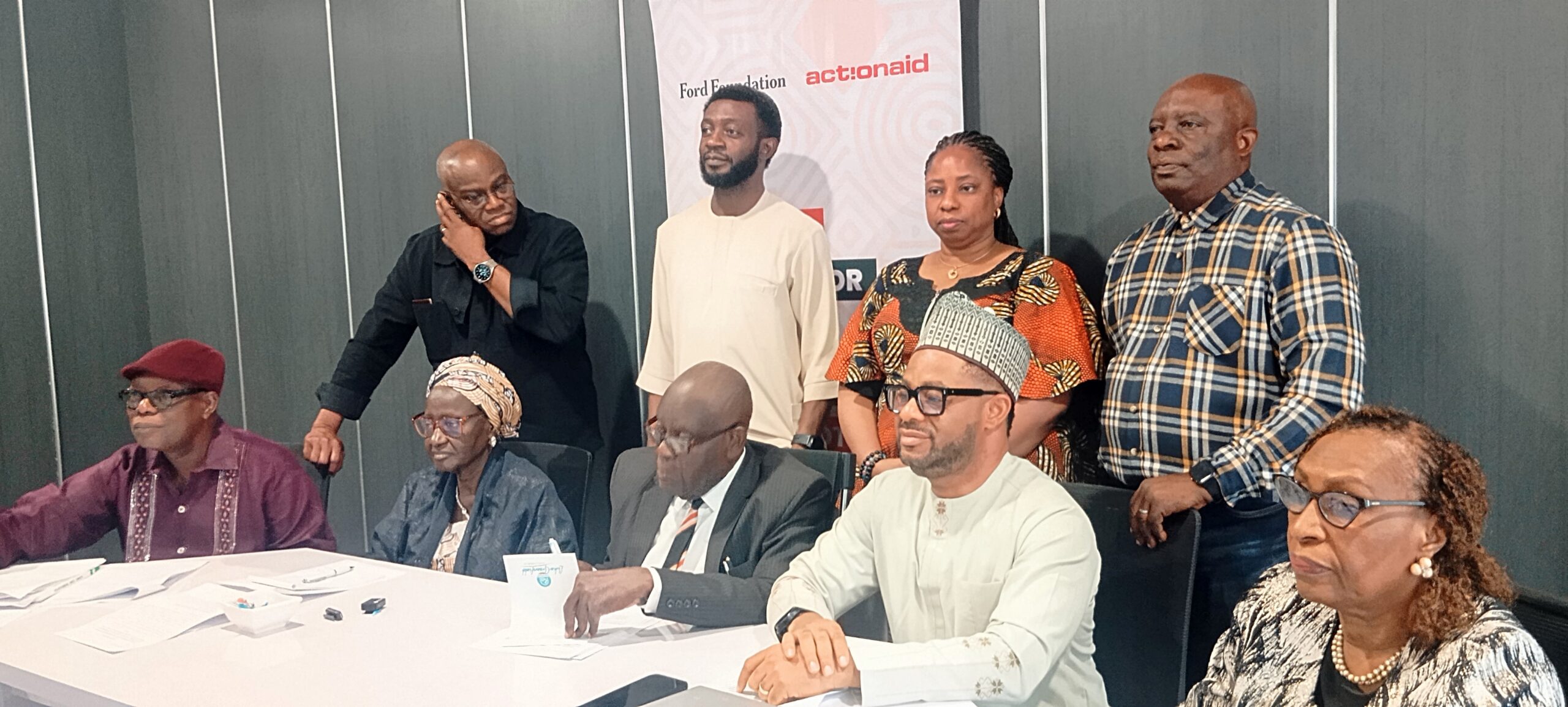
The Independent Judicial Accountability Panel (IJAP) of ActionAid Nigeria (AAN) has identified ambiguities in the recently signed 2026 Electoral Act, asking the National Assembly to address the contentions and amend the law to strengthen transparency and accountability in the nation’s electoral process.
The chairman of the panel, Prof. Mojeed Adekunle Owoade, said this while addressing journalists Friday in Abuja at the end of the panel’s three-day, fourth session convened under the CiTi-Act Project of AAN.
Owoade said that one of the major issues discussed during the session was the interpretation of Section 60(3) of the new Electoral Act, which has the phrase “shall at all times”.
The panel said that this could create confusion regarding the transmission of election results.
The panel noted that the phrase may be interpreted to mean either after a failure of electronic transmission or irrespective of whether electronic transmission fails or not.
“This ambiguity raises doubts about whether there could be sole reliance on Form EC8A where electronic transmission fails due to communication challenges,” Owoade said.
He said that to address the concern, the panel proposed that the law should clearly mandate the electronic transmission of election results immediately after result forms are signed and stamped at polling units and collation centres, with the transmitted results used to verify and confirm any other results before collation.
The panel also pointed out inconsistencies in the use of the term “transmission” in Sections 60(3), 60(5) and 62(4) of the Act, noting that the provisions do not clearly state whether the transmission referred to is electronic or manual.
IJAP recommended that Section 60(5) should explicitly provide for the electronic transmission of results and the number of accredited voters to the ward or registration area collation level to ensure proper verification.
The panel also raised concerns about the ouster clause in Section 83(5) of the Act, warning that it could conflict with provisions of the 1999 Constitution, especially in cases where internal party disputes involve constitutional breaches, and urged the National Assembly to amend the Electoral Act to address the identified gaps.
The panel also reviewed the Supreme Court judgment in the case of Attorney-General of Adamawa State and others versus the Attorney-General of the Federation concerning the declaration of emergency rule in Rivers State.
The panel noted that the delay in hearing and delivering judgment, coming after the suspension of Rivers State officials had already been lifted, could undermine public confidence in the judiciary.
The IJAP said that the court did not clearly define the scope of presidential emergency powers regarding the suspension of a governor, deputy governor, and a state legislature, and expressed concern that the ruling could allow the Senate to rely on voice votes rather than the two-thirds majority required by the Constitution when approving emergency powers.
To address these concerns, IJAP recommended that constitutional cases of national importance should be heard and determined expeditiously. It also urged the Supreme Court to adopt a more liberal approach to public interest litigation and maintain a progressive interpretation of the Constitution.
It urged the National Assembly to adopt roll-call voting, rather than voice votes, when determining the constitutionally required two-thirds majority for critical decisions.
Commenting on the call for clemency in the case of Sunday Jackson v. The State SC/CR/1026/2022, the IJAP said, “In the above case, involving Sunday Jackson, who was arraigned and convicted on a charge of culpable homicide punishable with death, and whose death sentence was affirmed by the Supreme Court in 2025. IJAP had, in its earlier session, considered the facts and circumstances of the case and resolved to intervene in the matter and advocate for the grant of clemency to Sunday Jackson.
“The panel happily notes that the Adamawa State Governor, on the 23rd of December 2025, finally granted him a pardon as advocated by civil society, including IJAP.”
The panel said it remain committed to fostering a more accountable judiciary and a transparent electoral system as the bedrock of Nigeria’s democracy, while its broadened scope will continue to enable interventions that not only focus on elections but also uphold broader democratic principles, citizens’ rights, and institutional reforms.
Discover more from TheTimes Nigeria
Subscribe to get the latest posts sent to your email.