By Editor
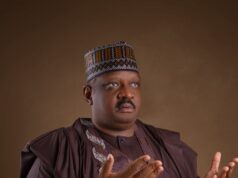
The Senate on Wednesday confirmed the immediate past Chief of Defence Staff (CDS), General Christopher Gwabin Musa (Retd), as the new Minister of Defence.
Gen. Musa, scaled the lawmakers’ hurdles following a grueling three-hour screening marked by rare bipartisan firmness, heated floor protests, and renewed scrutiny of the country’s faltering security architecture.
The senators rejected attempts to allow the nominee to ‘take a bow and go’, insisting that Nigerians deserved comprehensive answers on the escalating insecurity across the country.
President Bola Ahmed Tinubu has nominated Gen. Musa (Retd), as the new Minister of Defence, after the resignation of his successor Alhaji Mohammed Badaru Abubakar, who resigned on Monday, citing health reason.
The session featured rigorous questioning on defence funding, intelligence gaps, technology shortfalls, rising banditry, terrorist infiltration, and lapses in military operations—including high-profile kidnappings and the capture of a senior officer.
Chaos briefly erupted when some senators suggested Musa be spared questioning, citing his prior 2023 appointment as Chief of Defence Staff.
However, shouts of “Let him take a bow and go!” were met with protests from colleagues demanding accountability.
The Senate President Godswill Akpabio intervened, invoking Order 52, and stressed that the session was no mere formality: “How can he take a bow and go? Where are Brigadier General Uba? Where are the children kidnapped while soldiers withdrew? Nigerians want answers.”
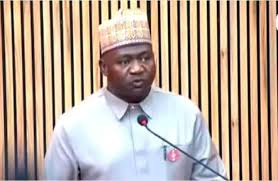
During the interrogation, Musa delivered a detailed plan to confront Nigeria’s worsening insecurity. He promised stricter operational discipline, improved community-based security, stronger inter-agency coordination, and full investigations into recent military lapses.
He described school abductions as “deeply unfortunate” and highlighted porous school infrastructure, weak community resilience, delayed intelligence, and insufficient technology as key challenges.
Stressing the importance of local response, he said, “Crime is localized. Security agencies cannot be everywhere. We must build community resilience. Technology and rapid information-sharing must be central to our approach.”
He proposed an integrated security model combining the Armed Forces, police, civil defence, state governments, and local communities, noting that fragmented responses have left gaps exploited by kidnappers.
Musa warned that militants continue to infiltrate Nigeria from neighboring countries, saying, “The terrorists believe Nigeria is rich. Wherever they operate, their endgame is to enter Nigeria.” He called for revitalizing the Multinational Joint Task Force and bolstering border security along corridors stretching toward Mali and Burkina Faso.
The Defence Minister-designate cautioned against relying solely on the military, noting that effective governance, justice, and capacity-building remain central to national security.
He emphasized the importance of regional cooperation, citing the southwest’s relative security as a product of strong coordination among governors and intelligence agencies.
Highlighting legal weaknesses, Musa said delayed justice undermines deterrence.
He pledged to tackle illegal mining, a major source of terrorist financing, and to fully investigate the capture of Brigadier General Uba, promising accountability for any negligence or cowardice.
Musa outlined key operational priorities, including withdrawing soldiers from routine checkpoints to focus on active combat, redeploying troops to forests and high-risk zones, and strengthening collaboration with governors, federal agencies, and local communities.
He also promised to expand maritime security under Operation Delta Safe, intensify border surveillance—particularly along the Cameroon frontier—and protect farmlands to safeguard food security.
Pressed on military preparedness, he acknowledged gaps in equipment, technology, and intelligence, pledging urgent reforms and a follow-up report to the Senate on defence needs. Senators called for predictable defence funding and improved troop welfare, citing Nigeria’s low soldier salaries.
Musa reaffirmed that former insurgents would not be recruited into the Armed Forces and advocated for a unified national security database to prevent criminal infiltration.
Musa’s also said, “I cannot afford to fail myself, my nation, or my family. No indolence. No cowardice. Nigerians must work together. We will face these evil forces squarely and stop the killings.”
Senate President Akpabio underscored that new Senate legislation, including the death penalty for kidnappers, would give Musa the legal framework needed to act decisively, “We are giving you the enabling framework. If they are not deterred, they will face the death sentence.”
TheTimes had earlier reported a private meeting between President Bola Ahmed Tinubu and Gen. Musa (Retd), hours before the immediate past Minister of Defence, Mohammed Badaru Abubakar, announced his resignation on Monday.
Gen. Musa, who retired on October 24, 2025, was reportedly led into the President’s office area by a senior security official for the meeting at the Aso Rock Presidential Villa.
Gen. Musa, Nigeria’s 18th Chief of Defence Staff, was appointed in June 2023 and retired in October 2025, handing over to General Olufemi Oluyede.
Originally from Zangon Kataf in Kaduna State, Musa gained national prominence as Theatre Commander of Operation HADIN KAI, where he led counter-insurgency operations against Boko Haram in the North-East.
Musa was awarded the Order of the Federal Republic (OFR) for his service.
His tenure as Defence Chief was marked by strong advocacy for civil-military cooperation, modernization of Nigeria’s defense strategy, and being vocal against corruption, which he described as ‘economic sabotage’.
General Musa, 58 won the Colin Powell Award for Soldiering in 2012.
Born in Sokoto in 1967, General Musa received his primary and secondary education there before attending the College of Advanced Studies in Zaria.
He graduated in 1986 and enrolled at the Nigerian Defence Academy the same year, earning a Bachelor of Science degree upon graduation in 1991.
General Musa was commissioned into the Nigerian Army as a Second Lieutenant in 1991 and has since had a distinguished career.
His appointments include General Staff Officer 1, Training/Operations at HQ 81 Division; Commanding Officer, 73 Battalion; Assistant Director, Operational Requirements, Department of Army Policy and Plans; and Infantry Representative/Member, Training Team, HQ Nigerian Army Armour Corps.
In 2019, he served as Deputy Chief of Staff, Training/Operations, Headquarters Infantry Centre and Corps; Commander, Sector 3, Operation Lafiya Dole; and Commander, Sector 3 Multinational Joint Task Force in the Lake Chad Region.
In 2021, General Musa was appointed Theatre Commander, Operation Hadin Kai. He later became Commander of the Nigerian Army Infantry Corps before being appointed Chief of Defence Staff by President Tinubu in 2023.
In the letter to the Senate, President Tinubu expressed confidence in General Musa’s ability to lead the Ministry of Defence and further strengthen Nigeria’s security architecture.
Discover more from TheTimes Nigeria
Subscribe to get the latest posts sent to your email.