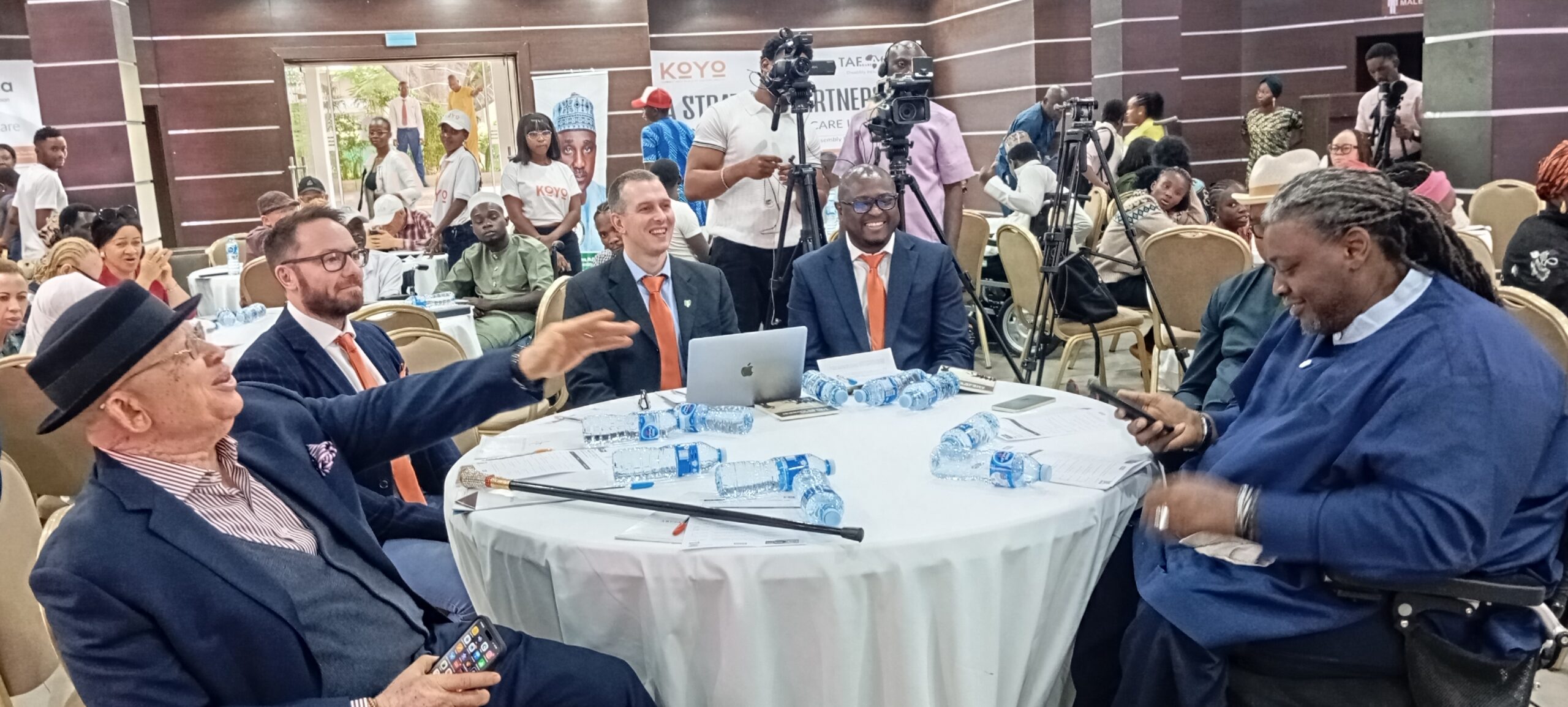
The Albino Foundation (TAF Africa), in partnership with the Koyo Healthtech and the Rt. Hon. Abbas Tajudeen Resource Centre for People with Disabilities at the National Assembly has formally unveiled the “Access to Health Initiative for Persons with Disabilities” through the “Koyo Navigate App”.
The Koyo Navigate App is an AI-powered digital healthcare platform created to expand access to quality healthcare for all Nigerians.
Although the Koyo Navigate App is a paid healthcare platform for the general public, the pilot phase of this initiative will provide FREE digital healthcare access to 350 beneficiaries, made up of 250 women with disabilities and 100 persons with albinism.
Beneficiaries will have access to virtual doctor-supervised consultations, AI-driven health support, mental wellness guidance, and specialist dermatology services, particularly vital for persons with albinism who face a high risk of skin-related conditions.
Speaking at the event, the Speaker of the House of Representatives, Dr. Abbas Tajudeen, assured that the National Assembly will fund monthly subscriptions for Persons With Disabilities (PWDs) under the Artificial Intelligence-enabled Koyo HealthTech programme for the next five years.
Speaker Abbas was represented by the Deputy Chairman of the House Committee on Power, House of Representatives, Hon. Joshua Gana.
“Around the world, AI is revolutionising the way healthcare is delivered to persons with disabilities, and through the Koyo App, patients in this country can begin to enjoy doctor-supervised consultations, AI-driven health guidance, dermatological assessments, and other accessibility features tailored to different categories of disabilities.
“On behalf of the House of Representatives, I reaffirm our commitment to supporting this initiative through the provision of monthly subscription coverage for persons with disabilities over the next five years,” Abbas said.
The Speaker making a presentation at the event themed, ‘Inclusive Health Through Innovation: Bridging Disability and Technology’, describing the initiative as a major step in advancing inclusive healthcare in Nigeria.
He also said that there plans to provide legislative backing for the sustainability of the programme.
He said, “We will also begin work on a bill to mandate the government to permanently assume the cost of such subscriptions for persons with disabilities. These efforts underscore our resolve to promote inclusion, strengthen healthcare delivery, and harness technology for the greater good of all Nigerians.
“This event is therefore more than a ceremony; it is a milestone in our journey towards building an inclusive society. Access to healthcare should be guaranteed for all citizens, regardless of physical or cognitive limitations.
“Health is not a privilege; it is a fundamental human right,” the speaker said, noting that many Nigerians with disabilities had long faced barriers to accessing medical care, health information and diagnostic services.”
Abbas highlighted the growing role of artificial intelligence in healthcare delivery, saying, “The vast potential of Artificial Intelligence in speeding up diagnostics, providing early intervention and enabling personalised care has already been proven.”
He explained that AI-powered solutions had enhanced communication for people with speech and hearing impairments, improved mobility for individuals with severe physical disabilities and expanded access to education and rehabilitation for people with learning disabilities and traumatic injuries.
He said the programme aligns with Nigeria’s commitment to uphold the dignity and well-being of over 25 million citizens living with disabilities, adding that the integration of AI into healthcare delivery would help close existing gaps and extend essential services to vulnerable populations.
He disclosed that 350 persons with disabilities would benefit from the pilot phase of the programme.
“For the 350 beneficiaries in this pilot phase, these services are not merely technological upgrades; they are life-changing pathways to dignity, independence, and improved well-being,” the speaker said, while appreciating the provision of two months of free AI-enabled healthcare services.
Speaker Abbas reaffirmed the commitment of the 10th House of Representatives to disability inclusion, referencing the Discrimination Against Persons with Disabilities (Prohibition) Act 2018 and the establishment of the National Commission for Persons with Disabilities. He, however, acknowledged that more needed to be done.
Speaking earlier, the Chief Executive Officer of KOYO, Dr Thomas Cracknell, said the collaboration was rooted in inclusion and accessibility.
According to him, Koyo Navigate App is a smartphone application designed to connect users with qualified medical doctors.
“Koyo Navigate is a smartphone app designed to connect people directly to qualified medical doctors, quickly and safely. At its core, Koyo exists for one simple reason: to make trusted healthcare guidance accessible to everyone, regardless of income, geography or circumstance,” he said.
He noted that the platform combines medical professionals with carefully governed artificial intelligence.
He said, “Alongside this, we are integrating carefully governed artificial intelligence, tools that help us to do three main things. One, to ensure that the medical knowledge shared is accurate, up to date and high quality. Two, to allow us to scale responsibly in spite of doctor shortages in the country. And three, to keep our costs and therefore the price of what we offer as low as we can possibly make it.”
While saying that affordability and accessibility are central to Koyo’s operations, he said, Cracknell said, “Persons with disabilities have historically not had the same access to opportunity, stable income or healthcare support as many others. That reality informs every decision we make. For Koyo, affordability and accessibility are not features. They are non-negotiable principles.”
He also said that the next phase of the partnership would focus on user feedback.
He said, “The next two months kick-starting this exciting partnership are not about us or me explaining to you what Koyo is necessarily. They are about learning what it is our users, our important users, want from us and our medical service.”
In his opening remark, the Founder/CEO of TAF Africa, Ambassador Jake Epelle, emphasized the importance of healthcare access in achieving inclusion.
Epelle announced temporary free access to the Koyo app for members of the disability community.
According to him, beneficiaries will have access to virtual doctor-supervised consultations, AI-driven health support, mental wellness guidance, and specialist dermatology services, particularly vital for persons with albinism who face a high risk of skin-related conditions.
“This partnership reflects TAF Africa’s commitment to disability inclusion, Koyo Healthtech’s drive for digital health innovation, and the National Assembly Resource Centre’s role in strengthening policy backing and national visibility for inclusive healthcare in Nigeria.
“When persons with disabilities have access to quality healthcare and qualified professionals, inclusion becomes achievable,” Epelle said.
He urged the Federal Government to collaborate with Koyo, saying, “Access to health is very pivotal if we must win the war against inclusion. When persons with disability are given access to quality health, not just health, but quality and qualified health practitioners, then we can be sure that we will obtain health in its true nature.
He also referenced the Discrimination Against Persons with Disabilities Act of 2018, which mandates accessibility in public buildings, transport systems and services, noting that poor implementation continues to limit its impact.
“So, we want to use this opportunity to call on the Federal Government to partner with Koyo in the administration of their app so that quality health care delivery can be given to the most marginalized.”
The Discrimination Against Persons with Disabilities (Prohibition) Act of 2018 was enacted in Nigeria in December of that year, prohibiting discrimination against persons with disabilities and mandating that public buildings, transportation systems, and other facilities be made accessible within a five-year transition period.
Nigeria is estimated to have over 25 million persons living with disabilities, many of whom remain structurally excluded from education, healthcare and other essential services, despite the existence of legal protections.
Discover more from TheTimes Nigeria
Subscribe to get the latest posts sent to your email.