The Head of the Civil Service of the Federation (HCSF), Mrs Didi Esther Walson-Jack, has said that the Federal Government’s digitalization policy is already yielding massive and positively impacting results.
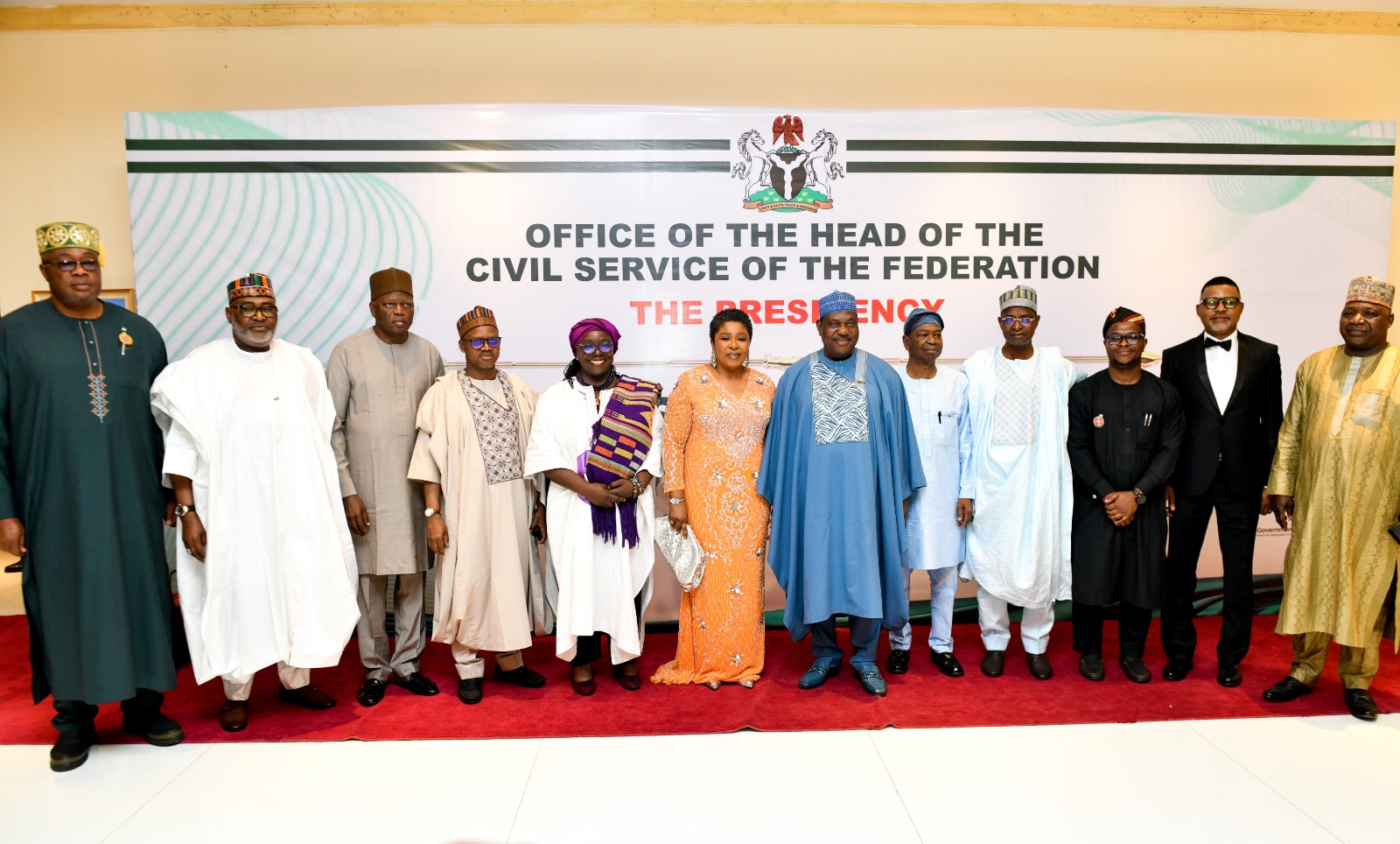
She said this Wednesday night in Abuja at the Paperless Civil Service Gala and Awards Night.
According to her, governments globally are embracing digital transformation as a powerful equaliser, using technology to leapfrog legacy systems, improve service delivery, reduce corruption, and connect more effectively with citizens, and that Nigeria’s progress demonstrates that African Public Services can innovate boldly and deliver reforms that match global standards.
She said that under her leadership as HCSF the civil service reforms have been consolidated and accelerated with urgency and discipline, ensuring continuity and sustainability while delivering measurable outcomes.
“That was why the War Rooms were established under FCSSIP25 not as spaces for long speeches, but as platforms for execution, accountability, and results. The Digitalisation War Room in particular has driven the transformation from aspiration to delivery, and the evidence is now visible across the Service.
“GOVMail, driven through this coordinated push, now stands at 100,828 official email accounts as of this evening, providing secure government communication at scale, strengthening sovereignty over official correspondence, improving responsiveness, and saving the government billions of naira previously spent on external licences.
“There is still so much more to do, the OHCSF is already moving ahead that is why we have come up with the following digital initiatives. Our world-class Service-Wise GPT trained on the Constitution, Public Service Rules, statutory regulations, circulars, and other official instruments has recorded over 25,000 chats, enabling faster access to authoritative guidance for public servants and the general public.
“The Online Compendium of Federal Circulars, with thousands of searches and downloads, has ended the frustrating hunt for “the right circular,” strengthening consistency and transparency in decision-making.
“We are also digitising our learning ecosystem through the Federal Civil Service Online Academy, ensuring that our training modules are modern, accessible, and scalable, so that capacity building keeps pace with the demands of a digital Service.
“Equally important, core management systems are being modernised, not as side projects but as the backbone of a performing Civil Service. The Performance Management System (PMS) is now automated in most Ministries, strengthening accountability and aligning performance with national priorities.
“The Personnel Audit and Skills Gap Analysis (PASGA) is digitising personnel records and skills data across the Service, giving government, for the first time, a living, evidence-based view of its workforce who we are, what we can do, where our gaps are, and how to plan recruitment, training, and deployment with precision,” Walson-Jack said.
She said that the journey towards a digitally transformed and paperless Federal Civil Service did not begin overnight, and it certainly did not begin with the present administration.
The HCSF said this has been a deliberate and progressive reform effort spanning successive Heads of the Civil Service of the Federation, with each building firmly on the foundations laid by their predecessors.
She said, “In 2017, under the leadership of Mrs Winifred Oyo-Ita, the Federal Civil Service Strategy and Implementation Plan 2017–2020 was launched, and for the first time, digitalisation was clearly positioned as a strategic reform priority.
“That strategy introduced the concept of an “Enterprise Content Management System”, signaling a shift away from paper dependency and laying the groundwork for digitising records, memos, and workflows across the service.
“Early efforts began modestly but meaningfully: for example, the traditional practice of issuing staff posting and deployment circulars purely on paper was moved to a secure online repository, using a controlled cloud approach, to prevent the fraudulent alteration of posting circulars. By placing these sensitive postings “in the cloud,” the Service sent a strong signal that transparency, authenticity, and accountability would define the new direction.
“Though initial reforms often faced the inertia of old habits, the foundation was laid for a Civil Service that could eventually transcend the deeply entrenched paper-bound bureaucracy of the past. It was a bold signal that the Service was ready to embrace an efficient, productive, incorruptible, and citizen-centred culture.
“That foundation was significantly strengthened under the leadership of Dr. Folasade Yemi-Esan, who recognised that digitalisation could not remain at the level of pilots and isolated initiatives. Under her stewardship, the Federal Civil Service Strategy and Implementation Plan 2021–2025, popularly known as FCSSIP25, was developed.”
In his special remarks, the Secretary to the Government of the Federation (SGF), Senator George Akume, described the digital transition in the civil service as a defining milestone in Nigeria’s public sector reform, saying it reflects a shift from bureaucratic routines to a more efficient, transparent, and accountable system of governance.
Akume commended the Office of the Head of the Civil Service of the Federation (OHCSF), led by Mrs Walson-Jack, for her consistent leadership and disciplined execution.
“The transition to paperless work processes is not merely a technological upgrade; it is a fundamental shift in culture, mindset, and service delivery. It represents efficiency over bureaucracy, transparency over opacity, and accountability over discretion. Above all, it reflects our collective resolve to build a modern, responsive, and citizen-centred public service.
“This transformation is fully aligned with the Federal Civil Service Strategy and Implementation Plan (FCSSIP 2021–2025) and the broader public sector reform agenda of His Excellency, President Bola Ahmed Tinubu, under the Renewed Hope Agenda. Digital governance is no longer optional; it is essential to effective coordination, fiscal discipline, and timely decision-making across government,” Akume said.
He urged all Ministries, Departments and Agencies (MDAs) to institutionalise digital processes, safeguard data integrity, invest in capacity building, and sustain reform beyond personalities. The future of governance lies in systems, not shortcuts.
A representative of the United Nations Development Programme (UNDP) in Nigeria, Beatrice Eyong, said one of the areas her organisation identified for partnership was in digitalisation.
She said that real skills can be transformed into jobs. This is part of the future in Nigeria.
“Beyond that, we have been exploring a number of partnerships, including developing an investment recipient team on an innovation hub to promote excellence within the civil service. We can take ideas into enterprises. We can take policies into really measurable gains that can accelerate inclusive development,” Eyong said.
In his goodwill message at the event, the MD/CEO, Galaxy Backbone Limited, Prof. Ibrahim Adeyanju, commended the HCSF for the successes recorded.
“The transition towards a paperless civil service marks a defining milestone in Nigeria’s digital transformation journey; one that places efficiency, transparency and service excellence at the heart of governance.
“This year has been truly remarkable. Under the visionary leadership and unwavering commitment of the Head of the Civil Service of the Federation, Mrs. Didi Esther Walson-Jack, we have witnessed renewed momentum, clarity of purpose and strong institutional drive towards the digitalisation of MDAs,” Adeyanju said.
Discover more from TheTimes Nigeria
Subscribe to get the latest posts sent to your email.