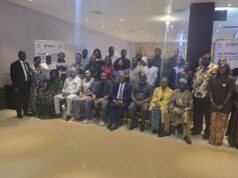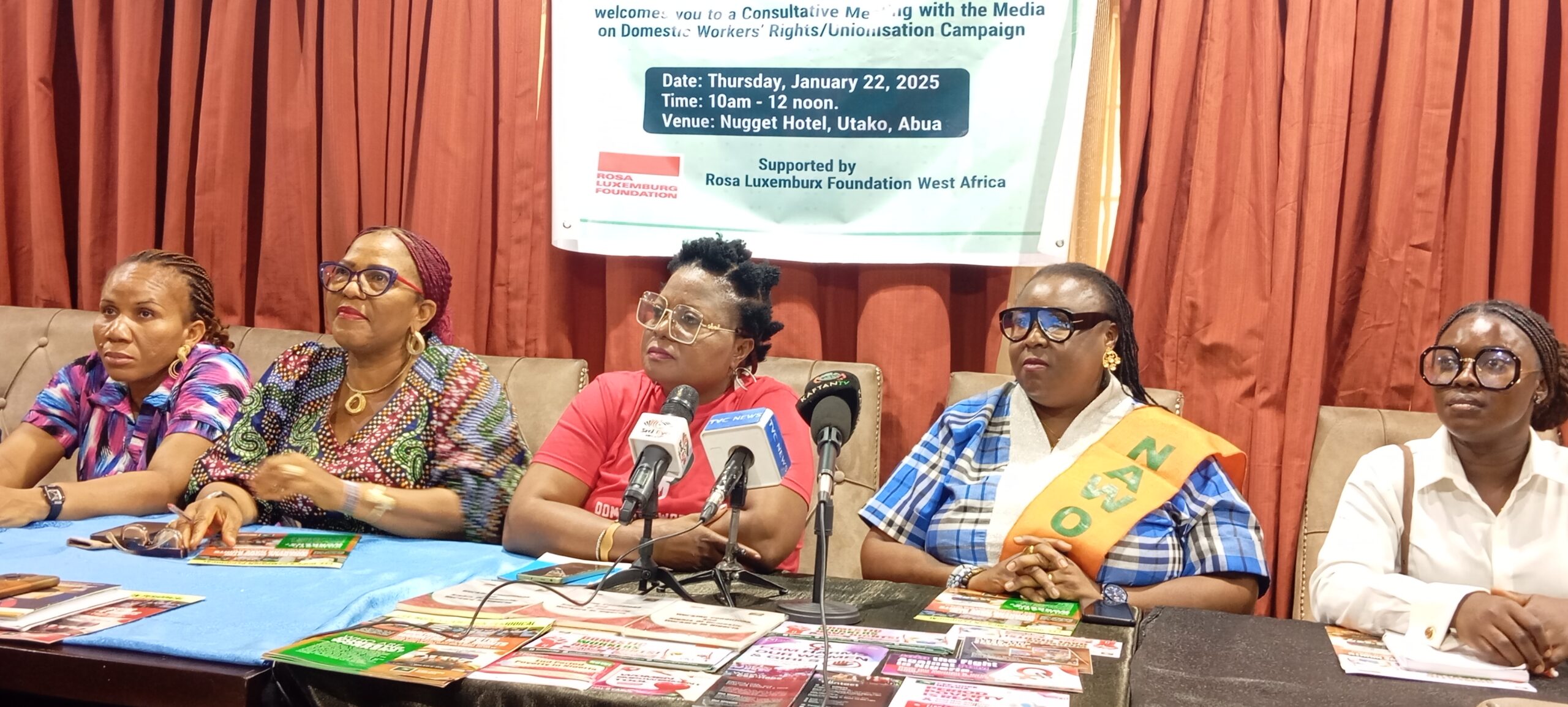
The ,CEE-Hope, a human rights and civil society organisation in collaboration with the Nigeria Association of Women Journalists (NAWOJ), has called for the unionisation of domestic workers to protect apprentices and interns from sexual abuse, exploitation and unfair treatments by employers.
They made the call during a consultative meeting with the media on domestic workers’ rights and unionisation campaign on Thursday in Abuja.
The groups said that their advocacy was due to the recent passage of the Informal Sector Employment (Regulation) Bill, 2025, by the Senate, which seeks to formalise domestic work and regulate employment in the informal sector.
The bill, sponsored by Senator Diket Plang (Plateau Central), consolidates earlier legislative efforts aimed at documenting and protecting domestic workers and regulating employment agents.
Presenting the report of the Senate Committee on Employment, Labour and Productivity, Plang had said the legislation was necessary due to growing cases of sexual assault, forced labour, torture and non-payment of wages suffered by domestic workers across the country.
Speaking at the media engagement meeting, Executive Director of CEE-Hope, Betty Abbah, noted that domestic workers are among the most violated groups in Nigeria, lamenting that many suffer abuse without access to justice.
She recalled the case of Joy, a domestic worker from Benue State, who was allegedly killed by her employers during the COVID-19 lockdown after being locked up for days, starved and beaten.
She said that investigations later confirmed her death was a homicidez rather than the suicide claim by her employers.
Abbah said many such incidents could have been prevented if domestic workers had unions to protect their rights, adding that Nigeria, despite having one of the highest numbers of domestic workers in Africa, lacks a functional domestic workers’ union.
She cited countries such as Ghana, Kenya and South Africa where domestic workers enjoy protection through unionisation and referenced the International Labour Organisation Convention 189, which guarantees decent work conditions and the right to form unions.
“In Nigeria, many domestic workers work round the clock, including children as young as seven. Unionisation will significantly reduce abuse and exploitation,” she said, urging President Bola Ahmed Tinubu to assent to the bill passed by the Senate.
On her part, the Vice President of NAWOJ, Zone D, Chizoba Ogbeche, said poor societal mindset and weak enforcement of laws were fuelling abuse of domestic workers, especially underage girls.
She decried the practice of overworking domestic workers while employers’ children enjoy privileges, warning that such behaviour entrenches a cycle of abuse in society.
Ogbeche stressed that beyond legislation, mindset change and sustained media follow-up were critical, noting that many abuse cases collapse due to lack of investigation and interference.
She also condemned the practice of hiring domestic workers through agencies and paying the agencies directly, describing it as exploitation and modern-day slavery.
According to her, NAWOJ had embraced the campaign and commenced advocacy across its chapters in the North, North Central states and the Federal Capital Territory, pledging continued media engagement to ensure domestic workers are treated with dignity.
Other speakers at the meeting, called for collaboration and information sharing as victims of abuse are fellow human being and who can positively contribute to national development of they were cared for.
Discover more from TheTimes Nigeria
Subscribe to get the latest posts sent to your email.