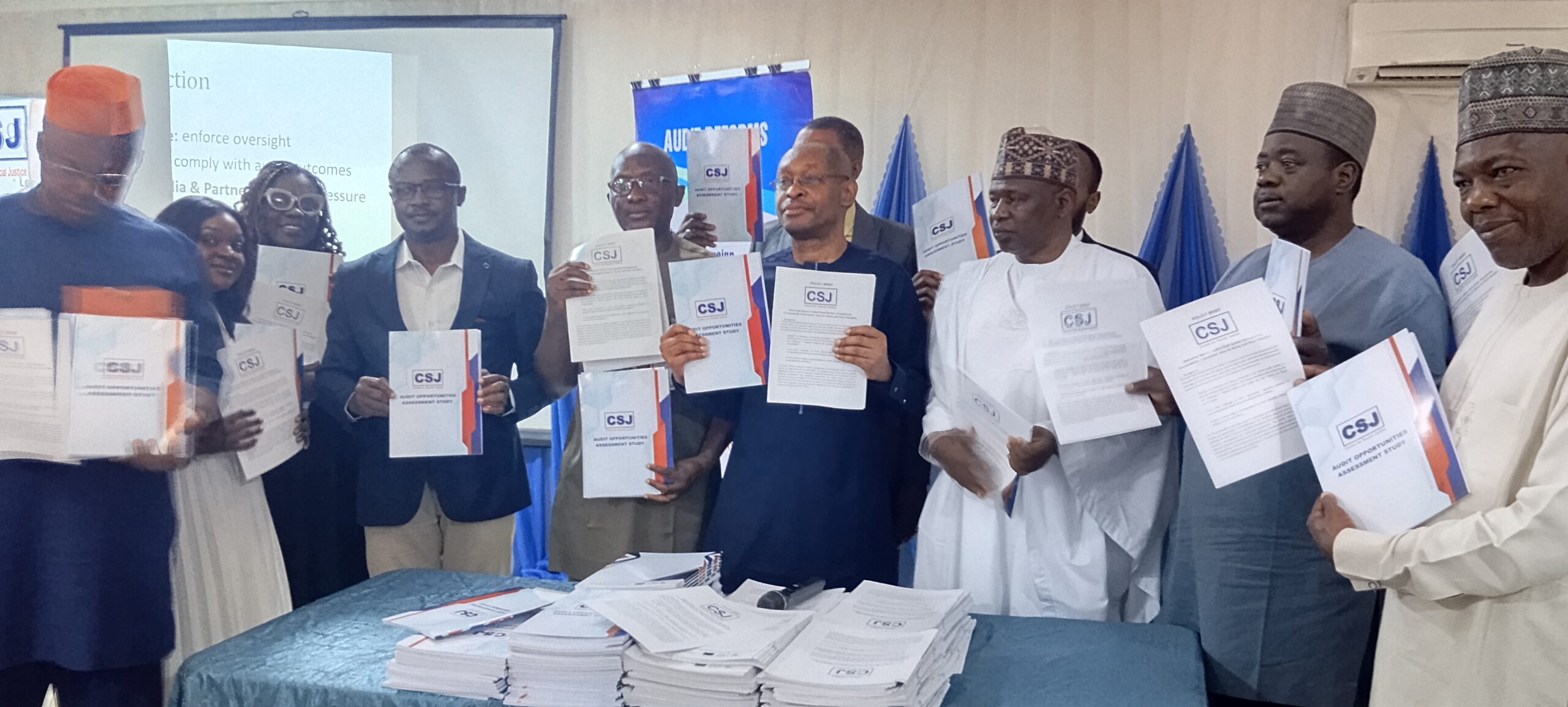
The Centre for Social Justice (CSJ) has called for the granting of independence and enforcement powers to the Auditor-General of the Federation’s (AuGF) office as part of measures to boost the anti-corruption efforts of the Federal Government.
The Lead Director for CSJ, Barrister Eze Onyekpere, made the call at the formal presentation of the 101-page ‘Audit Opportunities Assessment Study, and CSJ Policy Brief on ‘Reforming Nigeria’s Federal Audit System: Strengthening Accountability, Enforcement, Value for Money and Fiscal Discipline’, on Thursday, in Abuja
He said at the event organised by CSJ, with support from the European Union–funded Rule of Law and Anti-Corruption (RoLAC) Programme, that granting such privilege would ensure the AuGF functions optimally and muster enough power to sanction defaulting government agencies without interference.
According to him, weak sanctions, poor enforcement of audit reports and outdated legal frameworks are major challenges undermining the country’s fight against corruption.
He expressed worry that over time, exposing graft by the Auditor-General’s Office was not followed with commensurate sanctions because of limitations of its powers in the current audit law.
Onyekpere said that Nigeria was borrowing more because there were no adequate sanctions for misappropriations revealed in audit reports.
“Our fellow African countries like Gambia, Sierra Leone and South Africa have embraced the independence of the Auditor-General’s Office. In our country, it’s a different scenario as the National Assembly that should push for the Federal Audit Service Bill are still singing “on your mandate we shall stand,” (a slogan indicating absolute loyalty to President Bola Tinubu”, “he said
In a strategic recommendation for strengthening Nigeria’s audit system, Onyekpere stressed the importance of the enactment of the Federal Audit Service Bill, which would grant statutory independence and enforcement powers, establishing the Auditor-General of the Federation Office as an autonomous constitutional authority.
He also suggested the need to amend sections 85-87 of the Constitution to compel executive and legislative responses within fixed timeliness, ensuring that audit findings trigger mandatory corrective actions.
Onyekpere urged the Budget Office to withhold funds from ministries, departments and agencies of government that are non-compliant with audit rules.
He suggested multi-stakeholder oversight forums involving civil society organisations, media and development partners to strengthen external accountability and sustained public engagement.
Also at the event, the Chairman of the Fiscal Responsibility Commission (FRC), Victor Muruako, said the study was timely, given the urgent need to ensure that public resources are effectively and efficiently utilised in delivering public services and the “dividends of democracy.”
Muruako, who was represented by the Commission’s Director of Legal Services, Investigation and Enforcement, Charles Abana, said the event underscored CSJ’s sustained commitment to strengthening accountability and transparency in governance through data- and knowledge-driven tools.
He noted that the effective identification and utilisation of audit opportunities in the public service would promote transparency and accountability, improve efficiency, reduce waste, curb corruption and misuse of public funds, enhance revenue recovery, and boost citizens’ participation in governance.
“The main objectives and benefits of identifying and utilising audit opportunities in the public service on a regular basis include the promotion of transparency and accountability; improving efficiency and preventing wastage, reducing corruption and misuse of public funds,” he said.
He decried the absence of a modern federal audit law, noting that Nigeria “still relies on the obsolete 1957 Audit Law, even as several states have enacted updated audit laws” under the CFTAS programme.
“This is a public presentation of the audit assessment study. In this study, we had to look deeper into the surrounding circumstances and issues that have inhibited audit effectiveness, and we examined the political economy dimensions.
“Beyond confirming the level of fraud in the system, we were able to identify the core and critical issues that have made audits ineffective. One major finding that came out is that there are no sanctions, no punishments for violations,” he added.
On his part, the Project Manager for the Anti-Corruption Component of the European Union and International IDEA, Dr Emmanuel Uche, said the study underscored the central role of audit reforms in combating corruption.
He said: “There is no way we can claim to be fighting corruption without the involvement of the Auditor-General’s Office and the Public Accounts Committee.
“As much as flies like rotten meat, no fly will perch on rotten meat that is on fire. The audit institution is supposed to put fire on the system to ensure accountability.”
Discover more from TheTimes Nigeria
Subscribe to get the latest posts sent to your email.