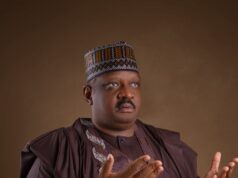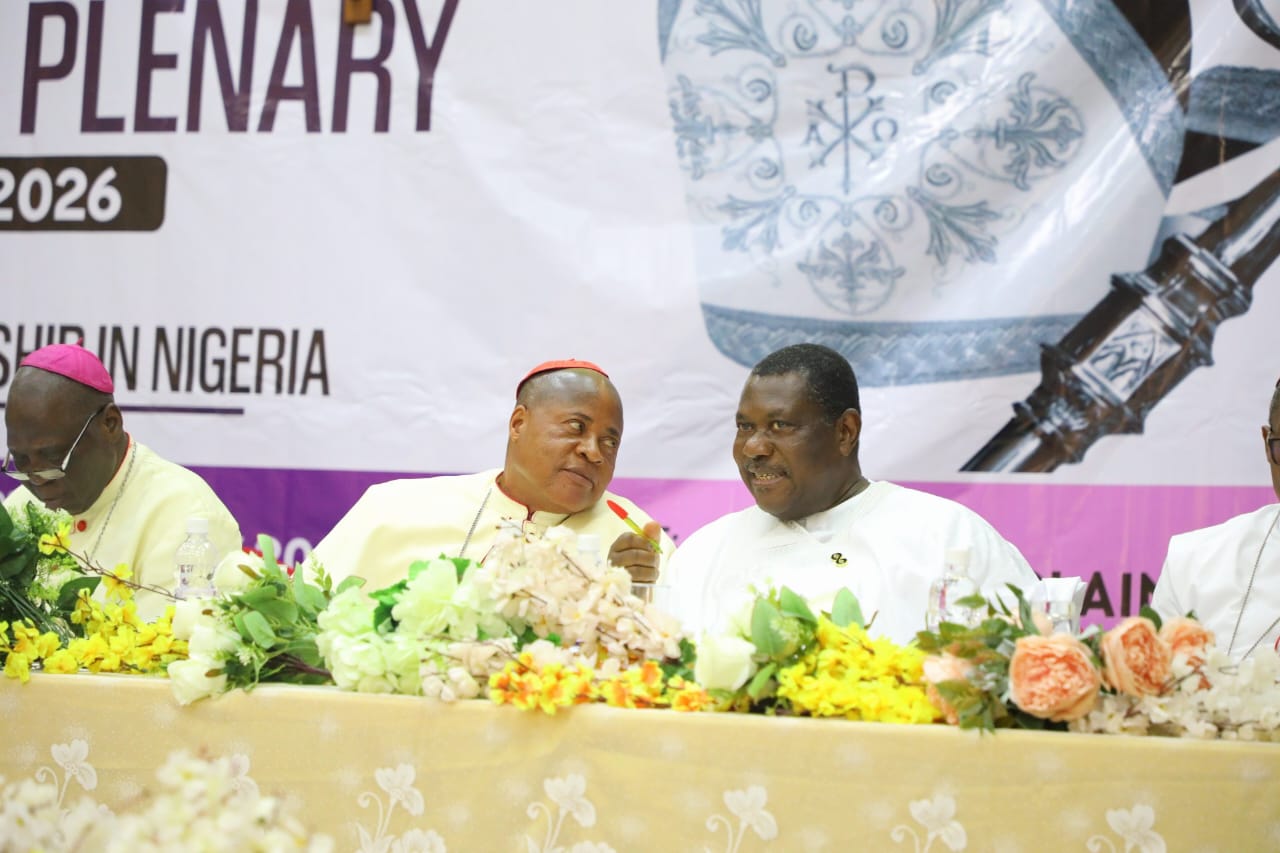
The Secretary to the Government of the Federation (SGF), Senator George Akume, has said that many of the terrorists responsible for killings and insecurity in Nigeria are foreign nationals operating from outside the country.
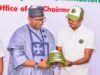
He said this on Sunday in Abuja at the at the 2026 First Plenary Assembly of the Catholic Bishops’ Conference of Nigeria (CBCN), with the theme “The Common Good and Leadership in Nigeria”.
According to him, security reports indicate that several arrested suspects do not speak English or indigenous Nigerian languages fluently but communicate mainly in French.
“Many of these people who have been arrested don’t speak English. They speak very poor Hausa, but they speak French. Do we speak French in Nigeria? No. While Boko Haram has local roots, a significant number of bandits and killers operating in forests in states such as Niger are from outside Nigeria’s borders,” Akume said.
The SGF also said that the Federal Government is working closely with international partners, including the United States, following Nigeria’s designation as a Country of Particular Concern.
He referenced recent drone strikes against terrorist elements in Sokoto State as evidence that government is not idle in tackling insecurity.
He President Bola Ahmed Tinubu’s recent visit to Turkey was largely to procure advanced military hardware, including drones, to strengthen Nigeria’s technological capacity in combating terrorism.
The SGF also revealed that 50,000 additional police personnel have been recruited to boost internal security operations.
He acknowledged that insecurity remains a serious challenge but insisted it is a global phenomenon, not peculiar to Nigeria and urged Nigerians, particularly religious leaders whom he described as the “moral conscience of the nation,” to engage issues holistically and avoid narratives that could erode public confidence.
Akume, who noted that illegal mining has contributed significantly to insecurity, as criminal groups exploit mineral resources to fund violent activities, said that the Federal Government has tightened mining regulations and strengthened enforcement to curb abuse in the sector.
Reaffirming government’s commitment to the welfare of citizens, Akume said democracy remains “government of the people, by the people, and for the people,” stressing that legitimate power is derived from the citizenry and must serve the collective good.
He assured the bishops of continued partnership between the Federal Government and the Catholic Church in promoting peace, social cohesion, youth empowerment and national development.
He urged the bishops not to lose confidence in Nigeria despite persistent concerns over corruption and insecurity, declaring that “there is progress” and that the government is taking concrete steps to address the nation’s challenges.
Responding to issues raised by the church leaders, including insecurity, electronic transmission of election results, tax reforms, and the rising cost of living Akume acknowledged the problems but cautioned against despair.
He said, “You recall that when the first democratically elected government was overthrown, the main reason given was corruption. Again and again, corruption. We must ask ourselves: does corruption exist only in the public service? Does it not exist in the private sector?”
“I don’t want us to lose confidence in this country. So much has been put on the ground since independence. It shows that there is progress,” he added, citing the expansion of universities and Nigeria’s growing global professional footprint.
He highlighted the contributions of Nigerian professionals abroad, particularly doctors:
“At one time, I was told there were over 22,000 medical consultants of Nigerian origin serving in America. Should they decide to withdraw their services, the whole healthcare system in the US would collapse.”
On the controversial tax reform law, Akume said public debate is part of the democratic process, stressing that the National Assembly subjected the proposals to scrutiny before passage.
He said, “No document is perfect in the world except, of course, the Bible, the Quran, and the Torah. Laws crafted by human beings are subject to amendment whenever the need arises.”
On electronic transmission of election results, he cited infrastructural limitations, saying, “In many places in the country, you can’t operate these machines. The reasoning given was insufficient communication and power structure. Where we went wrong, and we know we went wrong, we try to put things right.”
Speaking on education loans and anti-corruption efforts, the SGF described it as a ‘novelty in Africa’, adding, “Some students cannot afford N25,000 to pay for university education. Now, you get a loan, finish, and when you start working, you begin to pay. Over N665 billion has been disbursed to students. When we do something good, we should celebrate.”
Discover more from TheTimes Nigeria
Subscribe to get the latest posts sent to your email.