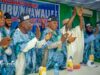
The Resource Centre for Human Rights and Civic Education (CHRICED) has raised an alarm that the country Nigeria is reaching a breaking point due to insecurity, economic hardship and mis-governance challenges pushing Nigerians to the brink of despondency.
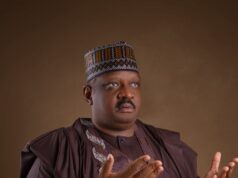
CHRICED’s executive director, Comrade Ibrahim Zikirullahi, raise the alarm on Tuesday in Abuja during the centre’s state of the nation press conference.
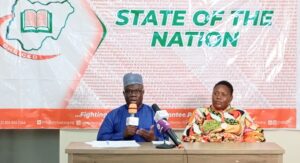 According to him, the situation has eroded public confidence and placed citizens under severe strain, apart from many Nigerians now living in fear amid rising cases of abductions, killings and attacks by armed groups across different regions in the country.
Zikirullahi lamented that over 1,100 people have been abducted since January 2026, while several others, including security personnel, have been killed in renewed violence.
He said, “We gather at a moment when the Nigerian nation is crying out for truth, courage, and principled leadership. The warning by Chinua Achebe- that democracy requires both a morally grounded leadership and a vigilant, educated citizenry- has never been more urgent.
“Across the country, citizens are grappling with fear, hunger, disillusionment, and a deepening sense that the social contract has been broken. The signs of strain are everywhere: in the insecurity that stalks communities, in the collapsing economy, in the shrinking civic space, and in the despair etched on the faces of ordinary Nigerians.
“This is not a time for silence. It is a time for clarity. Today, Nigeria is living through a moment that demands clarity, courage, and conscience. CHRICED stands here today to confront the truth, because as James Baldwin reminds us, “nothing can be changed until it is faced.”
The CHRICED boss speaking on the general political situation, described Nigeria as a ‘republic under siege’ as the country is experiencing a security breakdown so severe that it threatens the very foundations of the republic.
“The state’s inability to protect its citizens has turned vast regions into ungoverned spaces where armed groups operate with alarming freedom. The country is, in effect, facing an undeclared war -engulfed by a wave of violence that has transformed many communities into killing fields.
“Since January 2026, the situation has deteriorated sharply. More than 1,100 people have been abducted, while countless civilians and security personnel have been killed in attacks carried out by armed groups across multiple regions. In the Northeast, Boko Haram and the Islamic State West Africa Province (ISWAP) continue to launch coordinated assaults on communities and military formations. In the Northwest and North Central, banditry has evolved into a sophisticated criminal enterprise marked by mass kidnappings, village raids, and targeted killings.
“The southern region has also witnessed rising insecurity, with incidents of kidnapping, violent clashes, and attacks linked to various armed groups and criminal networks. No part of the country is insulated from the expanding geography of violence.
“This is not merely a security challenge -it is a national tragedy and a full-blown emergency. The scale and persistence of these attacks have eroded public trust, undermined confidence in government, and weakened the legitimacy of state institutions. Millions of Nigerians now live in fear, uncertain whether the state can or will protect them,” Zikirullahi said.
Speaking on the Plateau State and the expanding geography of death, the CHRICED helmsman said that the killings in Plateau State, including the March 29, 2026 attack in Angwan Rukuba, are part of a broader and deeply disturbing pattern of violence spreading across the Middle Belt and beyond.
He said that the fact that over 28 people were killed in a single night, as documented by Human Rights Watch, reflects a level of brutality that defies comprehension.
He said that these tragedies are not isolated as they form a grim tapestry of mass displacement, destroyed livelihoods, and near total impunity.
He said, “As if these horrors were not enough, on April 11, 2026, a Nigerian Air Force (NAF) airstrike intended to target Islamist militants in the Jilli axis of the Borno border struck a bustling market instead. Reports suggest that between 100 and 200 civilians may have been killed. This catastrophic error underscores the depth of Nigeria’s security dysfunction — where citizens are now caught between the brutality of insurgents and the deadly mistakes of the very forces meant to protect them.
“The death of Brigadier General Oseni Braimah on April 9, 2026, stands as one of the most devastating indicators of Nigeria’s deepening security crisis. According to reports, Brigadier Braimah was killed during a coordinated terrorist assault on the 29 Task Force Brigade Headquarters in Benisheikh, Borno State.
“The attackers -suspected Boko Haram and Islamic State West Africa Province fighters — launched a well-planned offensive that overwhelmed the base, resulting in the deaths of the Brigadier and several soldiers under his command.
“This was not merely another tragic incident in a long list of security failures. It was a symbolic rupture -a moment that exposed the fragility of Nigeria’s defence architecture. When a senior military officer, operating within what should be a fortified command environment, is overrun and killed by insurgents, it sends a chilling message about the state of national security. The question, therefore, if a Brigadier can be ambushed and killed, what hope remains for ordinary citizens?”
He noted that the implications of the attack are profound as it reveals internal vulnerabilities within the military’s operational command structure -from intelligence failures to inadequate fortification and compromised planning; exposes the erosion of morale among frontline troops, who are left with a sense of abandonment when their commanders fall in battle.
He added that the situation also underscores the growing boldness of insurgent groups, who now demonstrate the capacity to strike high value targets with precision and confidence; and deepens public anxiety, reinforcing the perception that no one -civilian or military- is safe.
Zikirullahi said, “Citizens watch with dismay as official responses appear disconnected from the gravity of the situation. Reports have noted that high profile visits by national leaders to conflict zones have done nothing to restore confidence.
“Rather, such visits have been more of mockery to victims than consolation. The example where the President spent only 10 minutes in Plateau and asked victims’ families to meet him at the airport — reflects a disconnect between leadership and lived reality. Symbolism cannot replace empathy. Photo opportunities cannot substitute for policy.”
Speaking on the political tension in the country Zikirullahi said that across the country, opposition parties and dissenting voices report harassment, intimidation, and selective enforcement of laws. Analysts have drawn parallels with the political tensions that preceded the collapse of first and second republics.
He said that the independence of the electoral umpire remains a recurring concern, as commentators have pointed to patterns of inconsistency and perceived bias in the conduct of elections, warning that democracy cannot thrive where the playing field is uneven.
Speaking on the economic sphere of the nation, the CHRICED boss said, “Nigeria’s youth unemployment crisis has reached catastrophic proportions. While figures vary, independent analysts estimate that well over 50% of young Nigerians are unemployed or underemployed, leaving millions in despair.
“Millions of young people—full of potential—are trapped in idleness, frustration, and despair. Many commentators describe this as a “wasted generation,” not because the youth lack talent, but because the system has failed to provide opportunities. And so long the Nigerian State failed to provide for the youth, we will continue to grapple with insecurity and destabilization.”
Bemoaning the extravagance in the midst of misery, he said, “Even as citizens struggle to survive, reports of lavish government spending continue to emerge – long convoys, frequent foreign trips, inflated contracts, and unnecessary luxuries.
“This level of excess, displayed in the midst of widespread hardship, is nothing short of an insult to the suffering of the poor. At a time when families are skipping meals and communities are drowning in poverty, such extravagance reflects a profound disconnect between those in power and the realities faced by ordinary Nigerians.”
On the rising debt profile of the country, he said, “Nigeria’s debt profile continues to rise sharply, with borrowing now treated as the default response to every fiscal challenge. Instead of strategic planning or prudent financial management, loans have become the government’s first resort.
“Meanwhile, citizens are burdened with increasing taxes and levies, even as public infrastructure collapses around them. Many Nigerians fear that the country’s future is being mortgaged without transparency, accountability, or a credible plan for repayment. The result is a growing sense that the next generation will inherit a nation weighed down by debt and devoid of opportunity.”
He among others called for comprehensive security overhaul that prioritises intelligence driven operations, community centred strategies, and strict accountability for security failures.
He urged the government to adopt prudent, transparent, and people centred public spending, eliminating wasteful expenditures and redirecting resources to essential services.
“Invest massively in job creation, particularly for young people, through skills development, innovation hubs, and support for small and medium enterprises. In addition, introduce social security measures and unemployment benefits to protect vulnerable citizens and provide a safety net for those temporarily out of work.
“Increase funding for education and healthcare, ensuring that resources are used efficiently and that institutions are strengthened to deliver quality services,” he said.
He urged political parties to promote internal democracy, ending the practice of imposed ‘consensus’ candidacies and ensuring transparent, competitive primaries.
He also urged the Independent National Electoral Commission (INEC) to strengthen institutional independence and resist political interference, especially at a time when public trust in the commission is under intense scrutiny.
He said, “Address growing public concerns regarding the neutrality of the INEC Chairman, Professor Joash Ojo Amupitan, SAN, whom various commentators, civil society groups, and sections of the public have raised questions about his perceived closeness to the ruling party, APC.
“These concerns have generated widespread debate about the Commission’s impartiality. CHRICED joins millions of Nigerians who believe that, in the interest of preserving the integrity of the electoral process and protecting his own reputation, the INEC Chairman should step aside. This call reflects the principle that the credibility of an election management body depends not only on its actions, but also on public confidence in its leadership.
“INEC must refrain from using the institution to defend or shield its chairman from public scrutiny. A national institution should not be deployed as a personal defence mechanism for any individual, no matter how highly placed.”
Discover more from TheTimes Nigeria
Subscribe to get the latest posts sent to your email.