The Interfaith Dialogue Forum for Peace (IDFP), comprising Christian and Muslim leaders, has called for a break in Nigeria’s cycle of hate speech and violence.
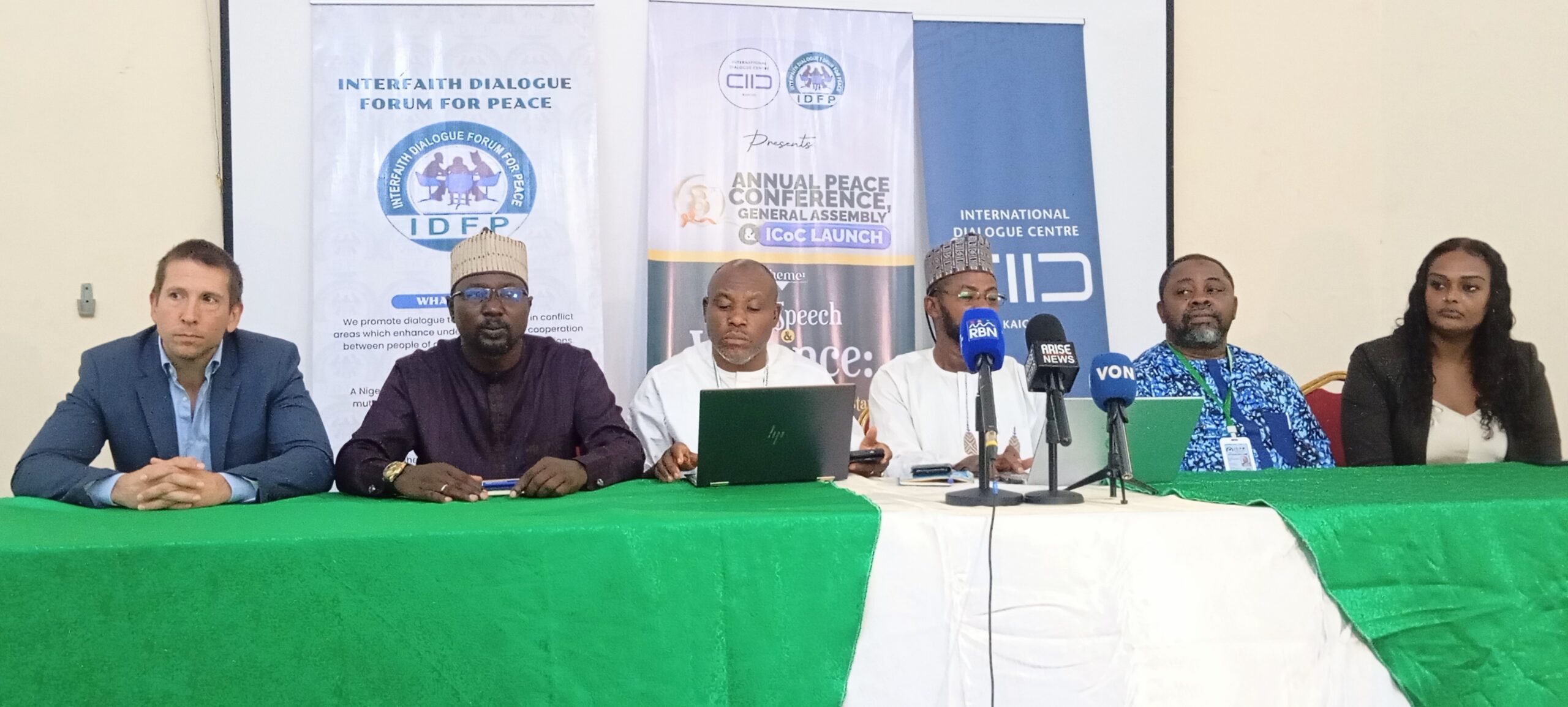
The call was made on Friday in Abuja at a press conference marking the end of the forum’s 8th General Assembly.
The event also witnessed the formal launch of the 32-page Interfaith Code of Conduct (ICoC) Nigeria 2026 as part of the assembly’s activities. Religious leaders, diplomats, government officials, peacebuilding experts, civil society organisations and development partners argued that preventing violence requires more than appeals for tolerance; it demands agreed standards capable of influencing how leaders speak, preach and engage the public.
The framework urges clerics, journalists, community leaders and public institutions to reject inflammatory rhetoric, noting that peace cannot be secured through dialogue alone but by changing the language that often precedes violence.
The ICoC, which aims to curb hate speech, prevent religious and political violence, and strengthen peaceful coexistence, also serves as a practical framework for addressing one of the country’s most persistent drivers of conflict ahead of the 2027 general elections.
The new co-chairmen of the IDFP, Rev. Abainatus Akila Hamman and Ameer Muhammad Jameel Muhammad, who jointly addressed the conference, said religious and community leaders must increasingly become the first line of response whenever tensions emerge within communities.
They urged Christian and Muslim leaders to reject inflammatory rhetoric capable of deepening religious, ethnic or political divisions, arguing that dialogue should become the primary instrument for preventing conflict rather than a response after violence has already occurred.
In a communiqué issued after the conference, the organisers also called on governments, traditional institutions, civil society organisations, development partners and the media to embrace the Code as a shared national framework for strengthening peaceful coexistence and social cohesion.
Participants agreed that hate speech continues to undermine democratic development, weaken public trust and increase the risk of communal violence, particularly during politically sensitive periods.
For that reason, they argued that the Code should be actively integrated into sermons, community dialogues, youth and women’s initiatives, peace education programmes, media engagement and other public communication platforms rather than remain a symbolic declaration.
The organisers further recommended the widespread dissemination of the document across churches, mosques, schools, traditional institutions, media organisations and relevant government agencies, accompanied by continuous training and community-level implementation.
They said responsible journalism would be central to preventing misinformation and narratives capable of fuelling violence in fragile communities.
Speaking on behalf of KAICIID, Acting Secretary-General Ambassador António de Almeida Ribeiro described the launch as an important milestone in the organisation’s long-standing partnership with Nigerian religious leaders.
He said KAICIID had accompanied the Interfaith Dialogue Forum for Peace since its establishment, describing the new Code as evidence that dialogue can produce practical tools for addressing complex national challenges.
«“For us at KAICIID, this moment is deeply meaningful,” Ribeiro said. “This Code speaks to the heart of our shared humanity. It reminds us that every person carries dignity.”»
The assembly, convened by the Interfaith Dialogue Forum for Peace in collaboration with the Christian Association of Nigeria (CAN), the Nigerian Supreme Council for Islamic Affairs (NSCIA) and the Institute for Peace and Conflict Resolution (IPCR), with support from the International Dialogue Centre (KAICIID), was themed: “Hate Speech and Violence: The Role of State and Non-State Actors in Nation Building.”
Unlike previous declarations encouraging peaceful coexistence, the Code establishes a shared values-based framework intended to shape how religious leaders conduct sermons, respond to crises, engage with the media, communicate with followers and relate to people of different faiths.
Beyond religious institutions, the Code also seeks to influence wider public discourse by providing ethical guidance for journalists, civil society organisations, educators, traditional institutions and government agencies whose communication can either calm tensions or inflame them.
The document outlines ten guiding principles for interfaith engagement, including mutual love and respect, protection of the sacred, respect for human dignity, prevention of hate speech and blasphemy, peaceful conflict resolution, justice, integrity and ethical conduct, transparency and accountability, respect for lawful authority, and compassion and empathy.
According to the organisers, these principles are intended to move beyond conference resolutions and become practical standards for everyday religious and civic engagement.The grammar, subject-verb agreement, punctuation, article usage, and a few style issues have been corrected while preserving the meaning and journalistic tone.
Discover more from TheTimes Nigeria
Subscribe to get the latest posts sent to your email.