Former Chief of Staff to the former Governor of Imo State, Ugwumba Uche Nwosu, has called for the revitalisation of the Igbo apprenticeship system, describing it as one of the greatest expressions of Igbo ingenuity that must be modernised to meet the demands of today’s global economy.
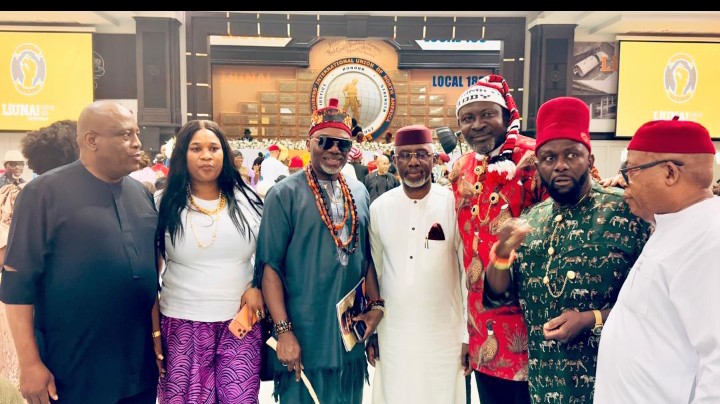
Nwosu made the call while delivering a keynote address titled “Rebuilding the Igbo Apprenticeship System for a New Generation” at the 2026 Igbo National Convention organised by the Igbo Union Canada.
Addressing traditional rulers, community leaders and members of the Igbo diaspora, he said the apprenticeship model, popularly known as Igba Boi, Imu Ahia and Imu Oru, had long embodied principles now celebrated globally as mentorship, startup incubation, practical training, venture funding and business networking.
He said the traditional system was designed not merely to train workers but to prepare future entrepreneurs by exposing apprentices to customer relations, negotiation, inventory management, market dynamics, business ethics and resilience.
According to him, unlike conventional training programmes, the apprenticeship system concluded with the settlement of apprentices through financial support, goods, equipment, business contacts or access to customers, thereby enabling them to establish their own businesses.
Nwosu said researchers have linked the system to the growth of commercial hubs such as Onitsha and credited it with facilitating the transfer of entrepreneurial knowledge across generations.
“The beauty of the system is that a successful master deliberately trains someone who may one day become a competitor. It reflects the Igbo philosophy of Onye aghana nwanne ya—let no one leave his brother or sister behind,” he said.
He recalled that following the Nigerian Civil War, when many Igbo families lost their businesses, properties and economic security, the apprenticeship system became a critical tool for rebuilding livelihoods, transforming thousands of young people into traders, manufacturers, artisans, transporters, importers and employers.
He, however, acknowledged that the system has significant shortcomings, including cases where apprentices were not settled after years of service, reliance on unwritten agreements, exploitation, exclusion of women and inadequate training in technology, financial management and digital marketing.
He said, “A tradition does not survive because we refuse to change it. A tradition survives because we protect its values while improving its methods.”
He advocated reforms that would include written agreements, clearly defined responsibilities, structured training plans, safe working conditions, transparent settlement arrangements, certificates of completion and credible mechanisms for resolving disputes.
He also stressed the need to ensure greater participation of women and girls, arguing that the future of Igbo enterprise cannot be built while excluding half of its talent.
Speaking on the role of the diaspora, he urged successful Igbo professionals abroad to move beyond remittances and invest in mentorship, skills development and enterprise creation.
He said professionals in fields such as technology, healthcare, engineering and business should support aspiring entrepreneurs by providing mentorship, market access, equipment, seed capital and exposure to international markets.
Nwosu proposed what he described as a simple commitment: “One successful Igbo professional, one apprentice, one future enterprise,” saying such an initiative could transform thousands of young people from job seekers into business owners.
He urged members of the Igbo community in Canada to ensure that the proposed Igbo House serves not only as a cultural centre but also as a hub for entrepreneurship, mentorship, skills acquisition, investment networking and leadership development.
He urged successful Igbo professionals to measure their achievements not only by personal success but also by the number of people they empower.
“We must preserve the spirit of our ancestors, correct the weaknesses of the old system, embrace technology, accountability, women’s inclusion, education and global opportunities, and make the Igbo apprenticeship system not just a proud story of our past, but a powerful strategy for our future,” he said.
Discover more from TheTimes Nigeria
Subscribe to get the latest posts sent to your email.