The Resource Centre for Human Rights and Civic Education (CHRICED) has expressed concern over what it described as worsening fiscal indiscipline, weak accountability and shrinking democratic space in Nigeria.
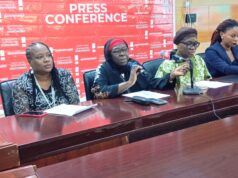
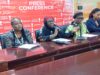
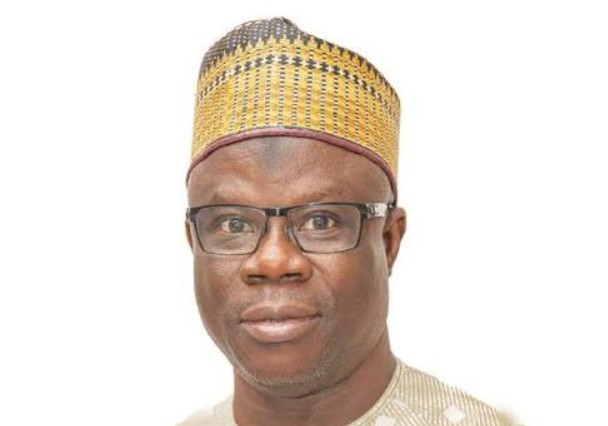
Speaking at a State of the Nation press briefing on Tuesday in Abuja, CHRICED Executive Director, Comrade Ibrahim Zikirullahi, said Nigeria’s democracy was facing serious internal challenges arising from poor governance, economic hardship, institutional failures and what he called the misuse of public resources.
According to him, Nigerians continued to grapple with rising unemployment, insecurity, inflation, and declining public services, while those demanding accountability were increasingly being ignored.
The CHRICED boss also criticised aspects of the 2026 Appropriation Act, alleging that the budget process had become susceptible to questionable insertions that undermine fiscal credibility.
Citing an analysis by BudgIT’s Tracka platform, Zikirullahi said the budget allocated about ₦8.05 billion for the construction and furnishing of churches and mosques through ministries, departments and agencies whose statutory responsibilities do not include such projects.
He noted that the allocations include N6.14 billion for 52 mosque-related projects and N1.91 billion for seven church projects.
He also questioned an allocation of N780 million by the Office of the Deputy Speaker for church musical instruments, arguing that scarce public resources should instead be directed toward addressing poverty, unemployment, healthcare, and education.
“Section 10 of the Constitution is unequivocal that Nigeria shall not adopt any religion as a state religion, yet public funds are being channelled into religious infrastructure through questionable budget insertions,” he said.
The CHRICED Executive Director further questioned other government expenditures, including N500 million reportedly earmarked for an international communications campaign to counter allegations of religious persecution, a reported US$9 million contract awarded to a United States lobbying firm to improve Nigeria’s international image, and N6.44 billion budgeted for FIFA World Cup qualifying activities despite Nigeria’s failure to qualify for the tournament.
On education, Zikirullahi described the budgetary allocations to the National Commission for Almajiri and Out-of-School Children Education as a betrayal of vulnerable children.
He alleged that billions of naira appropriated for the commission had been diverted to road construction, solar streetlights, and empowerment projects in Ogun, Katsina, and Ekiti states rather than programmes directly benefiting out-of-school children.
He said the diversion of funds meant for the education of almajiri children reflected misplaced priorities at a time when millions of children remain outside the school system and insecurity continues to threaten access to education.
He also expressed concern over Nigeria’s rising debt profile, which it said had reached N159.28 trillion despite the removal of fuel subsidy, the introduction of new taxes, and government claims of improved revenue generation.
The CHRICED boss questioned why many ministries, departments and agencies continued to complain about poor budget releases while government borrowing continued to increase.
He also bemoaned the repeated extension of annual budgets beyond their fiscal year, saying the practice weakens legislative oversight and undermines accountability in public finance management.
On constitutional reform, Zikirullahi said it supports genuine amendments to the Constitution but alleged that the ongoing process had become politicised.
While cautioning against rushing the proposed State Police Bill, he argued that fundamental challenges affecting policing, including inadequate funding, poor welfare, political interference, and the proliferation of arms, should first be addressed.
He called for broader public consultation and a national referendum on major constitutional amendments.
Zikirullahi further raised concerns over what he described as the “N1.3 billion Presidential Foreign Intervention Promotion Council scandal”, saying that conflicting accounts by government agencies reflected weak institutional oversight.
He called for the suspension of the President’s Chief of Staff, Femi Gbajabiamila, to allow what he described as an independent and transparent investigation by anti-corruption agencies.
He also sought clarification over the circumstances surrounding the release of pupils abducted from Oriire, Oyo State, noting that testimony by one of the victims allegedly contradicted the official account of the rescue.
He urged security agencies to investigate reports concerning ransom payments linked to the abduction.
The CHRICED helmsman also called for an independent investigation into the death of 26-year-old nurse Mary Habila at the country home of the Minister of Works, David Umahi.
According to him, public confidence in the investigation would be strengthened if the minister stepped aside pending its conclusion.
The organisation further expressed concern over what it described as increasing attacks on opposition political parties, alleging incidents of intimidation, disruption of political meetings, arbitrary arrests, denial of access to public venues, and the misuse of security agencies against political opponents.
He said, “A democracy without a vibrant opposition is not a democracy. Opposition parties are not enemies of the state; they are essential pillars of democratic accountability.”
He, therefor urged the Independent National Electoral Commission (INEC) and security agencies to remain neutral and professional in the discharge of their responsibilities.
He also urged President Bola Ahmed Tinubu to strengthen fiscal discipline, address rising public debt, and ensure accountability in public spending.
It urged the National Assembly to restore integrity to the budget process, while urging the Budget Office, the Office of the Auditor-General for the Federation, the Independent Corrupt Practices and Other Related Offences Commission (ICPC), and the Economic and Financial Crimes Commission (EFCC) to investigate the allegations of budget irregularities raised during the briefing.
Discover more from TheTimes Nigeria
Subscribe to get the latest posts sent to your email.