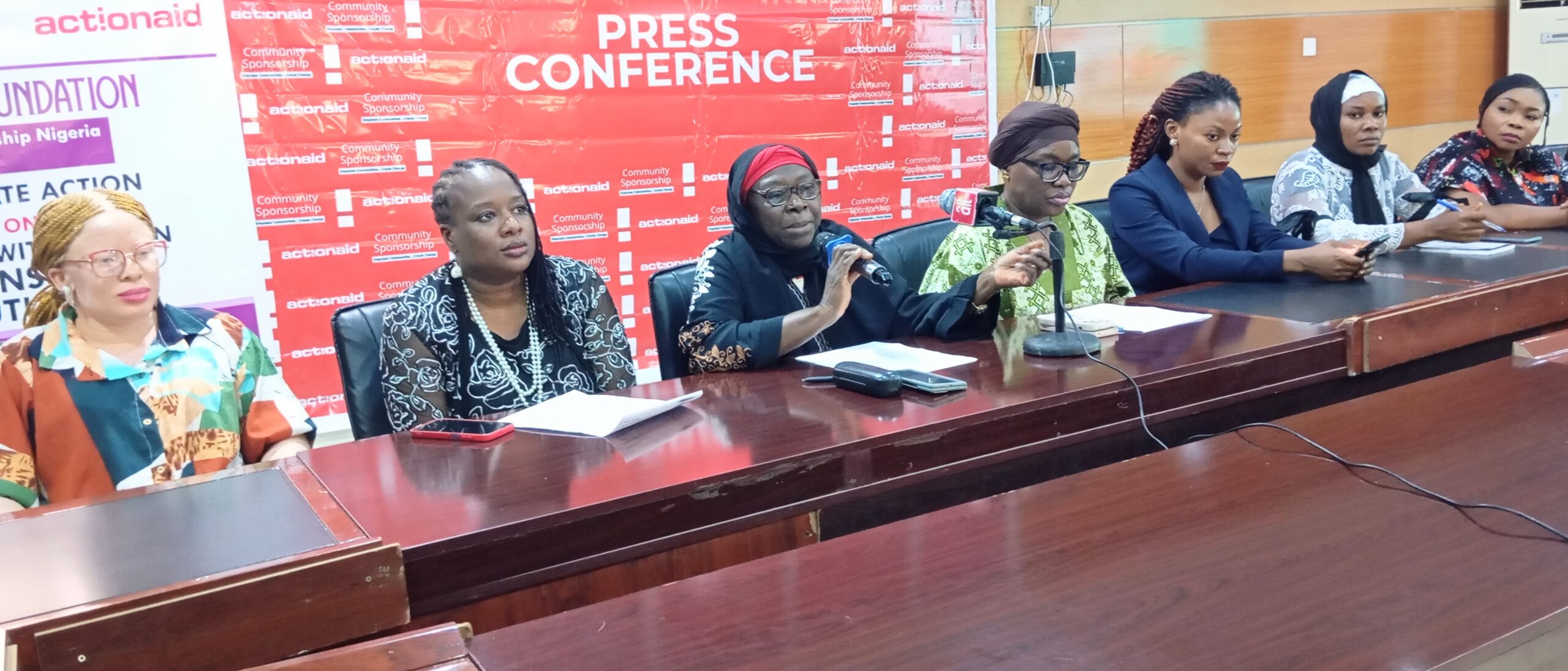
The ActionAid Nigeria (AAN) and the Euphrates Climate Foundation have raised the alarm over Nigeria’s growing debt burden, warning that debt repayments and inadequate climate financing are placing women, girls, children and vulnerable communities at increasing risk.
The organisations at a press conference on Friday in Abuja said the country could struggle to adequately finance critical sectors, including healthcare, education, flood protection, resilient agriculture and renewable energy, as a significant proportion of government revenue is committed to servicing debt.
The Friday’s event follows the release of ActionAid’s international report, Debt Fuels the Climate Crisis: How the Finance Flows.
Country Director of ActionAid Nigeria, Dr. Andrew Mamedu, said climate justice should ultimately be measured by its impact on ordinary people whose livelihoods are increasingly threatened by environmental and economic pressures.
“Climate justice must ultimately be about people, the farmer struggling to grow food, the fisher whose livelihood is disappearing, the girl whose education is threatened and the young person wondering what future they will inherit,” Mamedu represented by Deputy Country Director of ActionAid Nigeria, Hajiya Suweba Muhammad Damiano, said.
According to the report, the world’s most climate-vulnerable countries are spending nearly 25 times more on debt repayments than on climate action, while 93.5 per cent of them are either in debt crisis or at significant risk of debt distress.
The AAN said the global debt and climate crisis had direct consequences for Nigerians, particularly communities whose livelihoods depend on agriculture, fishing and natural resources.
The report cited the experience of Finegirl, a 59-year-old farmer, mother and grandmother from the Niger Delta, who recalled a time when rivers provided fish, crops grew well and communities had access to clean water.
Today, she reportedly said, oil pollution had contaminated rivers, damaged farming and fishing activities and degraded the environment on which families depend.
ActionAid Nigeria said the experience illustrated the human cost of climate change and environmental degradation, noting that when the environment is damaged and extreme weather intensifies, livelihoods disappear, food becomes more expensive and families are pushed deeper into poverty.
The organisation said Nigeria’s situation was particularly concerning, projecting that the country’s debt repayments would consume more than half of government revenue in 2026.
It further noted that despite Nigeria being Africa’s largest fossil-fuel producer, nearly 40 per cent of the population still lacked access to electricity.
AAN therefore questioned how Nigeria could adequately finance flood protection, resilient agriculture, healthcare, education, renewable energy and support for communities affected by climate disasters when a substantial share of public resources was committed to debt repayment.
The report also highlighted the gender dimension of the crisis, describing women and girls as often becoming the “shock absorbers” of climate disasters and cuts to public services.
According to the organisation, women may be forced to travel longer distances to obtain water, eat less when food becomes scarce and take on additional unpaid care work, while girls face an increased risk of dropping out of school when household incomes collapse.
It added that children and young people were also inheriting the consequences of present-day decisions through weakened education and health systems, fewer economic opportunities and greater exposure to climate shocks.
At the global level, ActionAid Nigeria said the imbalance in climate financing was even more striking, with the Global South reportedly paying about 225 times more in debt repayments than it receives in grant-based climate finance.
The organisation said a significant proportion of climate finance provided to developing countries came in the form of loans, potentially worsening the debt burden of countries already struggling to cope.
ActionAid Nigeria consequently joined the wider ActionAid Federation in calling for the cancellation and restructuring of unsustainable and unjust debt, increased grant-based climate finance, a fairer global debt system and transparent public debt and climate audits involving women, young people and affected communities.
The organisation also outlined six demands to the Nigerian Government.
It called for increased public financing for climate action, including greater domestic investment in climate adaptation and resilience, sustainable agriculture, renewable energy, flood prevention and locally led solutions to protect vulnerable communities.
It urged the government to take urgent steps to address Nigeria’s debt burden through a sustainable and transparent public debt strategy that would reduce excessive debt pressure and ensure that borrowing and repayment obligations did not undermine development and climate action.
ActionAid Nigeria further demanded that public services and climate action be prioritised over unsustainable debt servicing, stressing that debt repayments must not crowd out investments in healthcare, education, social protection and climate resilience.
It also called for transparent and accountable management of climate finance, with resources publicly tracked and mechanisms put in place to ensure that funds reach communities most affected by climate change, particularly women, young people, children and frontline communities.
The organisation demanded that climate budgets become gender-responsive and disability-inclusive, with major climate programmes demonstrating how resources would address the specific needs of women, persons with disabilities and other vulnerable groups.
It urged the government to invest in women-led green jobs and enterprises, arguing that women and young people required skills, technology, finance and market access to participate meaningfully in renewable energy, agroecology, recycling, sustainable agriculture and other green sectors.
The organisations said climate justice must ultimately be about the people whose livelihoods and futures were being threatened.
Discover more from TheTimes Nigeria
Subscribe to get the latest posts sent to your email.