The Economic Community of West African States(ECOWAS ),has warned that the region is facing increasingly complex security challenges that require stronger regional cooperation and collective action.
ECOWAS said violent extremism, terrorism, political tensions, organised crime and humanitarian pressures were becoming increasingly interconnected and crossing national borders.
The Director of Political Affairs of the ECOWAS Commission, Dr Babatunde Tolu Afolabi, stated this at the pre-West African Peace and Security Dialogue 2027 strategy and review meeting in Abuja on Tuesday.
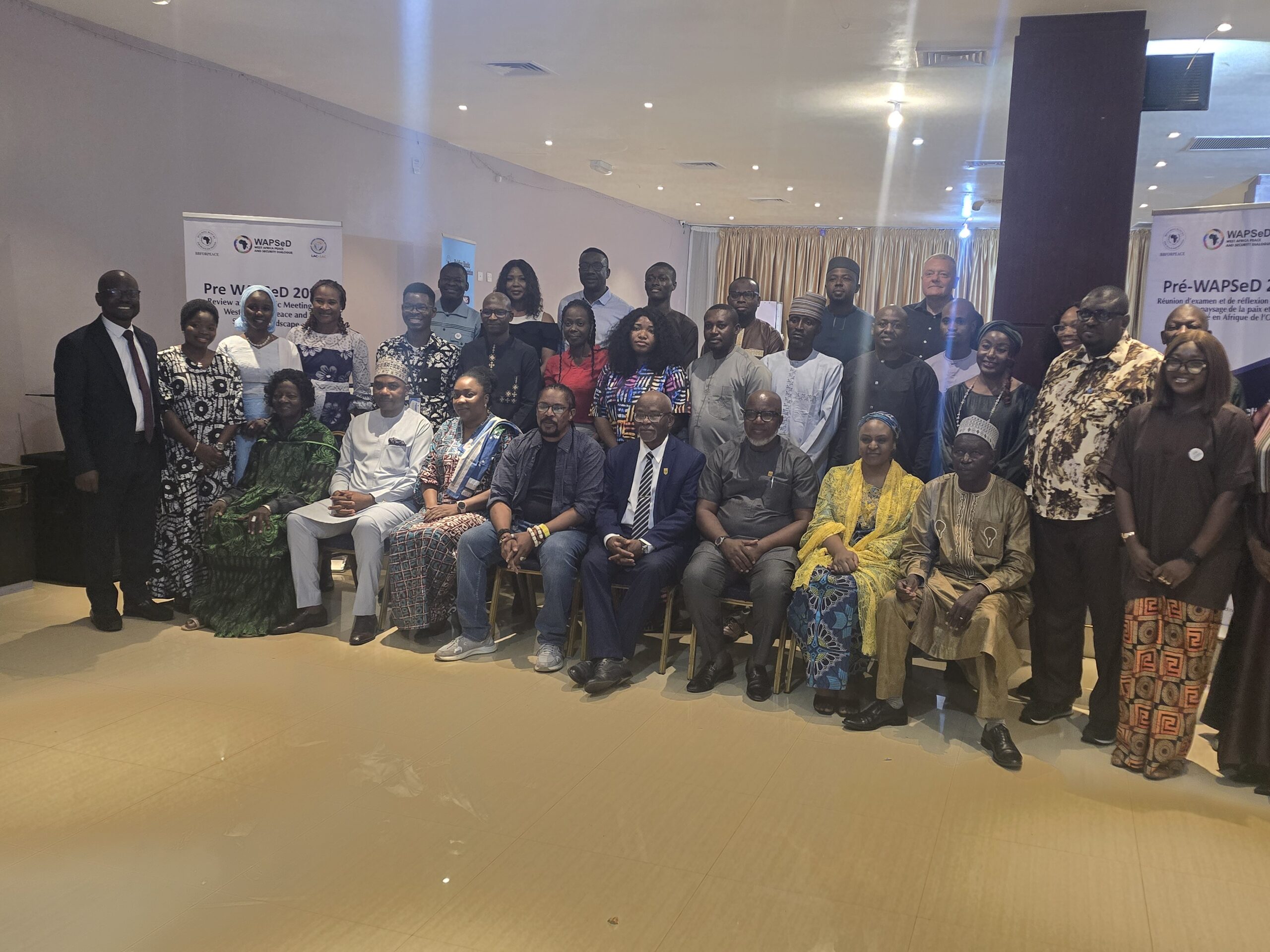
The meeting, organised by Building Blocks For Peace Foundation was themed, “From Dialogue to Action: Reflecting on WAPSeD 2025 Commitments and Setting the Agenda for WAPSeD 2027.”
Afolabi, who was represented by Gnacabja Constant, said sustainable peace could not be achieved by one institution, government or sector alone.
He said ECOWAS remained committed to creating platforms where regional institutions, civil society organisations, development partners and peace practitioners could deliberate on emerging security challenges.
“ If we want to achieve sustainable peace, we need to work on three Ps: people, prevention and partnership,” he said.
According to him, peace and security should not be limited to responding to crises, stressing that prevention must remain central to regional efforts.
“For ECOWAS, peace and security is not only about responding to crisis; it is also about preventing crisis, and ECOWAS has been doing this,” he said.
Afolabi acknowledged concerns about communication by regional institutions, saying ECOWAS was learning from its challenges.
“Although many people told us that we do not communicate, we are learning from our challenges and making sure that we communicate,” he said.
He stressed the need to move beyond dialogue and initiatives to concrete action.
“We also recognise that the existence of initiatives is not enough. We need to act. We need to do a good analysis. We need to come with a good recommendation.
“But how do we process the recommendation for action? I think that is the main essence of us being here,” he said.
He added that ECOWAS would continue working with member states, civil society organisations, development partners and other stakeholders towards a more peaceful and resilient West Africa.
In his keynote address, a professor of International Relations at Obafemi Awolowo University and Board Chair of Building Blocks for Peace Foundation, Charles Ukeje, called for greater participation of women, young people, minorities and marginalised communities in peace and security discussions.
Ukeje said communities directly affected by insecurity must have a voice in decisions concerning their lives.
“If civil society claims to represent communities, then communities must actually have a voice in the processes that affect them,” he said.
“We cannot speak about participation while excluding the people most directly affected by insecurity and poor governance.”
He also urged stakeholders to identify and mobilise local resources and capacities instead of relying exclusively on external actors.
“In an increasingly uncertain global environment, we cannot rely exclusively on external resources and actors,” Ukeje said.
He stressed the need for inclusion, saying the principle of leaving no one behind must remain central to efforts to build sustainable peace and security.
The Executive Director of the Building Blocks for Peace Foundation, Rafiu Lawal, said the security landscape in West Africa was changing rapidly.

Lawal identified disinformation, information manipulation, drug trafficking and illicit economies as emerging challenges affecting public trust, social cohesion and security.
“The geography of insecurity is changing, the nature of insecurity is changing, the actors are also changing, and therefore the tools required to prevent and respond to insecurity must also change,” he said.
He said the situation required local solutions, stronger regional cooperation, inclusive governance and meaningful participation by governments, civil society, international actors and communities.
Lawal said the West African Peace and Security Dialogue was established in 2024 to provide a safe and inclusive platform for stakeholders to examine the region’s evolving peace and security challenges.
He noted that editions held in 2024 and 2025 had brought together policymakers, peacebuilders, civil society organisations, researchers, youths, women and other stakeholders.
According to him, the meetings provided opportunities to analyse regional challenges, exchange experiences, build partnerships and develop practical approaches to conflict prevention and dispute resolution.
The Director-General of the Institute for Peace and Conflict Resolution, Dr Joseph Ochogwu, said represented by his Personal Assistant, Mr Olaniran Olusola, said the theme of the meeting was timely.
Ochogwu commended the Building Blocks for Peace Foundation and other partners for sustaining the initiative.
He said West Africa continued to grapple with economic downturns, poverty, illiteracy, human rights abuses, poor governance, terrorism, violent extremism and transnational organised crime.
“These challenges continue to threaten peace and stability, undermine livelihoods, exacerbate human crises, and impede socioeconomic development across the region,” he said.
He called for the translation of dialogue into practical measures to address violent conflicts, insecurity and criminality.
The Federal Government Peace Research and Impact Agency also said trained peace leaders could help drive dialogue and conflict resolution in their communities.
It noted that government interventions were aimed at promoting peace, stability and development, while acknowledging that persistent security challenges remained across the region.
The Secretary-General of the Society for Peace Studies and Practice, John Tor Tsuwa, said the weakening of indigenous security structures had created gaps that were being exploited by criminal groups.
He said traditional rulers lacked sufficient legal backing to perform security-related functions in many communities.
“We have traditional rulers everywhere, but there is no legal function for them,” Tsuwa said.
He also challenged the description of some communities as “ungoverned spaces”, arguing that some of them had alternative systems of authority.
“What we have seen from our own angle is that those places are not ungoverned. They are governed, only that they are ungoverned by the state apparatus or the security architecture,” he said.
Tsuwa called for deeper research and collaboration among communities, governments and lawmakers to develop concrete strategies for addressing emerging security threats.
He also raised concerns about displaced persons and their growing interaction with host communities, particularly in parts of North-Central Nigeria and areas bordering northern Nigeria.
He warned that the changing pattern of displacement and settlement could create additional security challenges if not properly managed.
In his welcome remarks, the Team Lead of The Tattaaunawa Roundtable Initiative, Dr Prince Charles Dickson, challenged stakeholders to assess the impact of existing peace and security interventions.
“We must be willing to ask whether our interventions are reaching the people who live closest to insecurity,” he said.
Dickson also questioned whether early-warning systems were translating into timely action and whether policies were producing tangible improvements in human security.
He said communities should not merely be invited to endorse solutions already designed elsewhere.
Discover more from TheTimes Nigeria
Subscribe to get the latest posts sent to your email.