The Nigerian Supreme Council for Islamic Affairs(NSCIA ),has rejected claims that Christians or any other religious group are facing genocide in Nigeria, saying insecurity affects Nigerians irrespective of their faith.
The council also called for urgent and comprehensive reforms of the country’s security architecture, including decentralised policing, but stressed that such a system must be guided by professionalism, constitutional safeguards, accountability and respect for fundamental rights.
The position was contained in a communiqué issued after the NSCIA General Assembly held at the Abuja National Mosque on October 1, 2026.
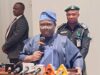
The assembly, chaired by the Sultan of Sokoto and President-General of the council, Alhaji Muhammad Sa’ad Abubakar III, was attended by Islamic scholars, traditional rulers, Chief Imams and representatives of major Islamic organisations from across the country.
On security, the council said Nigeria’s worsening insecurity should not be interpreted through a religious lens.
It said the violence affects Nigerians across religious lines and urged the Federal Government to overhaul the security system.
The NSCIA particularly advocated decentralised policing, provided there was effective coordination between federal and state security institutions.
It also urged the government to take more urgent measures to reduce the cost of food and transportation, citing the hardship confronting ordinary Nigerians.
While acknowledging efforts to revive the economy, the council said more needed to be done to reduce the pressure on citizens.
The assembly also expressed concern over tensions surrounding religious identity, particularly allegations concerning Muslims in the South-East.
It said Islam had existed in Igboland for several decades and across generations, rejecting attempts to portray Muslims as non-indigenous to the region.
According to the council, such narratives could contribute to the suppression of Muslims and create an environment in which attacks against them become normalised.
On religious rights in educational institutions, the NSCIA welcomed the Supreme Court judgment concerning the construction of a mosque for Muslim students at Rivers State University.
It urged the Rivers State Government and the university management to implement the judgment without further delay.
The council also called on government agencies to respect the rights of Muslim female students, female National Youth Service Corps members, female security personnel and other Muslim women to wear the hijab.
It criticised what it described as the “hostile dispositions” of the University of Ibadan, Obafemi Awolowo University and the University of Lagos towards a Supreme Court judgment on hijab use in their international schools.
The NSCIA alleged that the institutions were attempting to redesignate the schools as private institutions, despite their establishment by public universities, and urged them to comply with the law.
The council further warned Muslims against circulating unverified information, saying false claims and accusations could damage the reputation of individuals and leaders.
It also advised Muslim scholars against publicly attacking one another, urging them to resolve disagreements through established internal mechanisms.
On civic participation, the NSCIA urged Muslims to obtain their National Identification Numbers and Permanent Voter Cards and participate actively in elections at all levels.
The council also encouraged Muslim organisations to pursue lawful investments and strengthen the administration of Zakat and Waqf as mechanisms for addressing poverty.
The assembly approved the renewal and expansion of the council’s National Executive Committee.
It appointed Prof. Mahfouz A. Adedimeji as Deputy Secretary-General (National Affairs), Prof. Salisu Shehu as Deputy Secretary-General (International Affairs) and Abeni Obomeileh Mohammed, SAN, as Deputy Secretary-General (Corporate Affairs).
The council also honoured its Secretary-General, Prof. Is-haq O. Oloyede, for his contribution to education and nation-building during his tenure as Registrar of the Joint Admissions and Matriculation Board between August 2016 and July 2026.
The assembly further adopted the 2026 report of the National Hajj Commission of Nigeria and endorsed its recommendations for repositioning the Hajj industry.
Discover more from TheTimes Nigeria
Subscribe to get the latest posts sent to your email.