…Berate manufacturers of targeting children with aggressive marketing, interference in public health policies
A coalition of civil society organisations (CSOs) has accused multinational alcohol companies of deploying aggressive marketing strategies, targeting children and undermining public health regulations in Nigeria, warning that thousands of lives are being lost to alcohol-related diseases and road crashes.
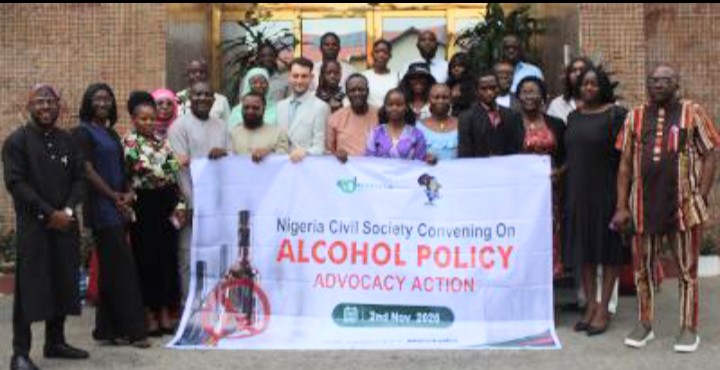
The groups made the demand in a communiqué issued at the end of a one-day Nigeria Civil Society Convening on Alcohol Policy Advocacy Action and media engagement on ‘Responsible Reporting on Alcohol Harm and Policy Responses’, organised by Renevlyn Development Initiative (RDI) and Motivators Crib Africa (MCA) on Monday in Abuja.
The organisations challenged the National Assembly to urgently pass the National Alcohol Control Bill, 2026, warning that further delay could expose millions of Nigerians, particularly children and young people, to preventable health risks.
They accused the alcohol industry of putting profit ahead of human lives through political interference, resistance to regulation, aggressive advertising and the use of corporate social responsibility programmes to influence public policy.
According to the organisations, the industry’s increasing use of digital platforms, lifestyle branding and online content to glamorise alcohol consumption poses a serious threat to Nigerian children and young people.
Citing the World Health Organisation’s Global Status Report on Alcohol and Health, the coalition said alcohol-related deaths in Nigeria included 42,120 cases of liver cirrhosis, 15,365 road accident deaths and 4,687 cancer-related deaths.
The groups said the figures underscored the urgent need for comprehensive legislation to tackle alcohol consumption and its devastating consequences on public health and national development.
The Executive Director of RDI, Philip Jakpor, said civil society must not allow the alcohol industry to sacrifice Nigerian lives in its pursuit of commercial profits.
He called for stronger public advocacy to ensure that the government prioritised the health and safety of citizens over the financial interests of alcohol manufacturers.
Similarly, the Executive Director of MCA, Chijioke Nwokocha, warned that the continued delay in passing the bill threatened the lives of vulnerable Nigerians, particularly young people.
The coalition expressed particular concern over what it described as the alcohol industry’s deliberate targeting of children through cheap alcoholic products and aggressive marketing.
It cited a NAFDAC survey which reportedly indicated that about 50 per cent of Nigerian children as young as nine years were exposed to or engaged in alcohol consumption.
The organisations blamed the situation partly on the availability of cheap sachet and miniature alcoholic drinks, which they said were easily concealed and accessible to children and young people.
They also alleged that alcoholic products packaged in sachets and small PET bottles remained widespread in local communities despite NAFDAC’s ban, accusing unscrupulous producers of continuing to manufacture and distribute them.
The groups faulted the poor coordination among government agencies responsible for enforcing existing alcohol regulations, saying the absence of an overarching national law had weakened the country’s response to alcohol-related harm.
They further warned that the industry’s marketing activities were putting pressure on Nigeria’s largely non-drinking population, citing a figure in the communiqué which indicated that 74 per cent of Nigerians lived free from alcohol consumption.
The coalition urged the 10th National Assembly to pass the National Alcohol Control Bill before the expiration of its tenure, insisting that political activities and the forthcoming electioneering season must not be allowed to frustrate the legislation.
It also called for the Nigeria Alcohol Policy and its Multisectoral Implementation Plan (2026–2030), introduced by the Federal Ministry of Health, to receive statutory backing, with clear enforcement provisions and penalties for violations.
The organisations demanded that the government protect alcohol policy formulation from commercial interference, insisting that public health decisions must be guided by independent scientific evidence rather than the interests of alcohol manufacturers.
They also called for increased public enlightenment, stronger inter-agency collaboration and stricter enforcement of drink-driving regulations, including regular sobriety testing and monitoring at motor parks.
The coalition further urged the government to provide adequate funding for nationwide enforcement of the ban on sachet and miniature alcoholic products and ensure that civil society organisations were involved in policy formulation, public hearings and implementation.
The communiqué was endorsed by 22 organisations, which called on lawmakers to take a decisive stand on public health by passing the bill into law.
The organisations are: Renevlyn Development Initiative (RDI), Motivators Crib Africa (MCA), Initiative for Community Development and Advancement of Social Orientation (ICODASO), Cedars Refuge Foundation, Ominya Initiative for Peace and Community Development (OIPCD), Koyenum Immalah Foundation, Development Initiative for Society Health (DISH) and Renewed Initiative for African Development.
Also included are ShiShen Wellness & Consultancy Limited, Association of Advocates Against Alcohol Harm in Nigeria (ASAAHN), C & A Consult, Abuja; Thrive Communications, Pro CEDECOM-Nigeria, Civil Society on Mental Health and Drug Demand Reduction, and EdifyHER Institute.
Others are Enene Akoyom Foundation, Ihuoma Institute for Human Rights Advocacy, Touch a Child Life Today Initiative, Dr Mohammed Audu Foundation and Rehabilitation Center, Crusade for Greater Nigeria on Poverty Eradication and Social Matters, El-Rakhum Foundation and Women in Extractives.
Discover more from TheTimes Nigeria
Subscribe to get the latest posts sent to your email.