
The ActionAid Nigeria (AAN) has demanded immediate and lasting solutions to the rising technology-facilitated gender-based violence (TF-GBV), revealing that 45% of Nigerian women have experienced cyberstalking and 10.6% have been victims of doxing the online release of private information.
The AAN’s Women’s Rights Programme Manager, Niri Goyit, warned that journalists, activists, politicians and influencers are among the most targeted.
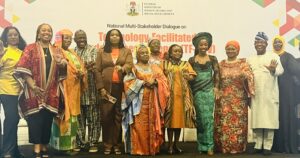
The figures were presented in Abuja at a National Multi-Stakeholder Dialogue on Technology-Facilitated Gender-Based Violence (TF-GBV).
It was organised by UN Women, the Federal Ministry of Women Affairs, ActionAid Nigeria, CARE International Nigeria, Plan International Nigeria GIZ, TETRATECH SPRING and other partners under the aegis of the Development Partners Group on Gender (DPGG), as part of the 2025 16 Days of Activism campaign.
Held as a flagship event of the 2025 16 Days of Activism against Gender-Based Violence, the dialogue brought together a broad coalition of government institutions, development partners, technology companies, law enforcement agencies, civil society organisations, digital rights groups, and survivor advocates to address the rapidly growing threat of violence against women and girls in online and digital spaces.
 Technology-facilitated GBV ranging from cyber-harassment, non-consensual image sharing, online stalking, digital blackmail, hate speech, and exploitation—continues to escalate in Nigeria, yet reporting pathways remain unclear, institutional mandates overlapping, and coordination across sectors insufficient to match the complexity of digital harms.
Goyit in her technical presentation: an overview of TF-GBV trends in Nigeria, listed patriarchal norms, low digital literacy, weak enforcement of online harassment laws, platform moderation gaps, and rapid spread of smartphones/apps as some of the drivers of T-FGBV in the country.
She said, “In Nigeria, 45% of women have experienced cyberstalking, especially women in public roles, and 10.6% have faced doxing. Nigeria’s internet adoption has grown faster than the safeguards needed to protect users. Survivors as young as fourteen now seek help. Women in public life face coordinated attacks and gendered misinformation.”
She noted that local data shows that many women have experienced cyberstalking or doxing while thousands of sextortion linked accounts were removed by platforms.
“In Nigeria, digital spaces mirror offline gender power structures Women and girls—especially activists, journalists, politicians, and influencers—face high levels of threats, coordinated harassment, image-based abuse, and doxing.
“Women and girls across all ages are affected, but some groups face heightened vulnerability: dolescent girls (12–17) and young women (18–35) due to early, frequent social media use and limited control over privacy. Other vulnerable groups are Women in public roles — journalists, activists, politicians, influencers.”
The aim, according to her is to silence or discredit them.
On the impact of TF-GBV on victims, Goyit said it includes withdraw or self-censor, reducing women’s civic participation and economic opportunities.
She blamed systemic challenges for low implementation of the laws against TF-GBV, saying “Several challenges stand in the way. Laws have not kept pace with digital realities. Many officers do not have the skills to handle digital evidence. Society often dismisses online abuse as jokes. Platforms act slowly and case management systems are weak. These issues combined create major obstacles for survivors.”
Noting the challenges, the ActionAid officer urged for collaboration among all stakeholders.
She said, “No single institution can handle TFGBV alone. Government agencies must provide clear pathways for reporting and investigation. Law enforcement needs support from digital experts. SARCs must connect with cybercrime units. Civil society offers survivor centred approaches while technology companies must improve takedowns and cooperation. When all actors work together survivors are protected more effectively.”
She however said that Nigeria does not need entirely new laws that will take years to pass, as the country can update the laws it already has to match today’s digital realities.
UN Women Acting Deputy Country Representative, Ms. Patience Ekeoba who spoke on behalf of the UN Women Country Representative to Nigeria and ECOWAS, Ms. Beatrice Eyong, noted the importance of collaboration to tackle the scourge.
“TF-GBV is one of the fastest-growing threats to gender equality that demanded a stronger national response,” she said.
Also, the Country Director, ActionAid Nigeria, Mr Andrew Mamedu reiterated the commitment of AAN to ending all forms of GBV including TF-GBV.
He called on all the stakeholders to join in preventing the menace.
Mamedu who was represented by Goyit said, “At ActionAid Nigeria, our commitment to ending all forms of GBV including TF-GBV- remains firm.
“We work in communities to challenge harmful norms, support survivors, strengthen access to justice, engage men and boys, and build the capacity of women-led organisations. We recognise both the opportunities and risks of digital platforms, and we remain committed to ensuring that technology empowers rather than harms women and girls.”
He therefore urged all partners – government, civil society, private sector, media, development partners, and community leaders – to renew their shared commitment to preventing and responding to all forms of GBV.
Special Adviser to the President on Women’s Health, Dr. Adanna Steinaker, representing the Minister of Women Affairs, Mrs. Imaan Sulaiman-Ibrahim said, “As technology evolves, so must our responses. Technology should be a tool for empowerment, not a weapon of abuse. As a nation, we are committed to building systems that protect women and girls in every space – including the digital world. This dialogue moves us closer to a Nigeria where online safety, accountability, and justice are guaranteed for all.
“Technology-facilitated violence is one of the fastest-growing threats to gender equality. On behalf of UN Women, I reaffirm our commitment to working with the Government of Nigeria and all partners to ensure that women and girls can participate in digital spaces without fear.
“This dialogue is a critical step toward a coordinated national response that protects rights, amplifies accountability, and builds a safer future for all.”
Discover more from TheTimes Nigeria
Subscribe to get the latest posts sent to your email.