By Editor
The International Press Institute (IPI) Nigeria has listed the Inspector General of Police (IGP), Olukayode Egbetokun, and two governors in its Book of Infamy.
The institute, however, honoured the Director General of the Department of State Services (DSS), Adeola Oluwatosin Ajayi.
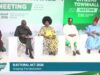
The Book of Infamy was unveiled by Vice President Kashim Shettima on Tuesday at the second Annual Conference and Annual General Meeting (AGM) of IPI Nigeria.
The two governors, who made the list of three persons to first get documented in the Book of Infamy, were Akwa Ibom State, Imo Eno; and his Niger State counterpart, Mohammed Umar Bago.
While Egbetokun was said to have failed to heed the calls by IPI to stop the arbitrary arrests of Journalists nationwide by his operatives, Eno barred the crew of Channels TV from covering the activities of the Akwa Ibom State Government House.
For Bago, he ordered the closure of Badeggi FM, a private radio station over reportage relating to insecurity in the state.
Despite appeals by IPI Nigeria for reconsideration of their decisions which they had no powers to so take, both Bago and Eno refused to back down.
For the DG of the DSS, he was described as a listening head of a sensitive government agency who has listened to interventions by the IPI and corrected wrongdoings pointed out to him.
Top on the list of his quiet achievements was the removal from the government’s watchlist of the Executive Director of the International Press Centre, Lanre Arogundade, after 40 years.
Speaking at the event, the Minister of Information and National Orientation, Mohammed Idris, said an Independent press was central to functioning democracy.
The Minister, who was the Special Guest of Honour at the event, said a sure-footed, critical, and independent press is the central nervous system of a functioning democracy.
“But as we gather today, our first duty must be to a shared foundation of facts. We must ask: does this theme describe our present reality, or does it risk anchoring us to a sad past we are actively working to transcend?”
“If the theme suggests an active, systemic policy of repression by the current administration, then we must, with respect, interrogate it against the available evidence.
“A dialogue on freedom cannot itself be detached from fact. It is in that spirit of candour and shared purpose that I stand before you today, not to reel out a list of government achievements, but to present evidence and engage in a critical dialogue about the path we are walking together towards a more accountable and sustainable democracy.
“Let me state without any ambiguity that the administration of President Bola Ahmed Tinubu operates on the fundamental principle that a sure-footed, critical, and independent press is the central nervous system of a functioning democracy.
“It is significantly the mechanism through which a nation holds a conversation with itself. Our presence here today, under the chairmanship of His Excellency the Vice President, is a deliberate signal of our commitment to that conversation,” he said.
The Minister said security agencies now operate under stricter protocols to respect the rights of journalists in conflict zones and during civil demonstrations.
Idris said the Tinubu administration has continued to guarantee the proper assurances of the enabling environment necessary for licensed media establishments to thrive and give more voices to our people without ambiguity or fear.
In his remarks, the Executive Director, IPI Global, Scott Griffen, commended IPI Nigeria for its commitment to press freedom and independent journalism in Nigeria and beyond.
He called for genuine collaboration among stakeholders in the country in promoting and enhancing independent journalism in Nigeria in the face of daunting challenges.
The IPI Nigeria President, Musikilu Mojeed, said the conference served as a platform for critical reflection on the state of journalism in Nigeria.
He added that the event would enhance practice and safeguard the lives of journalists, as participants were expected to adopt a call to action centred on media reform.
Mojeed urged the Federal Government to call state governments, security agencies and other actors to order, curb incessant harassment of journalists, and strengthen the mechanism for their safety across Nigeria and beyond.
He also called for collective action by journalists to address challenges confronting their interests, noting that “solidarity is the journalists’ greatest line of defence.”
Discover more from TheTimes Nigeria
Subscribe to get the latest posts sent to your email.