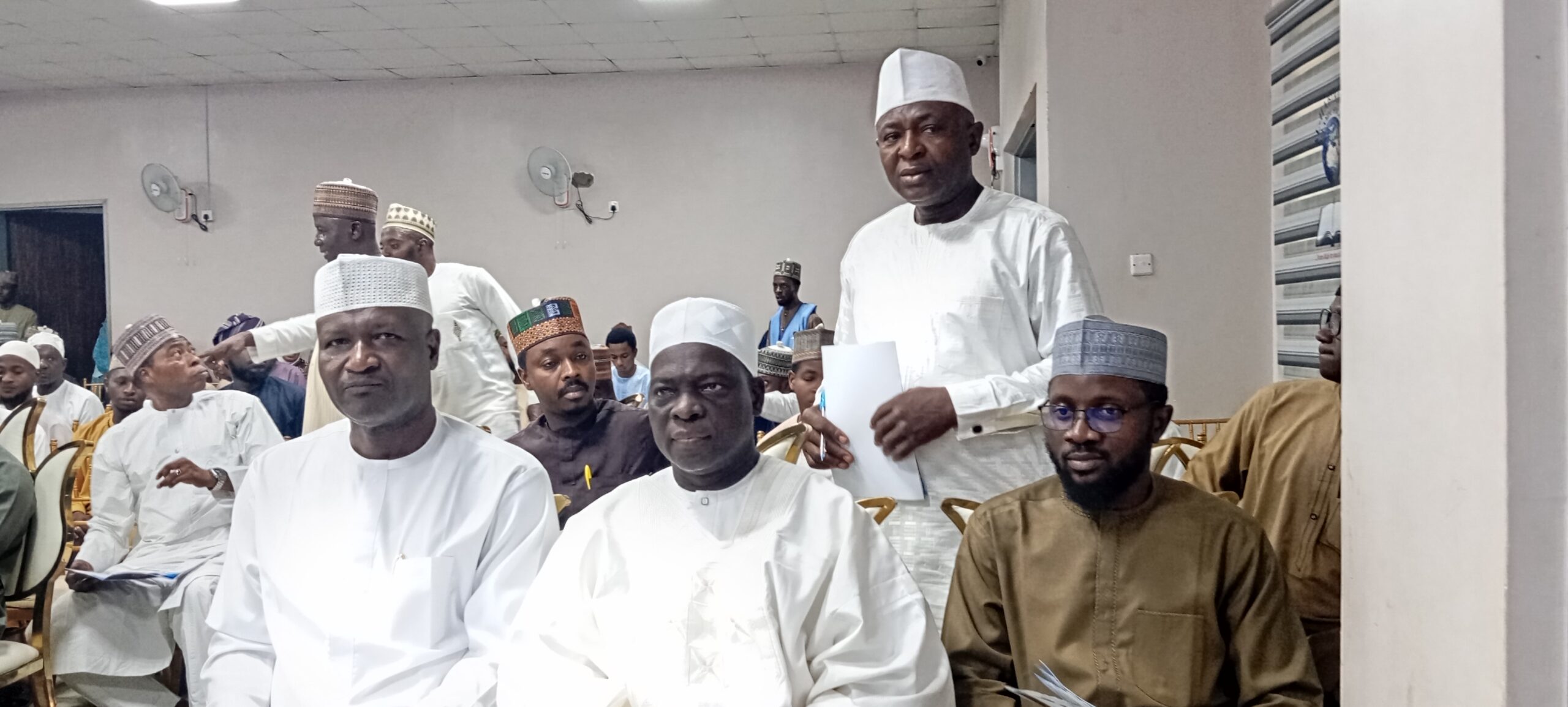
Thousands of beneficiaries including Muslims and Christians have benefitted from the annual zakat disbursement of the Al-Habibiyyah Islamic Society (AIS) in Abuja and environs.
The National Chief Imam of Al-Habibiyyah Islamic Society, Sheik Fuad Adeyemi, said this at the 5th National Zakat and Waqf Day and 15th Public Disbursement of zakat to the needy.
The event held at the Al-Habibiyyah Jumat Mosque, Guzape, Abuja, was with the theme: ‘Zakat, Waqf and the new Tax Regime’.
TheTimes reports that zakat (compulsory charity/alms for the needy) is the last of the five compulsory pillars of Islam, for those that meet the designated threshold in cash and other forms of wealth in a one full lunar calendar year.
According to him, these year’s programme was carefully established to sensitise everyone on the current issues, including the new tax regime; challenges on the payment and disbursement of zakat and the importance of Waqf to tackling the myriads of socio-economic and political challenges confronting the country.
While beneficiaries were numbered in thousands in the last 15 years, millions of naira in cash, endowment, business start-ups and items includes deep freezers, sewing machines, grinding machines, fridges and barbing saloons startup kits among others.
Millions of naira in zakat was disbursed by the organisation in the last five years, including N8.377m in 2022; N15.122 in 2023; N11.884 in 2024; N29.734 in 2025; and N30m in 2026.
“Zakat disbursement not only serves as a means of poverty alleviation and wealth purification but also supplements government efforts and aids in combating insecurity. What we are doing today and discussing is the essence of Zakat and Waqf generally. We are distributing approximately N30 million worth of items and cash to 140 people, and we have at least 10 to 15 Christians among the beneficiaries, as mentioned in the Qur’an. Therefore, non-Muslims are also included.
“This initiative cuts across health, education, empowerment, and entrepreneurship – many areas are involved. We expect people to support this programme so that we can help our country in the best possible way. Incidentally, it is not religiously exclusive; any religion can embrace it, and it will work for everyone. The scope, the people, and the outreach encompass every human being,” Adeyemi said.
According to him, Zakat’s potential to completely eliminate poverty and transform individuals’ lives across the country, is known however, many Muslims have not correctly fulfilled their Zakat obligations over the years.
He said, “In fact, it will supplement government efforts and help in fighting insecurity, in development, and in humanitarian efforts. However, because we don’t fully understand it, the essence of this programme today is to enlighten and educate people on what Zakat and Waqf can achieve so that we can all embrace it.
“When we embrace it, it’s easy, simple, responsive, and everlasting. That is the key difference – it is everlasting when done well. We have Waqf organisations that have existed for more than 500 years, even one for over 1,000 years, and they are still going strong.”
He also said that Al-Habibiyyah sees zakat as an immediate relief with purpose, and waqf as a long-term investment for generations yet unborn.
He said, “Together, they form a powerful framework for social justice and economic stability. They are both wings of a bird without which the bird will not be able to fly.”
He noted that the Al-Habibiyyah Islamic Society was founded 23 years ago with a clear vision to serve Allah through service to humanity.
“Over the years, that vision has matured into an institution driven by structure, accountability and measurable impact. Today, the trust placed on us has translated into concrete support for families, students and skilled but undercapitalised individuals across our communities,” he said.
Imam Adeyemi said this year’s celebration of national zakat and waqf day became truly national, as the Association of Zakat Operators in Nigeria (AZAWON) adopted it as a national celebration by all members.
“In 2025 alone our zakat disbursement of N29.734 million supported 41 cash beneficiaries, provided 21 deep freezers and 31 sewing machines, delivered 36 one-off education support and sustained 44 ongoing scholarships.
“In the last three years, zakat totaling N125.5 million reached 405 direct beneficiaries, while sadaqah mobilisation of N166.5 million impacted over 88,000 people,” he added.
He said that in the Waqf Directorate, two hectares of land had been endowed as waqf, securing long-term benefit, thus reaffirmed the organisation’s commitment to building permanent assets that will continue to serve the ummah beyond yearly disbursements.
He said, “We combine zakat for immediate human need with waqf for sustainable development. This approach ensures continuity, transparency and lasting impact, and it is the reason partners continue to trust and work with Al-Habibiyyah.
“Today, we are officially commencing the raising of one billion Naira Waqf fund. The intention was to make it a yearly affair so as to build sustainable development in a structured way to make it a model for the generality of people and generations to come.”
On his part, the Emir of Hadejia in Jigawa State, Dr. Adamu Abubakar Maje, represented by the Alhaji Usman Abdullahi Abdulaziz, Galadima Hadaija, Jigawa State, commended the Al-Habibiyyah for its continuous public enlightenment on Zakat and Waqf.
He said the efforts as a foundational Islamic social finance instrument for poverty alleviation, infrastructure development, education, health, and housing.
“Education is key in this, and this organisation has the responsibility of enlightening the general Muslim Ummah on the necessity and their obligation to pay Zakat, and the appeal of embarking on Waqf endowments,” he stated.
Speaking on the theme of the event, Mallam Muhammad Lawal Maidoki, the guest speaker and Deputy Secretary General, World Zakat and Waqf Forum (WZWF) for West Africa, said that Zakat is one of the pillars of Islam, reducing poverty and crime, and fostering peace.
Mallam Maidoki, represented by Dr. Balarabe Kakale, the Special Adviser to the Minister of Education on almajiri and out of school children, said, “Zakat is the third pillar of Islam. It is a mandatory charge on wealthy Muslims who have reached the ‘Nisab,’ which is the threshold.
“We believe that with Zakat and Waqf, if properly harnessed and operationalised in this country, it will contribute significantly to the GDP, create jobs, and solve the problem of youth unemployment.”
Also, at the event which witnessed a panel discussion, Hon. Dele Kelvin Oye, Chairman, Alliance for Economic Research and Ethics, in his paper titled: ‘Faith and the Fiscus: Synergizing Zakat and Waqf under Nigeria’s Tax Act 2025’, noted that the passage of the Nigeria Tax Act 2025 signifies a radical change in the country’s fiscal architecture.
He said that it entails shifting from a fragmented, multi-layered tax regime to one that is centralized and digitally integrated.
“While the Act is intended to streamline revenue mobilization, increase tax compliance and enhance administrative efficiency, significant friction is created for faith-based institutions, and particularly those institutions operating in accordance with Islamic finance paradigms,” Oye said.
He called for efforts to streamline the frictions to among others tackle double taxation and regulatory overreach of the new Nigeria Tax law.
He said, “In order for it to recognize Zakat and Waqf as a vital form of the social safety net, as opposed to merely as ‘informal’ or as ‘unregulated’, the state can turn a potential tension into national growth. The synergies of ‘Faith and the Fiscus’ is not merely legal, but moral for a nation that seeks to strive for a just and prosperous society.
“These reforms enable and protect the believer’s spiritual sanctuary while activating the potential of Islamic social finance to enable national development, poverty alleviation, and inclusive growth. Ultimately, the reforms of 2025 should strive to ensure that each Naira – paid as tax to the state or as Zakat to the poor – benefits the common good in an environment of justice, transparency, and mutual respect.”
Discover more from TheTimes Nigeria
Subscribe to get the latest posts sent to your email.