The Health Sector Reform Coalition (HSRC) has called for an increase in budgetary allocation for the health sector to at least 10% of the overall vote in the 2026 budget.
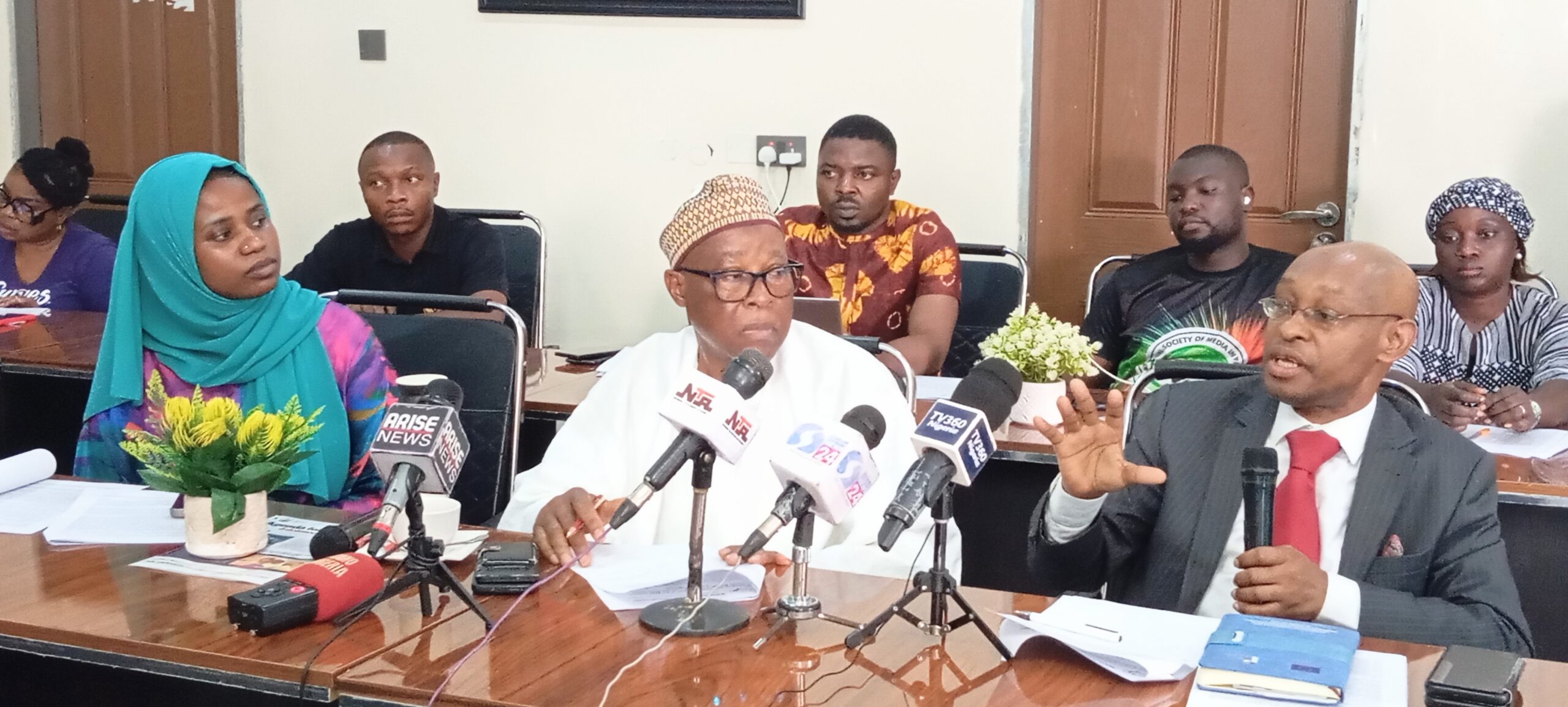
The coalition made the call at a media briefing where it also presented a ‘Memorandum on the 2026 Federal Health Budget Proposals’.
Their demand followed revelations by the Coordinating Minister of Health and Social Welfare, Prof. Ali Pate, that only N36 million out of the N218 billion capital allocation approved for 2025 was released to the ministry.
Speaking at the event, Chairperson of HSRC Nigeria, Dr Muhammad Mustafa Lecky, said the prolonged underfunding and under-release of capital funds witnessed in the 2025 budget sector threatens not only health outcomes but also economic productivity, national health security, and social stability.
“The vote to the Ministry of Health and Social Welfare should be increased to at least 10% of the overall vote. If meeting the 15% benchmark is difficult because of lean resources, the budget should at least target two-thirds of the benchmark,” Lecky said.
According to him, the under-release of capital funds witnessed in the 2025 budget could erode institutional confidence and discourage private sector and donor co-investment.
He said, “Moreover, delayed counterpart funding signals weak fiscal discipline, which may gradually erode Nigeria’s reputation as a reliable partner for global health financing mechanisms.”
He also said that budget appropriation without corresponding cash backing undermines the credibility of Nigeria’s planning frameworks, foretells grave danger for the ongoing Health Sector Strategic Blueprint under the Nigeria Health Sector Renewal Investment Initiative (NHSRII).
He warned that the near-total non-release of funds has stalled hospital upgrades, delayed procurement of equipment, weakened supply chains and crippled digital health investments, leaving frontline workers to operate in increasingly fragile environments.
“Data available from the Budget Office Reports of Implementation shows that only 32.20%, 17.30%, 35.79% and 40.69% of the health capital allocation were utilized for the years 2024, 2023, 2022, and 2021. This is a four-year average of 31.49% implementation of the capital vote. This past year, 2025 is clearly the worst in capital fund releases to the Federal Ministry of Health,’ he said.
He said that the situation threatens the drive toward universal health coverage and undermines the Nigeria Health Sector Renewal Investment Initiative, noting that budget approvals without corresponding cash backing make long-term planning impossible.
He added that under the proposed 2026 federal budget of N58.47 trillion, only about N2.9 trillion, roughly 4.98 percent, has been earmarked for health, far below continental commitments and Nigeria’s own policy benchmark of not less than six percent.
“This leaves a funding gap of about N5.9 trillion when measured against Africa’s health financing commitments. The allocation must cover the Federal Ministry of Health and Social Welfare alongside 148 agencies and institutions under it,” he said.
The coalition also raised concerns over what it described as “opaque bulk capital votes” in the 2026 proposal, warning that poorly detailed projects worth over N32 billion could encourage mismanagement and further delay fund releases.
Dr. Lecky said if ministries cannot predict or rely on capital releases, long-term infrastructure projects, hospital upgrades, digital health systems, supply chains, and workforce expansion-become effectively impossible.
He said, “There is therefore no wonder or surprises that the national health system is underperforming, trying to turn magicians out of our health administrators to deliver. This is an impossible task.
“Capital budgets are designed to build resilient systems, not merely sustain recurrent operations. The near-total collapse of capital releases implies halted construction of PHC facilities, stalled equipment procurement, delayed health technology investments, and incomplete reforms targeting health workforce retention.”
Also speaking, the Lead Director of the Centre for Social Justice (CSJ), Barrister Eze Onyekpere, noted the huge funding opportunities available through the implementation of the National Health Insurance Scheme (NHIS).
According to him, it is unfortunate that the National Health Insurance Authority (NHIA) has not prioritised the sensitisation of people to key into the system.
He urged the government to ring-fence the health sector vote and ensure timely releases to stabilise the sector and prevent collapse.
“If the Health Ministry is not responsible for the funds allotted to health, how will it take blame for the underfunding of the health sector-related projects? Not just the immunisation fund, GAVI and other counterpart funds are warehoused at the service-wide vote and at the discretion of the Presidency.
“We must ensure that these funds are captured in the ministry’s budget to know who to hold responsible when a health programme fails. It is important for the government to make health insurance compulsory for Nigerians and to also prioritise immunisation as a first-line charge,” Onyekpere who is also a member of the HSRC said.
The President Emeritus of the Association for Reproductive and Family Health, Oladapo Ladipo, said Nigeria has consistently failed to prioritise health and education as drivers of development.
He proposed quarterly budget-tracking meetings involving the media and civil society to detect underfunding early and improve accountability.
The Chief Executive Officer of the Afrihealth Optonet Association, Uzodinma Adirieje, described the 0.016 percent release rate of 2025 capital health funds as a ‘disaster’, cautioning that it could compromise vaccine safety and erode donor confidence.
On her part, Programme Delivery Lead of the Africa Health Project Network, Amina Haladu-Muhammad, lamented that N168 billion for immunisation, N6 billion for family planning and N80 million for adolescent health remain unreleased, warning that continued delays could reverse gains in primary healthcare.
The coalition also expressed concern over declining donor support for programmes on immunisation, HIV, tuberculosis and malaria, warning that heavy reliance on external funding exposes the health system to serious shocks.
The coalition further urged President Bola Ahmed Tinubu’s administration to prioritise domestic health financing, institutionalise transparency in budgeting and releases as well as strengthen oversight.
Discover more from TheTimes Nigeria
Subscribe to get the latest posts sent to your email.