The federal government has warned that payments for zonal interventions and constituency projects will be based strictly on satisfactory performance to ensure value for money.
The government also said that a total of 110 zonal interventions and constituency projects across the nation’s six geo-political zones were verified and certified in the third quarter of 2025.
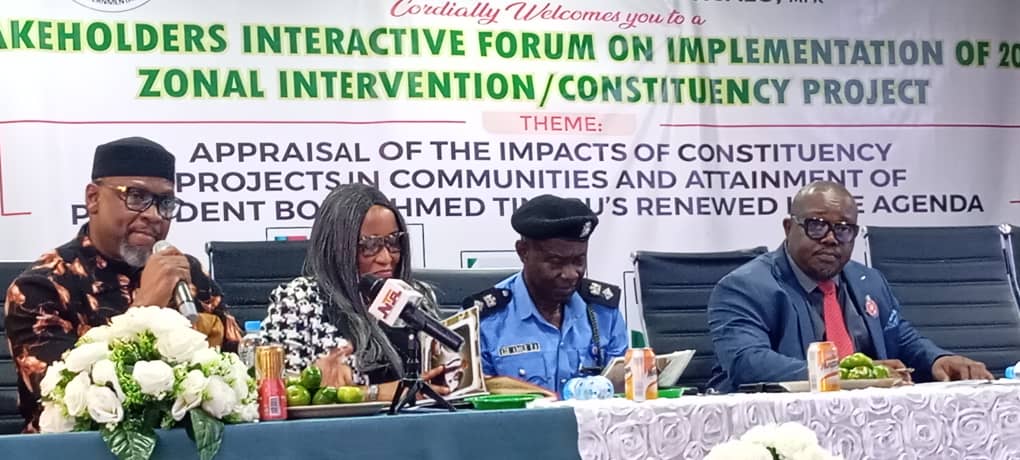
Th e Minister of Special Duties and Intergovernmental Affairs (FMSDIGA), Hon. Zaphaniah Bitrus Jisalo said this yesterday in Abuja during the Stakeholders’ Engagement on the implementation of 2025 zonal Intervention/constituency projects.
The event with the theme, “Appraisal of the Impacts of Constituency Projects in Communities and Attainment of President Bola Ahmed Tinubu’s Renewed Hope Agenda”, was organized by the ministry, Hajiya Hadiza Foundation, Novel Communication Limited and other stakeholders.
The Minister represented by the Permanent Secretary of the ministry, Dr. Onwusoro Maduka Ihemelandu, also warned that there are sanctions for non-compliance with the zonal interventions and constituency projects, including prosecution by the EFCC, ICPC, and other anti-corruption Agencies.
“It is important to draw the attention of MDAs to the provisions of the extant Circulars dated 20th September 2023, which guide the implementation of these projects. There are sanctions for non-compliance, including prosecution by the EFCC, ICPC, and other anti-corruption Agencies. Payments for projects will be based strictly on satisfactory performance to ensure value for money.
“The President’s Renewed Hope Agenda has become a benchmark for assessing the progress, relevance, and impact of Zonal Intervention/Constituency Projects across the country. This stakeholders’ forum is therefore aimed at briefing participants on the critical roles expected of Ministries, Departments and Agencies (MDAs), particularly regarding adherence to the Guidelines for effective monitoring, evaluation, and verification for payment of Zonal Intervention/Constituency Projects nationwide.
“As a ministry, we have verified and certified 110 Zonal Intervention and Constituency Projects across the six Geopolitical Zones as at the 3rd Quarter of 2025 with verification and certifications currently ongoing. These include school renovations, borehole installations, agricultural empowerment initiatives, medical outreach programmes, and street lighting projects. These interventions have directly uplifted communities, stimulated local economies, and
enhanced access to essential services.
“As we all know, project implementation is often challenging due to the ambitious and diverse nature of the projects. Strong capacity on the part of Public Officials and a sense of ownership by beneficiary communities are critical drivers of quality, effectiveness, timeliness, and efficiency in delivering the dividends of democracy to our people.
“A task is not done until it is fully done. In line with Mr. President’s directive, the Ministry will henceforth strengthen its engagement with beneficiary communities to ensure they take full ownership of all Zonal Intervention/Constituency Projects,” Jisalo said.
The minister said that the Executive’s decision to domicile the execution of constituency projects within various MDAs is intended to ensure that relevant competencies are applied and that projects are satisfactorily completed.
He said, “While MDAs are responsible for actual implementation, the Federal Ministry of Special Duties and Inter Governmental Affairs is mandated to monitor, evaluate, verify, and confirm the level of work before authorizing payments.”
Speaking in his capacity as the permanent secretary of the ministry, Dr. Onwusoro Maduka Ihemelandu, said the theme is not only timely, but also strategic as it reflects the collective responsibility “We bear in ensuring that Government-funded projects translate into real, measurable, and sustainable impacts in the lives of citizens across all geopolitical zones while ensuring value for money.”
According to him, while the zonal intervention and constituency projects represent a critical component of Government’s efforts to deliver inclusive development, designed to reach communities at the grassroots, address local needs, create economic opportunities, and strengthen the bond between Citizens and Government, the success of these projects depends greatly on effective collaboration, transparency, community engagement, and timely implementation.
On his part, Mr. Yusuf Ahmadu, the Director, Programmes and Projects, FMSDIGA, said that the event is significant, as it aligns with the national effort to strengthen transparency, accountability, and value for public resources which are core pillars of President Bola Ahmed Tinubu’s Renewed Hope Agenda.
He said that the zonal intervention projects (ZIPs) and constituency projects are development projects and programmes funded from the national budget to address the specific needs of the six geopolitical zones and also designed to ensure equity, balance, and fairness in the distribution of federal resources across Nigeria.
He said, “ZIPs typically focus on infrastructure, social development, skills empowerment, education, health, and other community-based priorities identified at zonal levels.”
Delivering the keynote, ‘An Appraisal of the Impacts of Constituency Projects in Communities
and Attainment of President Bola Tinubu’s Renewed Hope Agenda’, Prof. Abdullahi Saleh Bashir, of the University of Abuja, said that people vote parties in power to form government for progress, to achieve development, while government implement programmes and projects for the interest of the citizenry.
“Constituency projects have numerous positive impacts on Nigerians. Among them are: improved infrastructure, job creation, increased access to services, community development and stakeholder engagement,” Prof. Bashir said.
He said that the ZIPs and constituency projects can contribute to the Renewed Hope Agenda through infrastructure development by building and renovating roads, schools, health centres, and other infrastructure to stimulate economic growth and development; economic empowerment; education and healthcare; and agricultural development among others.
Discover more from TheTimes Nigeria
Subscribe to get the latest posts sent to your email.