The Secretary to the Government of the Federation (SGF), Senator George Akume, has underscored the importance of inter-faith trust in driving national cohesion and development.
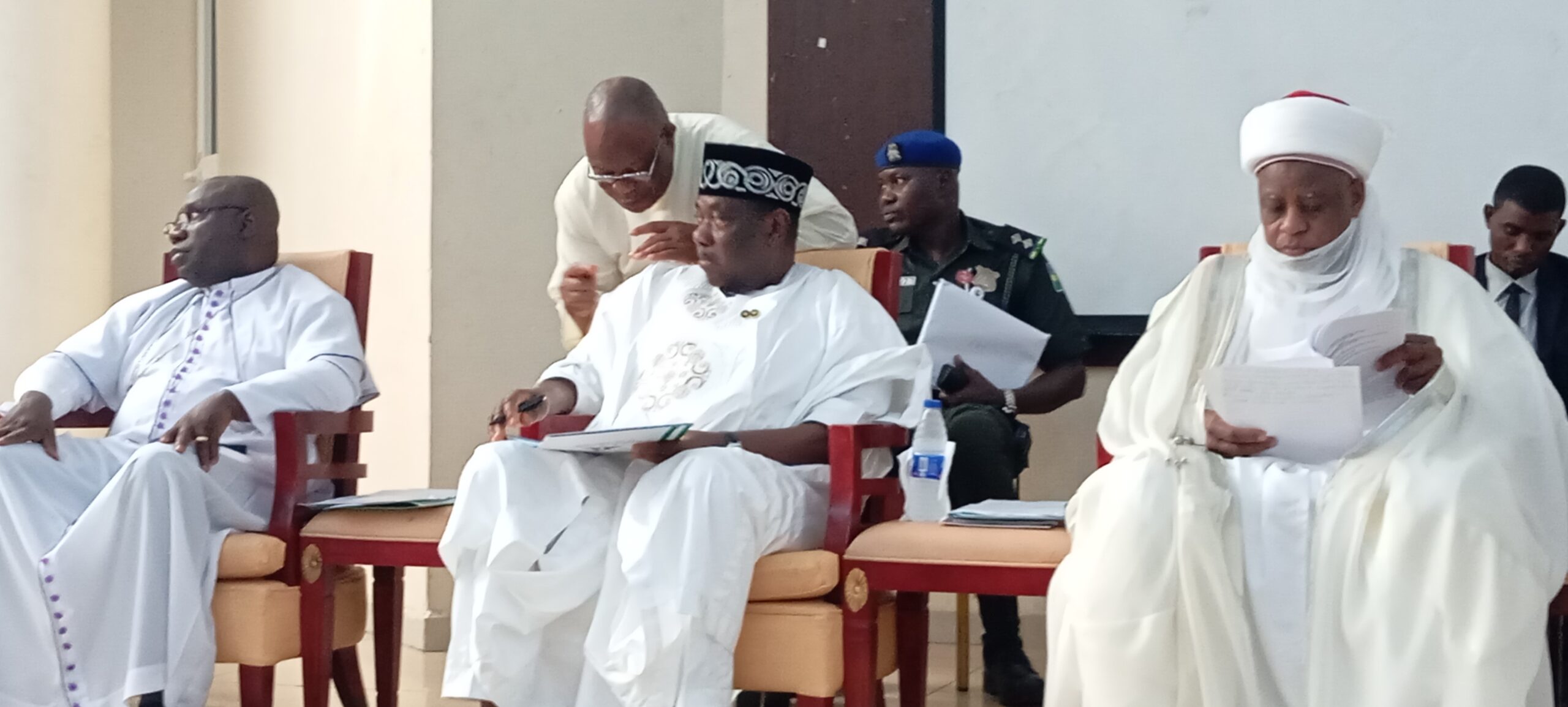
Akume made the call in Abuja on Wednesday at the second triannual meeting of the Nigeria Inter-Religious Council (NIREC).
The meeting was with the theme: “Collaboration of Inter-Religious Councils with Government to Promote Peace in Nigeria”.
Akume said Nigeria is passing through one of its most delicate periods, marked by heightened political rhetoric, internal security strains, and degraded mutual trust that “was almost ebbing into religious conflict” in recent months.
He tasked the NIREC on the implications of the erosion of trust between Nigeria’s major faith groups, saying it poses one of the gravest threats to the country’s unity.
“The recent violent incidents from Yelwata in Benue State to Eruku in Kwara, and attacks across Kebbi, Niger, and Zamfara, have deepened public anxiety, even as government intensifies rescue efforts and arrests of criminal elements responsible,” Akume said.
He reaffirmed President Bola Tinubu’s commitment to delivering on the constitutional mandate of welfare and security for all citizens.
The SGF stressed that while Christian and Muslim communities have both suffered devastating losses from insurgency, banditry, and communal violence, public narratives often wrongly portray the crises as one-sided.
He urged Nigerians to avoid framing violence solely along religious lines, insisting that such narratives deepen suspicion and undermine national cohesion.
He said, “The point is not to engage in a scorecard of pain,” he said, “but to underscore that violence in Nigeria is not monolithic. Both major faith groups bleed when any Nigerian is killed.”
He added that an inter-faith approach to peacebuilding is now “not only ideal but necessary” to restore mutual trust.
The SGF noted that Nigeria’s designation as a “Country of Particular Concern” by the U.S. government further underscored the need for stronger domestic engagement to correct global misperceptions.
The former Benue State Governor noted that while diplomatic steps have yielded progress, much more work must be done in the short and long term.
Akume revealed that President Tinubu has established a new US–Nigeria Joint Working Group on Security, in which NIREC leaders are expected to play significant roles as part of wider non-kinetic approaches to peace.
He said, “Nigeria will be stronger, better, and enjoy lasting peace if we collectively shame the peddlers of hatred and disunity.”
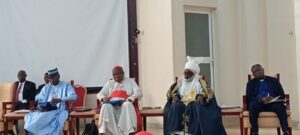 …Sultan seeks dialogue, sincerity
Also speaking at the event, the Co-Chairman of NIREC and President General of the Nigeria Supreme Council for Islamic Affairs (NSCIA), Alhaji Muhammad Sa’ad Abubakar III demanded decisive action against those sponsoring violence and for sincerity on the part of religious and other leaders in the country.
The Sultan emphasised that lasting peace cannot be achieved by force alone.
He warned against hypocrisy, backbiting, and divisiveness while urging religious leaders to foster understanding, neighbourliness, and unity across faiths.
“You can really sit and discuss any issue between you as people, as religious followers. As I said, God doesn’t make mistakes. He created us into tribes and nations so that we could understand one another.
“There are many other things I won’t start quoting from the holy books. But I believe that when we close the session, we should speak honestly and sincerely, without mixing words. We must be very blunt,” Sultan Abubakar said.
…CAN President Okoh demands action against violence sponsors
On his part, Co-Chairman and President of the Christian Association of Nigeria (CAN) Archbishop Daniel Okoh, reinforced the link between peace and justice, calling for accountability for perpetrators of violence.
He urged religious leaders to guide citizens in rejecting violence and misinformation while fostering social harmony and unity across faith lines.
“This meeting comes at a most critical moment in our national history. Nigeria continues to grapple with insecurity that threatens our collective survival and national cohesion. Banditry, kidnapping for ransom, violent extremism, and other forms of criminality have spread across the country-leaving behind sorrow, fear, and displacement.
“The daily loss of innocent lives is alarming and heartbreaking. Families are mourning, communities are being deserted, and citizens are increasingly anxious about their safety-at home, on farms, on highways, and even in places of worship.
“Beyond the human tragedy, insecurity is crippling our economy. Farmers are unable to access their farmlands, traders face rising operational challenges,and investors are discouraged by uncertainty. These realities continue to deepen poverty, hunger, and frustration-conditions that further fuel instability.
“While government bears the constitutional responsibility to protect lives and property, religious leaders carry a sacred moral responsibility to build mutual trust and foster religious harmony within communities. At this juncture, I would like to acknowledge the ongoing efforts of the Federal Government under the leadership of His Excellency, President Bola Ahmed Tinubu, to reduce the level of insecurity in our nation.
“We acknowledge the renewed initiatives to strengthen security architecture in order to combat the activities of terrorists and bandits across the country and we encourage His Excellency to do more.
“Faith institutions remain among the most trusted and far-reaching structures in Nigeria. Our pulpits, mosques, and community networks shape values, guide behaviour, and can either calm tensions or escalate distrust.
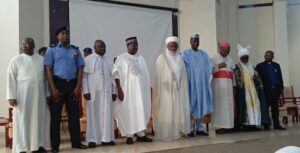 “We, therefore, encourage government at all levels to draw even closer to these organisations, including NIREC, by recognising the unique value they offer in mobilising communities, promoting dialogue, and nurturing social harmony. Working hand-in-hand – sharing insights, coordinating initiatives, and jointly seeking solutions – will produce far greater impact. Such partnership enhances public trust and ensures that peacebuilding strategies are people-centred and inclusive.
“CAN reaffirms its full commitment to support NIREC and collaborate with government in restoring peace and security nationwide. However, peace cannot be sustained without justice. Perpetrators of violence – and those who finance them or encourage them – must be held accountable; victims must be supported and rehabilitated; and communities must be reassured that the rule of law protects every citizen equally.
“As religious leaders, we must intensify prayers alongside action. We must continue to use our influence to encourage citizens to reject violence, resist misinformation, cooperate with lawful authorities, and uphold the enduring values of honesty, compassion, and national unity. Our unity across faith lines is, in itself, a message of hope to a nation weary of fear and division,” Okoh said.
…NIREC boss seeks collective actions
Earlier, Executive Secretary of NIREC, Fr. Prof. Cornelius Omonokhua, noted the Council’s growing global partnerships and stressed the importance of collaboration with government and communities to promote justice, reconciliation, and peace.
“NIREC continues to strengthen interfaith dialogue, now with global partnerships. Since 1999, it has enabled religious leaders to collaborate with government in preventing conflict and rejecting manipulation of religion for violence.
“Our role is to ensure that communities are educated, reconciled, and mobilised to support peace, justice, and national stability,” Omonokhua said.
The immediate past SGF, Mr Boss Gida Mustapha commended the NIREC leadership for managing the America and Nigeria dispute over the Christian genocide claim such that the narrative did not turn Christians and Muslims against each other, which is the main strategy of the terrorists and bandits.
Discover more from TheTimes Nigeria
Subscribe to get the latest posts sent to your email.