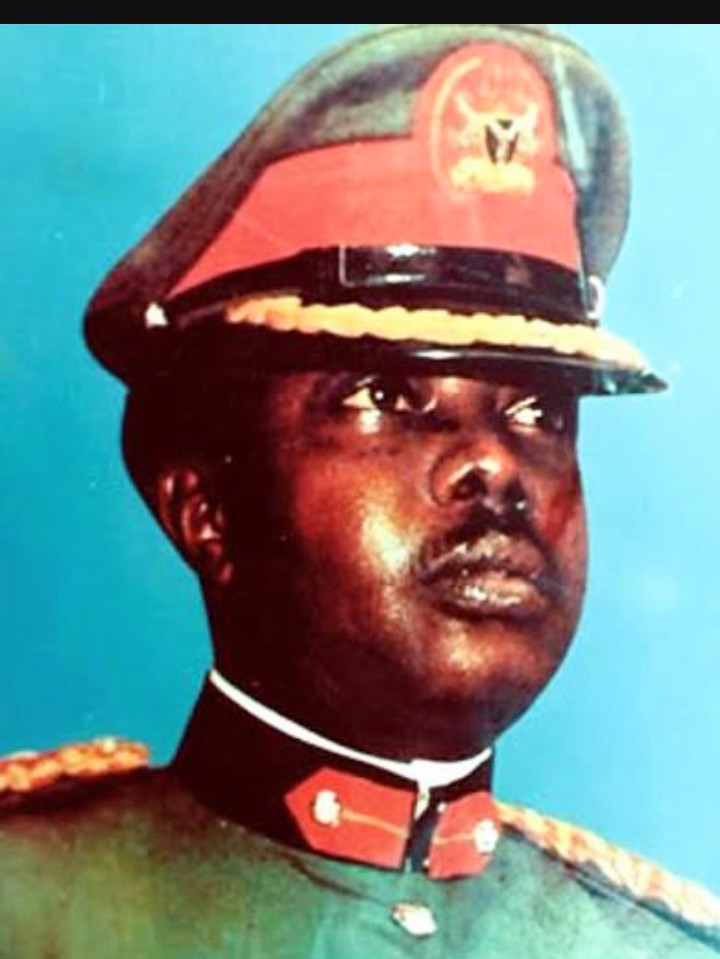
President Bola Tinubu has paid tribute to the late Head of State, General Murtala Muhammed, describing him as a military officer with democratic credentials whose leadership left a lasting mark on Nigeria’s political evolution and Africa’s liberation struggle.
The President spoke on Thursday at the 50th Murtala Mohammed International Lecture and Leadership Conference held in honour of the late leader.
Represented by the Secretary to the Government of the Federation (SGF), Senator George Akume, Tinubu said Muhammed possessed “democratic blood in his veins.”
He praised Muhammed for implementing a transition programme during his brief tenure to return Nigeria to presidential democracy.
This was contained in a statement by the Head of Information and Public Relations Department, Office of the Secretary to the Government of the Federation, Dewan Nengak Goshit on Thursday in Abuja
“He (late Gen. Muhammed) was not just a Nigerian; he was a man who loved his country deeply. He took on corruption headlong and fought it with all the skills and talents given to him by God,” Tinubu said, adding that the anti-corruption initiatives he began remain respected and remembered by Nigerians.
The President also highlighted Muhammed’s commitment to Africa’s emancipation, recalling Nigeria’s frontline role in liberation movements across Angola, Namibia, Mozambique, Zimbabwe, Guinea-Bissau, and in the dismantling of apartheid in South Africa.
Also speaking at the event, the Chairman, Board of Trustees of the Murtala Foundation and former President Olusegun Obasanjo, stated that one of the legacies of the late Head of State was grooming a successor, noting that most leaders fail to prepare those who will succeed them.
He added that Muhammed’s impact on his life groomed him to sustain his legacy of transferring power to presidential democracy in Nigeria.
In his remarks, former Vice President Yemi Osinbajo asserted that the “Africa coming of age,” as championed by Muhammed, is coming to fruition as many African countries move from being importers to exporters through the signing of the African Continental Free Trade Area (AfCFTA).
He added that Africa is also leading in entrepreneurship, innovation and manufacturing of goods and services, saying that with good leadership, the continent will compete with others.
Also, former President of Malawi, Mrs Joyce Banda, described the late General as her hero and a distinguished son of Africa whose entire life centred on selfless service to his people without enriching himself.
She added that his Pan-Africanist ideologies led to the liberation of many African countries.
Also, former President Goodluck Jonathan urged African nations to embrace a generational shift in governance, arguing that the continent needs leaders between the ages of 25 and 50 to effectively confront the demands of modern leadership.
Speaking on the physical and mental demands of public office, Jonathan said governance requires extraordinary stamina, recalling the intense pressure he faced while serving as president.
“Why do we begin to think that you must be a hundred years old before you can rule your country?” he asked.
According to him, younger leaders are better positioned to withstand the pressures associated with national leadership.
“If they need to stay awake for 24 hours, they can stay awake for 24 hours. When I was in office, some days I did not sleep up to two hours. If you subject an older person to that kind of stress, the person will spend 50 per cent of the time in hospital,” Jonathan said.
He stressed that Africa must deliberately create pathways for younger generations to assume positions of authority, describing vibrancy and resilience as critical attributes for effective governance.
He said, “If we are looking for people who can run nations in Africa, we should look within the 25 to 50 age brackets. That is when you can be very vibrant, physically strong and mentally sound.”
General Muhammed seized power, ousting General Yakubu Gowon in a bloodless coup in July 1975.
He was, however, assassinated on February 13, 1976, barely six months after assuming office as Nigeria’s Head of State.
During his brief 200-day tenure, he initiated the process that led to the relocation of Nigeria’s capital from Lagos to Abuja.
His administration also implemented sweeping reforms, including the dismissal of over 10,000 public officials accused of corruption, the creation of seven new states, and plans for a transition to civilian rule.
He was succeeded by Gen Olusegun Obasanjo, who later returned power to democratically elected civilians led by former President Alhaji Shehu Shagari.