Nigeria’s oil wealth, corruption, economic collapse and disputed elections created the conditions that paved the way for the military coup that toppled President Shehu Shagari on December 31, 1983, a new biography has revealed.
The revelations are contained in Chapter 15, titled From Bonanza to Breakdown: The Road to Another Coup, of The Authorised Biography, written by Dr Udu Yakubu and recently launched in Abuja.
The book chronicles how Nigeria’s oil boom, which initially promised prosperity and economic stability, gradually turned into a crisis of mismanagement, reckless spending, mounting debt and political distrust.
Nigeria’s oil production peaked at 2.4 million barrels per day in 1979, while petroleum became the country’s dominant source of government revenue.
By 1976, state profits had risen to a record N5.3bn, reflecting the enormous financial windfall generated by the oil industry.
However, the author said the boom also exposed weaknesses in public spending, economic planning and fiscal discipline.
Between 1976 and 1978, Nigeria’s current account deficit widened from about N340m to N1.1bn, as imports surged and oil earnings struggled to sustain the country’s growing expenditure.
The government subsequently resorted to foreign borrowing, contracting jumbo loans totalling about $1.75bn in 1977 and 1978 to address liquidity challenges and external imbalances.
The book said austerity measures introduced during the period failed to address the structural problems, as the country continued to depend heavily on oil revenues to finance government activities.
The situation worsened in the early 1980s following a global oil glut, declining demand and falling oil receipts, which weakened Nigeria’s foreign reserves and forced the government to reintroduce austerity measures and import restrictions.
Despite dwindling revenues, the author said the political class continued to spend as though the oil boom would never end.
“Contracts became instruments of quick enrichment; they were traded, inflated and defended with political muscle, while tangible work on the ground often lagged or failed to materialise,” the book stated.
It added that the consequences were felt by ordinary Nigerians, with workers going unpaid for months, living standards declining and public institutions struggling to perform basic responsibilities.
The growing frustration also affected the military, whose officers increasingly viewed corruption, weak governance and the deteriorating economy as evidence of the civilian administration’s failure.
The author said the October 1983 general elections, which returned Shagari for a second term, further deepened the crisis, with widespread allegations of rigging, violence, voter intimidation and manipulation of results.
The polls, according to the book, were characterised by ballot-box snatching, electoral fraud and violence, particularly in parts of the South-West, where the unrest evoked the ‘Wild West’ atmosphere.
The disputed elections further weakened public confidence in civilian rule and provided the military with what it could present as justification for intervention.
However, the book noted that the December 1983 coup was not necessarily a predetermined operation before the elections, saying the plotters were initially watching developments before their discussions gradually turned into plans for intervention.
It identified Major-General Ibrahim Babangida, then Director of Army Staff Duties and Plans, and Colonel Aliyu Mohammed Gusau, Director of Military Intelligence, as central figures in the conspiracy.
Other officers involved included Major-Generals Domkat Bali and Mamman Vatsa; Brigadiers Sani Abacha, Ibrahim Bako, Tunde Idiagbon, Mohammed Magoro, Joseph Olayeni Oni and Jeremiah Useni; as well as Lieutenant-Colonels Tunde Ogbeha, David Mark and Joshua Dongoyaro.
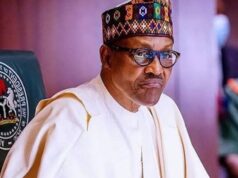
The biography also detailed the relationship between Babangida and Muhammadu Buhari, describing how their friendship developed from their early military careers into a political partnership that eventually brought Buhari to power.
Buhari, who was a course ahead of Babangida at the Nigerian Military Training College, later became close to him through their mutual friend, Shehu Musa Yar’Adua.
Their relationship reportedly deepened during the civil war and subsequent military postings, with the two officers later sharing social ties, family relationships and personal friendships.
Babangida, according to the book, described Buhari as a straightforward, disciplined and honest officer whose reputation made him attractive to the coup plotters.
He reportedly said Buhari was not the mastermind of the December 1983 coup but was chosen by the conspirators because they considered him the most suitable person to lead the country after the overthrow of Shagari.
“One thing we were convinced of in that period was that Buhari was the best person to be there, because he was a very honest person. He was straightforward, and he had a lot of friends outside the military,” Babangida was quoted as saying.
The biography said the officers eventually agreed to make Buhari Head of State if their coup succeeded, although the account of how he was approached and his initial response to the plot continues in the next section of the chapter.
Discover more from TheTimes Nigeria
Subscribe to get the latest posts sent to your email.