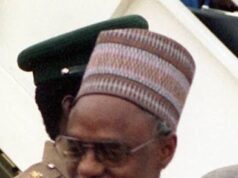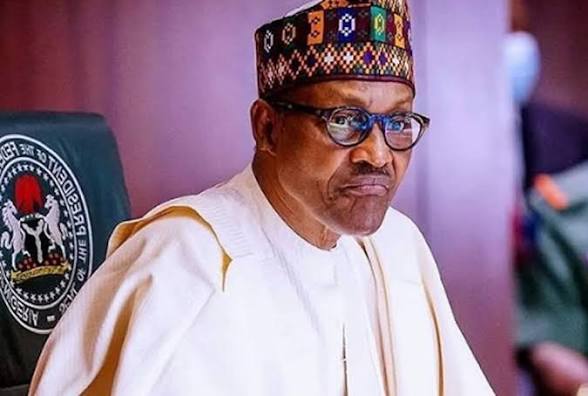
Former President Muhammadu Buhari gave no hint of the December 1983 coup that toppled the civilian government of President Shehu Shagari, even to close associates he met shortly before the takeover, according to his authorised biography.
The revelation is contained in Chapter 14, titled A Coup’s Logic: The Burden of Correction, in Volume One of Buhari: The Authorised Biography, written by Dr Udu Yakubu.
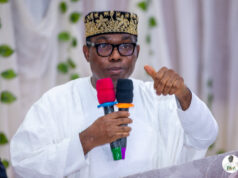
One of Buhari’s associates, Abdullahi Adamu, recalled meeting him in Jos shortly before the coup, when Buhari was still the General Officer Commanding.
Adamu said they had tea at Buhari’s residence after an appointment scheduled for 9pm, but their conversation gave no indication that a military takeover was imminent.
“I had an appointment with him for 9 p.m. After the meeting, we said our goodbyes,” Adamu recalled.
He added, “He didn’t give me the slightest hint of what was about to happen.”
Adamu said he attempted to see Buhari again the following day, as they had agreed, but was told at the gate that the general was not around.
He later heard martial music on the radio while visiting Jibril Ahmed, followed by an announcement that the military had overthrown the government.
By the following morning, Buhari had become Head of State.
“Just over 24 hours earlier, we had been together, and he gave no indication of what was coming,” Adamu said.
The biography described Buhari as a man who rarely disclosed his intentions before acting, even to people he respected, noting that he guarded his thoughts and did not speak loosely.
Buhari flew from Jos to Lagos a day before the coup. His appointment as Head of State was announced shortly after 12.15am on January 1, 1984, following the overthrow of Shagari.
In his inaugural broadcast, Buhari said the military takeover was aimed at rescuing Nigeria from what he described as an impending collapse, citing financial mismanagement, corruption, electoral malpractice, indiscipline and economic crisis.
He declared that the 1979 Constitution had been suspended, except for provisions specifically exempted, while the Armed Forces established a Federal Military Government comprising the Supreme Military Council, Federal Executive Council and National Council of States.
Buhari also condemned corruption, contract inflation, kickbacks, embezzlement, forgery, foreign exchange abuse and smuggling, promising to bring corrupt officials to book.
He acknowledged that the government had yet to establish the country’s full financial position but promised to pay workers who had gone unpaid for about eight months.
The biography said many Nigerians initially welcomed the coup, seeing it as an opportunity to end corruption, indiscipline and political drift.
However, it noted that the military’s promise of discipline came with the prospect of imposing restrictions on public behaviour beyond politicians and government officials, extending to ordinary citizens.
Buhari reportedly admitted shortly after taking office that the challenges facing the government were overwhelming.
“We are now where we are,” he told Mamman Daura, who had returned from London and visited him at Dodan Barracks.
“The problems are so many. I wish we knew what we were getting into,” Buhari reportedly said.
The biography also examined Buhari’s decision to appoint Brigadier Tunde Idiagbon as Chief of Staff, Supreme Headquarters, describing it as one of his most consequential early decisions.
Buhari reportedly insisted on choosing his deputy without interference, citing Idiagbon’s discipline, administrative competence and integrity.
The appointment, however, generated controversy over regional, ethnic and religious considerations, with critics questioning the concentration of power among northern officers.
The composition of the Supreme Military Council also fuelled concerns about regional imbalance, as northerners outnumbered southerners, although military governorships and the Federal Executive Council provided some representation across regional and religious lines.
Despite the criticisms, Buhari reportedly maintained that Idiagbon was dependable, focused and capable of enforcing decisions without compromise.
The biography said the duo worked harmoniously, with Buhari directing policy while Idiagbon coordinated its implementation across government.
Buhari later described Idiagbon as one of the three officers he trusted most, citing his record of leaving offices he occupied stronger than he found them.
Discover more from TheTimes Nigeria
Subscribe to get the latest posts sent to your email.