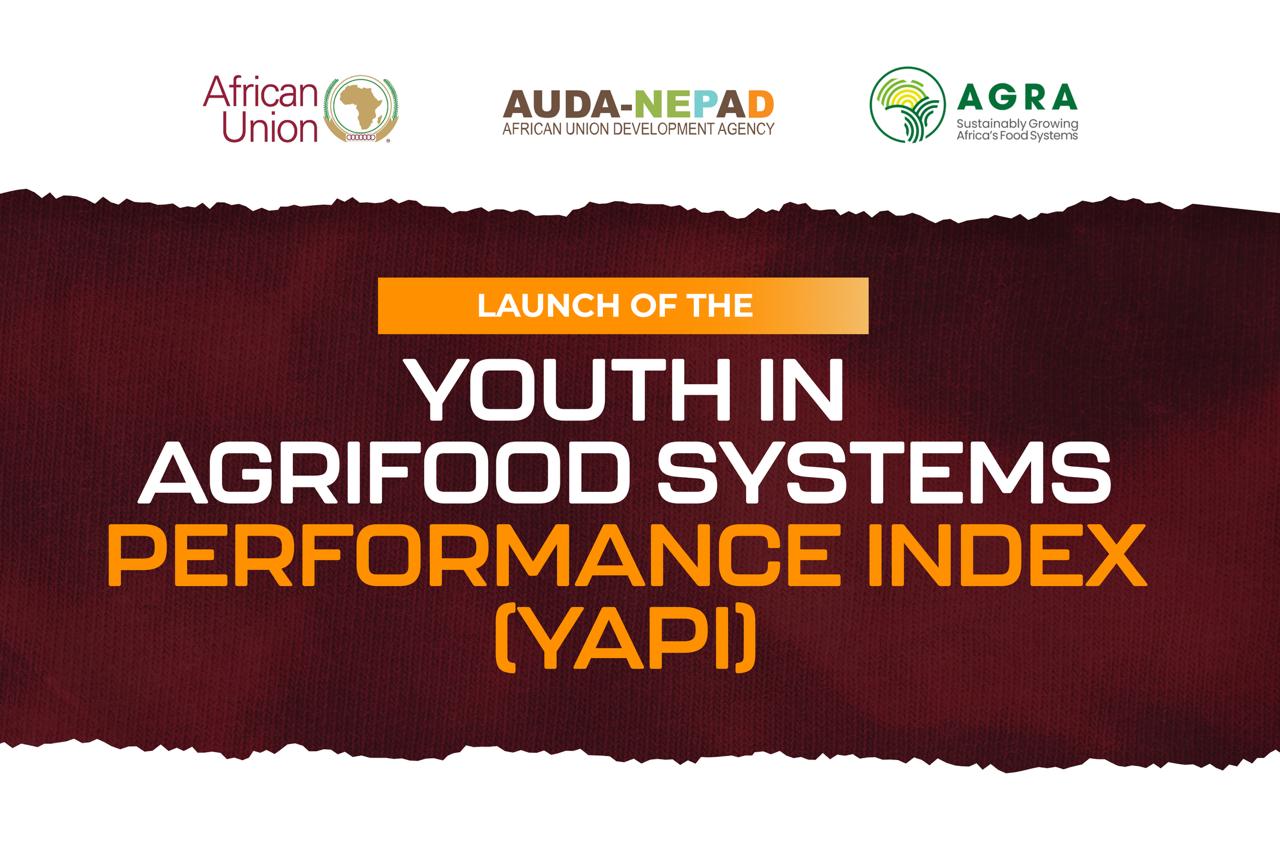
The African Union Commission (AUC), in collaboration with the African Union Development Agency (AUDA-NEPAD), AGRA and the International Food Policy Research Institute (IFPRI), will officially launch the Youth in Agrifood Systems Performance Index (YAPI) on 28 July during the 9th Africa Agriculture Science Week in Abuja, Nigeria.
Africa is home to more than 400 million young people between the ages of 15 and 35, making youth employment and entrepreneurship one of the continent’s greatest development priorities.
While agrifood systems offer enormous potential to drive inclusive economic growth and create decent jobs, progress has historically been measured largely by counting the number of agricultural jobs created. YAPI introduces a broader, systems-based approach that measures whether young people have the skills, resources, opportunities and enabling policy environment needed to succeed across agrifood systems.
Developed under the leadership of the African Union Commission in collaboration with AUDA-NEPAD, YAPI was made possible through the partnership of AGRA and the Mastercard Foundation under the Youth Entrepreneurship for the Future of Food and Agriculture (YEFFA) programme, with technical collaboration from the International Food Policy Research Institute (IFPRI), the University of Ibadan and other continental stakeholders. Together, these partners have supported the establishment of YAPI as an African Union-led instrument to strengthen evidence-based decision-making, accountability and the intentional inclusion of young people in Africa’s agrifood systems.
Fully aligned with the Kampala CAADP Strategy and Action Plan (2026–2035) and the African Agribusiness Youth Strategy, YAPI provides African Union Member States with a practical framework to identify barriers to youth participation, prioritise investments and strengthen accountability for commitments made towards youth empowerment across agrifood systems.
The framework was developed through rigorous research and pilot-tested across 11 African Union Member States representing all five regions of the Continent: Cameroon, Côte d’Ivoire, Egypt, Eswatini, The Gambia, Kenya, Malawi, Morocco, Nigeria, Tunisia and Uganda. The pilot has helped validate the framework while generating valuable insights to inform its continental rollout.
YAPI measures national performance across five interconnected domains: Education, Skills and Technology; Productive Resources and Services; Economic Opportunities; Policy Engagement and Governance; and Sustainability and Resilience to Shocks. Together, these provide governments with a comprehensive picture of the factors that enable young people to participate meaningfully and succeed in agrifood systems.
Beyond measuring performance, YAPI is designed to help governments identify policy gaps, better target public investments, strengthen accountability under the CAADP Biennial Review process and support evidence-based decision-making. It provides a common framework that enables governments, development partners and other stakeholders to align efforts towards creating more inclusive and resilient agrifood systems for Africa’s young people.
The official launch at Africa Agriculture Science Week will bring together policymakers, researchers, development partners, the private sector and youth leaders to discuss the findings of the pilot and chart the next phase of YAPI’s rollout across African Union Member States. As countries adopt the framework, YAPI is expected to strengthen data-driven policymaking and accelerate progress towards Agenda 2063 and the CAADP Kampala Declaration.
About the Partner Organizations The African Union Commission (AUC) serves as the executive arm of the AU, championing sustainable development, peace, and political integration across Africa. The African Union Development Agency (AUDA-NEPAD) is mandated to coordinate and execute priority regional and continental projects to promote integration and economic growth. AGRA is an African-led institution focused on scaling agricultural innovations that help smallholder farmers towards increased incomes, better livelihoods, and improved food security. The International Food Policy Research Institute (IFPRI) provides research-based policy solutions to sustainably reduce poverty and end hunger and malnutrition.
Discover more from TheTimes Nigeria
Subscribe to get the latest posts sent to your email.