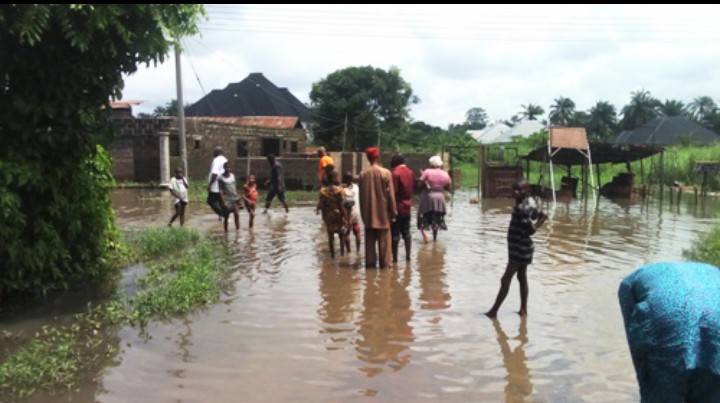
The Egbema Voice of Freedom (EVF), Advocates for Community Alternatives (ACA), and Aggah community activist – Pastor Nicholas Evaristus Ukaonu have filed an appeal against the April 9, 2026 judgment of the Ordinary Court of Milan in the case against Eni S.p.A. and Oando Energy Resources Nigeria Limited (formerly known as NAOC).
The lawsuit challenged the companies’ failure to resolve chronic flooding in the Aggah community in Rivers State, despite commitments made under a 2019 Terms of Settlement (ToS) facilitated by Italy’s Organisation for Economic Co-operation and Development (OECD) National Contact Point.
The people of Aggah are of the Egbema ethnic nationality, whose land can be found in the Ogba/Egbema/Ndoni Local Government Area of Rivers State, Nigeria.
The people of Aggah depend largely on subsistence farming and fishing for their livelihoods and survival.
Addressing journalists and stakeholders during a webinar on Tuesday reviewing the judgment, representatives of the community and civil society organisations (CSOs) lament the court’s decision and their resolve on the judgement that had been filed before the Italian Court of Appeal.
Participants at the webinar also raised concerns about what they described as the limited consideration given to the social and human consequences of the flooding, despite the visible negative impacts.
Some of the speakers in turn suggested that journalists, media organisations and others concern, should visit Aggah community to see firsthand and document the situation through photographs, videos and field reports to provide a clearer picture of conditions on the ground.
Italian energy giant Eni S.p.A. has drilled for oil in and around the town of Aggah which borders and overlaps the Mgbede oil field since the 1960s.
In the early 1970s, a subsidiary of Eni known as Nigerian Agip Oil Company Ltd. (NAOC) created three 40,000 ft2 earthen embankments in three locations on the Mgbede oil field to support wellheads, and built raised access roads to connect them.
These constructions block the natural streams that used to flow through Aggah, and no adequate drainage channel exists.
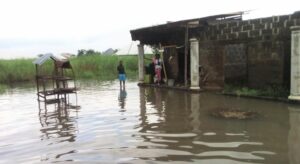
As a result, the streams back up, and extreme flooding covers Aggah’s farmlands and residential areas every year, typically during the rainy season between July and September.
Several people have drowned in the floodwaters over the years. Floods also destroy sewage systems, resulting in vast pollution and harm to the ecosystem.
During the course of this litigation, Eni sold NAOC to Oando, a Nigerian oil company, which changed NAOC’s name to Oando Energy Resources Ltd Nigeria.
A Ruling Disconnected from Reality
While the Milan Court confirmed its jurisdiction to hear cases involving the overseas activities of Italian parent companies, it dismissed the communities’ claims for further remediation and compensation.
The ruling leaves residents of Aggah facing continuing environmental devastation, including recurring floods, destruction of farmland, polluted water sources, and severe health risks.
The case centered on the failure of the defendants to resolve perennial flooding caused by oil infrastructure, despite a 2019 “Terms of Settlement” (ToS) mediated between the parties in Italy.
The Court’s decision rested on several controversial grounds:
Technical Compliance vs. Real-World Results: The Judge ruled that ENI and NAOC fulfilled their contractual obligations simply by constructing 14 drainage channels and conducting feasibility studies. The Court stated that the 2019 agreement did not create a “guarantee” to eliminate flooding, but only an obligation to perform the specific works listed.
Dismissal of Human Impact:
The Court declared the claims for damages inadmissible on “standing” grounds, arguing that the EVF could neither claim on behalf of its membership of almost 1,900affected residents, nor on its own behalf as a mission-driven organization.
Financial Penalty for Justice:
In a move that threatens to stifle future corporate accountability efforts, the Court ordered the claimants to pay over €180,000 in legal costs.
The Evidence Ignored:
Evidence submitted before the Court, including the Final Flood Aggah Community Report, demonstrates that the flooding crisis is directly linked to oil infrastructure in the area.
The report – in addition to internal company documents, a Nigerian civil judgment against Eni’s subsidiary, and the findings of the Rivers State Ministry of Environment – determined that access roads connected to Wells 11, 18, and 20 obstruct the natural flow of water and function effectively as dams, worsening flooding across the community.
By finding that EVF had no right to assert claims for flood damage, the court avoided considering this overwhelming proof.
The court also ignored extensive evidence that the channels NAOC built were not functional and had not been designed to channel water away from the community.
“By focusing on whether infrastructure was built rather than whether it actually solved the flooding, the Court adopted an approach disconnected from the realities faced by the people of Aggah,” Evangelist UBAS, community member, stated.
“A settlement cannot be considered fulfilled when families remain underwater, livelihoods are destroyed, and environmental harm continues unabated.”
Appeal Filed:
The appeal challenges the judgment’s interpretation of corporate responsibility and seeks recognition that environmental remediation efforts must be evaluated based on their effectiveness, not merely on whether technical measures were completed on paper.
The filing also contests the Court’s restrictive interpretation of representation and damages in environmental harm cases affecting entire communities.
As Aggah prepares to face the floods of yet another rainy season with NAOC’s obstructions un-remediated, community representatives maintain that the people of Aggah continue to suffer the consequences of inadequate drainage interventions and remain exposed to recurring floods, unsafe water conditions, and economic displacement.
Continued Commitment to the Aggah Community:
How can the judge ask the oppressed to pay €180,000 to the oppressor, who has taken our oil for more than 50 years and left us flooded for the same number of years and counting? This is a difficult moment for us as a community, but we are not deterred. We have gone to appeal, regardless of the punitive cost to the oppressor,” Pastor Nicholas Evaristus Ukaonu said.
The claimants reaffirm their commitment to pursuing justice for the Aggah community and to advocating for a permanent and effective engineering solution capable of restoring safety, dignity, and sustainable livelihoods for affected residents.
Discover more from TheTimes Nigeria
Subscribe to get the latest posts sent to your email.