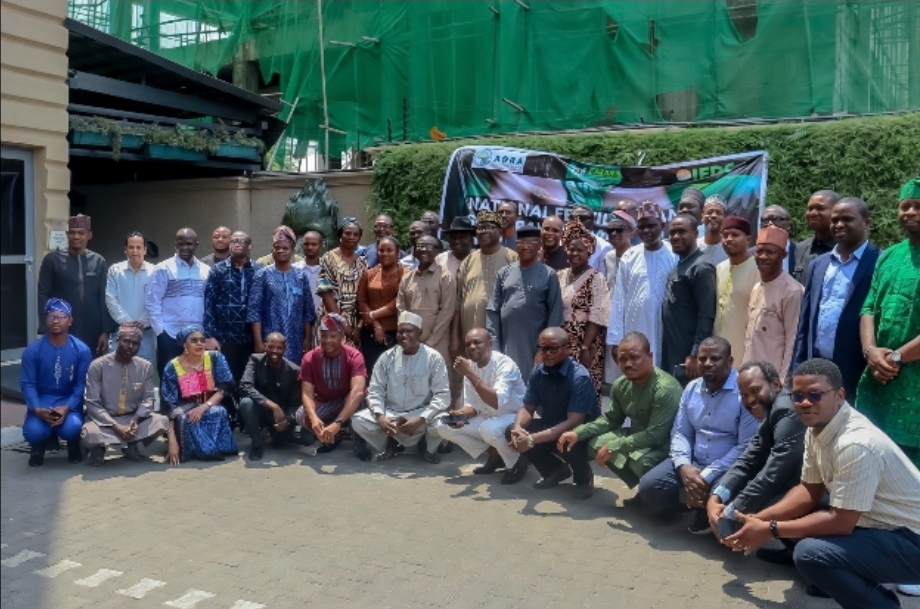
Stakeholders from government, private sector, research institutions and development partners met in Abuja, on Thursday, March 5, 2026, for a high-level workshop on Nigeria’s National Fertilizer and Soil Health Roadmap.
The workshop, co-facilitated by AGRA, the International Fertilizer Development Center (IFDC), and the Farm Inputs Support Services (FISS), aimed to finalise a comprehensive framework that places soil health at the centre of the country’s agricultural transformation agenda.
Godswill Aguiyi, Programme Officer at AGRA, represented the Country Director and delivered both opening and closing remarks. He positioned AGRA as a key partner working to align global best practices with Nigeria’s domestic priorities in restoring the productivity of farmlands across the country.
The session served as a technical validation platform for the National Fertilizer and Soil Health Roadmap — a strategic document designed to move the sector from fragmented input supply to a well-coordinated, efficient soil nutrition ecosystem.
Central to the day’s deliberation was the executive summary of a joint study conducted by AGRA, PILAF and IFDC. Presented to participants, the study provided a clear diagnosis of existing gaps in fertilizer blending, distribution and utilisation, while offering practical, data-driven recommendations to boost yields for smallholder farmers.
By integrating feedback from manufacturers and private sector actors, the roadmap seeks to create a more responsive market that prioritizes product quality and environmental stewardship.
Strategically, the deliberations focused on three systemic levers: optimizing internal blending capacity, streamlining distribution networks to reach the last mile, and ensuring the efficient use of products at the farm level.
These pillars are intended to reduce the volatility of the fertilizer market by maximizing localized production and minimizing the logistical overhead that often inflates costs for rural producers.
The roadmap emphasizes that soil health is not merely a technical concern but a prerequisite for economic resilience, as healthy soil directly correlates with higher nutrient density and greater climate adaptability for Nigerian crops.
A critical component of the day’s strategic focus involved a comprehensive review of cost-cutting activities and efficiency protocols.
This financial vetting ensures that the roadmap is not only technically sound but also economically sustainable in a competitive global market.
The workshop underscored a key message: soil health is not just a technical or environmental issue — it is fundamental to Nigeria’s food security, economic resilience, and climate adaptation.
By addressing blending, distribution and utilisation holistically, the roadmap seeks to reduce costs, improve access, and ensure that farmers receive the right fertiliser blends at the right time and at affordable prices.
As the session ended, participants left with a shared understanding that the country has moved from conceptual planning to the operational phase of what could become one of the most important agricultural reforms in recent years.
With continued support from AGRA and other partners, alongside strong local ownership, Nigeria now has a genuine opportunity to reverse decades of soil degradation and build a more productive, sustainable and self-sufficient agricultural sector.
Discover more from TheTimes Nigeria
Subscribe to get the latest posts sent to your email.