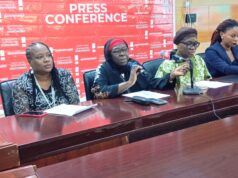
Enugu, Nigeria — Efforts to strengthen human rights monitoring and improve access to justice in Southeast Nigeria received a major boost with the launch of the Southeast Human Rights Bureau (SEHRB) and a technology-driven reporting platform designed to improve the documentation and verification of human rights violations.
The initiative, spearheaded by the Rule of Law and Accountability Advocacy Centre (RULAAC) in collaboration with the Nigerian Bar Association (NBA), civil society organisations, and development partners, was unveiled during a two-day regional programme held in Enugu from 23 to 24 July 2026.
The event was supported by the Ford Foundation and attracted a broad cross-section of stakeholders, including legal practitioners, government officials, academics, journalists, human rights advocates, and community leaders from across the Southeast.
A major highlight of the programme was the introduction of an innovative online reporting system that enables trained human rights defenders to securely document alleged abuses, upload digital evidence, and manage cases using internationally recognised documentation standards.
The platform, available at https://plearp.rulaac.org, was designed by Dr. Gabriel O. Akinremi, an Information Technology specialist and Open-Source Intelligence (OSINT) expert. During its public demonstration, he explained how digital technology can strengthen human rights work by improving the accuracy, security, and accessibility of evidence collected from victims, witnesses, and investigators.
According to Dr. Akinremi, the system provides a structured approach to documenting incidents, preserving photographs, videos, audio recordings, and other supporting materials while ensuring that critical digital evidence is protected for future investigations, advocacy campaigns, and legal proceedings.
He noted that reliable documentation remains one of the greatest challenges facing many human rights organisations, particularly where incidents occur in remote communities or evidence risks being lost or manipulated before investigations begin.
Beyond capturing individual cases, the platform incorporates features that allow organisations to monitor trends, analyse emerging patterns of abuse, and generate data that can support policy reforms, strategic litigation, and early warning mechanisms.
Participants at the launch described the platform as a practical response to the growing need for credible, technology-enabled human rights monitoring systems capable of supporting accountability and strengthening public confidence in justice processes.
The event also featured a specialised training on Open-Source Investigation and Digital Documentation facilitated by Dr. Akinremi. Human rights defenders from the five Southeast states received practical instruction on ethical evidence collection, digital verification techniques, metadata preservation, reverse image searches, geolocation, and secure information management.
The training encouraged participants to adopt professional documentation practices that meet international standards while protecting the rights, privacy, and safety of victims and witnesses.
Speaking at the event, Executive Director of RULAAC, Mr. Okechukwu Nwanguma, said the establishment of the Southeast Human Rights Bureau fulfils a key recommendation adopted during the 2025 Southeast Stakeholders’ Summit on Peace and Security and Public Hearing on Human Rights Violations.
He explained that the Bureau is intended to serve as a permanent regional institution that coordinates human rights monitoring, promotes evidence-based advocacy, facilitates strategic litigation, and strengthens collaboration among civil society organisations, public institutions, and development partners.
Several speakers, including representatives of the National Human Rights Commission, Amnesty International Nigeria, PRAWA, the Nigerian Correctional Service, and the Ford Foundation, welcomed the initiative, describing it as a timely intervention that combines technology, collaboration, and capacity building to improve human rights protection across the region.
Observers at the programme noted that the combination of a regional coordination mechanism and a modern digital reporting platform represent an important step towards improving transparency, preserving credible evidence, and supporting victims seeking justice.
They expressed optimism that the initiative will contribute to more effective responses to human rights violations while promoting accountability, institutional reform, and the rule of law throughout Southeast Nigeria.
Discover more from TheTimes Nigeria
Subscribe to get the latest posts sent to your email.