A nationwide survey of 693 civil society organisations (CSOs) in Nigeria has found that eight out of every 10 organisations operate without a written fundraising plan (86 per cent, approximately 596 organisations), while more than three-quarters have not conducted any formal evaluation of their programmes in the last two years (76.3 per cent, about 529 organisations).
These findings are contained in a new report titled Trapped in Fragility: An Assessment of
Civil Society Landscape in Nigeria, commissioned by the Nigeria Node of the West Africa
Civil Society Institute (WACSI) and led by the Nigeria Network of NGOs (NNNGO).
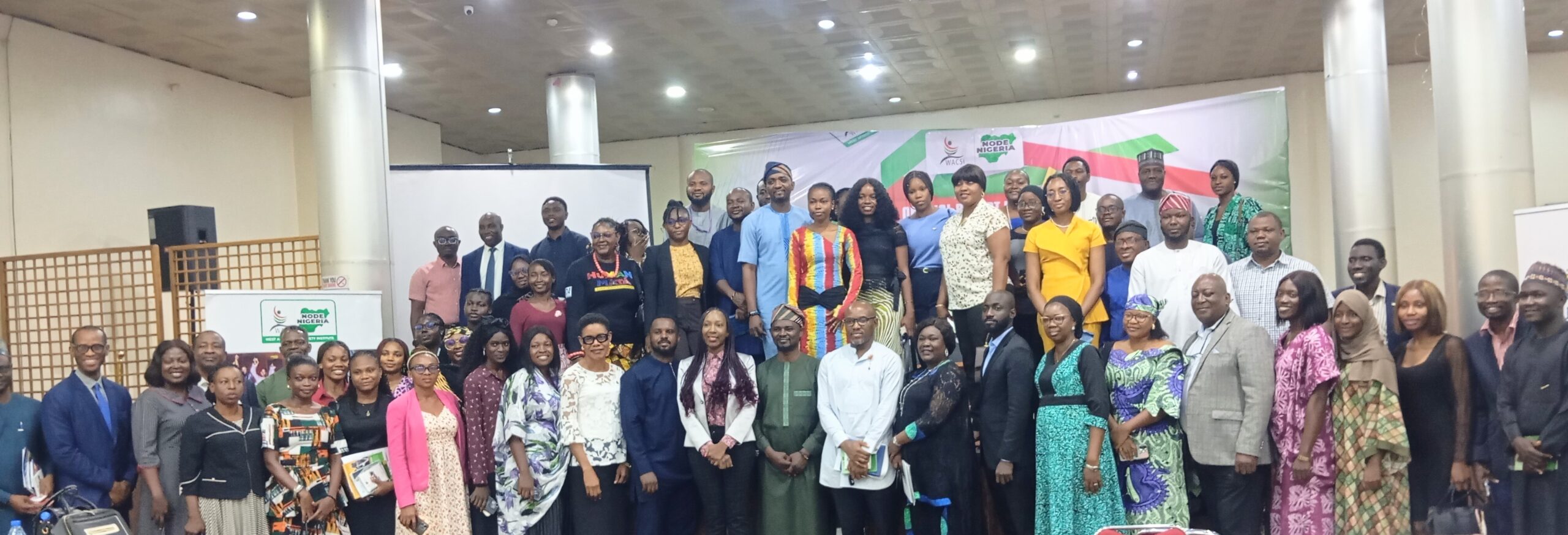
The report launched at a hybrid event in Abuja on Thursday draws on survey responses from 693 validated organisations, 21 key informant interviews, a literature meta-scan, and case studies of 47 capacity development providers.
Taken together, the findings point to a sector that is highly active and widely present across
the country, yet structurally constrained in its ability to plan, measure results, and sustain its
operations over time.
At the centre of the report is what researchers describe as a systemic “starvation cycle”.
This refers to a reinforcing pattern in which chronic underfunding prevents organisations from
investing in core institutional systems such as governance, staffing, financial management, and monitoring and evaluation.
As these systems remain weak, organisations struggle to demonstrate impact and manage resources effectively, which in turn reduces their ability to attract funding, reinforcing long term fragility across the sector.
The survey shows that 86 per cent of organisations (about 596 of 693) do not have a written fundraising plan, meaning the majority operate without structured financial strategies for sustainability.
Also, sixty point two per cent (60.2% – approximately 417 organisations) report having no
dedicated budget for staff training and professional development, pointing to a persistent human capital deficit. In addition, 76.3 per cent (about 529 organisations) have not conducted programme evaluations in the past two years, limiting their ability to demonstrate results beyond activity reporting.
“The absence of core organisational systems is also widespread. More than eight in ten organisations report lacking essential internal tools, including communications plans (80.7 per cent), information technology policies (85.4 per cent), board manuals (79.9 per cent), and data protection and privacy frameworks (76.8 per cent).
“These gaps suggest that many organisations operate without the foundational systems required for coordination, accountability, and institutional stability,” the report stated.
Governance challenges remain significant, the report said, with sixty-four point seven per cent (approximately 449 organisations) report major difficulties in board development, while 61.5 per cent (about 426 organisations) report challenges in strategic planning and board engagement. These findings point to persistent weaknesses in oversight structures, leadership alignment, and organisational direction.
Resource mobilisation emerges as one of the most severe constraints identified in the survey, as sixty-seven point eight per cent (approximately 470 organisations) report difficulties
accessing government funding, while more than 60 per cent report challenges in securing funding from foundations, corporate actors, and other sources.
The report highlights a heavy dependence on a narrow funding base and limited progress in financial diversification.
The study also identifies growing digital and operational vulnerabilities, with fifty-one point seven per cent (51.7 per cent) report difficulties digitising financial and fundraising processes, while 48.5 per cent report weak preparedness for cyber threats.
In addition, 35.6 per cent have experienced phishing attacks and 35.5 per cent ransomware incidents. Notably, all organisations (100 per cent) report no use of automated data analytics tools, and 88.5 per cent do not use donor management or CRM systems, underscoring the absence of data driven systems across the sector.
Structurally, the sector remains uneven. The CSOs are heavily concentrated in southern Nigeria, while northern regions remain significantly underrepresented in formal datasets despite high levels of humanitarian and development need.
Faith-based organisations account for approximately 46 per cent (2,245 of 4,881 mapped organisations), while about 15 per cent of organisations do not clearly define their thematic focus, reflecting fragmentation and limited coordination across the ecosystem.
Despite these challenges, the report emphasises that civil society remains a critical pillar of
democratic governance, accountability, and service delivery in Nigeria.
However, it warns that without urgent and coordinated reforms, many organisations risk remaining trapped in survival mode rather than transitioning into sustainable, institutionalized actors.
The report calls for a coordinated response across stakeholders. Civil society organisations are urged to strengthen governance systems, adopt structured multi-year planning, professionalise fundraising, invest in staff development, and improve digital security and compliance.
Donors and development partners are encouraged to shift towards long-term, flexible, trust
based funding that reflects the true cost of organisational sustainability.
Government and regulatory bodies are urged to simplify compliance processes and create a more enabling environment for civil society. Capacity development actors are encouraged to move beyond one-off training interventions towards sustained, blended learning approaches.
Speaking earlier, Country Lead, WACSI Node Nigeria, Ms Omolara Balogun, stressed the need for long-term sustainability in the sector, noting that civil society must move beyond survival to institutional resilience.
According to her, the report highlights key gaps in governance, resource mobilisation, and technology adoption, adding that recent funding shocks -including the withdrawal of major international support – have worsened the situation.
Balogun She also noted that CSOs must invest in stronger systems, including financial management, leadership development, and digital security, while donors should provide more flexible, long-term funding to support institutional growth.
She also called for greater collaboration within the sector, urging organisations to break out of operational silos and leverage shared strengths to address common challenges.
She said, “At West Africa Civil Society Institute, WACSI, our vision is to contribute to a civil society ecosystem that is not only vibrant, but also resilient, credible, and sustainable. So why did we conduct this mapping and assessment?
“Across the globe, civil society organizations play indispensable roles: delivering services, defending citizens’ rights, strengthening accountability, and supporting communities in crisis. Yet the sector faces increasing pressure -financial, institutional, regulatory, and technological.
“WACSI has worked across 18 countries for over two decades. Last November, we marked our 20th anniversary. Having worked in Nigeria for twenty years, the easiest choice would have been to design our interventions based solely on our existing knowledge.
“As our Executive Director, Dr. Nana Azantewa Afadzinu shared during the launch of our WACSI Note in 2022, she worked here between 1996 and 2006, and again in 2009. She loves Nigeria dearly. There’s a phrase she repeats on every platform that I’ll never forget: “If Nigeria gets it right, the region will get it right.” That alone was reason enough for us to act.”
On his part, the Board Chair, WACSI Node Nigeria, Dr. Oladayo Olaide, noted the growing pressures on civic space, including arrests of activists under cybercrime laws and increasing threats from State actors.
He noted that several activists have been forced into exile, while some organisations have shut down following the detention of their leaders.
Olaide said that civil society groups continue to play a vital role in electoral reforms, including advocacy for improved electoral laws, electronic transmission of results, and increased youth participation in politics.
He, however, said that structural barriers such as high costs of political participation still limit broader inclusion.
He noted that the report reveals a sector that is at once indispensable to Nigeria’s democratic health and yet trapped in a cycle of structural fragility and systemic starvation.
He said, “It tells the story of organizations that stand between communities and destitution, between citizens and abusive power, yet – a sector that cannot reliably pay staff, replace a seven‑year‑old laptop, or fund basic training.
“Boards exist in name but not in practice; executive directors double as HR managers, fundraisers, program officers, and IT support; organizations can show activity but struggle to demonstrate impact.
“To understand how we arrived here, we need to recall the first great wave that reshaped our sector: I am talking about the wave of democratization in the 1990s and early 2000s.
“As Nigeria returned to civil rule, international aid flowed, and many foundations that had operated from outside the country opened offices in Lagos and Abuja. Professionalization became the new watchword. Civil society organizations were required to speak the language of corporate governance, strategic plans, logical frameworks, HR manuals, value-for-money, and indicators.
“And yet professionalization has not been matched by commensurate investment. We have built the structures of institutional life- including policies and processes – on top of a body that is chronically starved.
“Across the country, we see what this report describes as a starvation cycle: organizations that are told to have robust systems but cannot fund them; organizations asked to retain skilled staff but cannot pay them; organizations required to demonstrate impact but cannot finance basic monitoring tools; organizations that are encouraged to diversify funding but have never had the space or resources to develop a serious fundraising strategy.
“The compliance thresholds of the last three decades have risen faster than the resource base and political protection required to meet them,” Olaide said.
Discover more from TheTimes Nigeria
Subscribe to get the latest posts sent to your email.