The Social Democratic Party (SDP) has attributed its poor showing in the Saturday’s 15 August 2026 Osun State off cycle governorship election to the late recognition of its candidate by the Independent National Electoral Commission (INEC), following prolonged litigation over the party’s candidature.
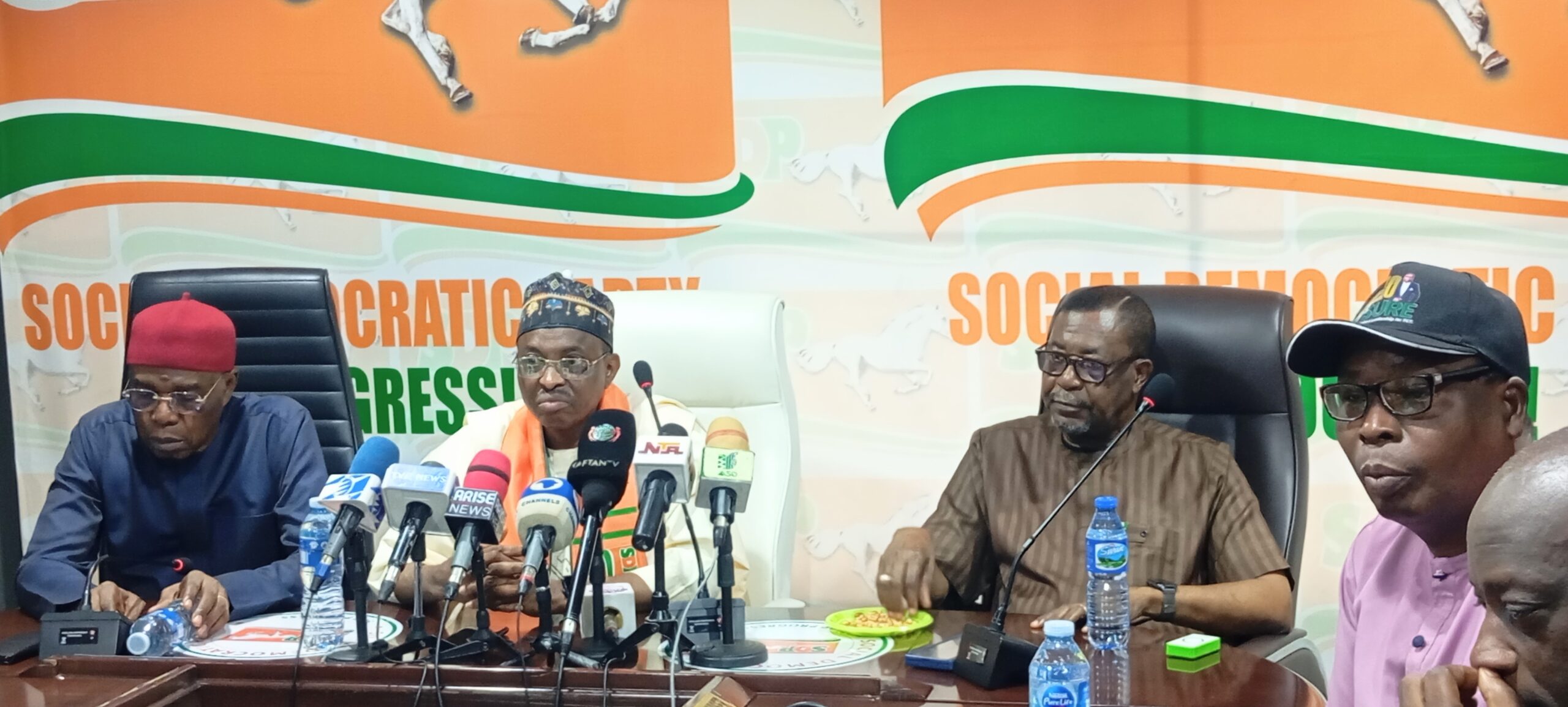
SDP National Chairman, Prof. Sadiq Umar Gombe, said this on Monday at a media briefing in Abuja, on the outcome of the election and the lessons the party had learnt ahead of the 2027 general elections.
He said that the party’s performance in the election did not reflect its actual strength or level of acceptance among Nigerians.
According to him, the legal dispute over its candidate significantly affected its preparations and mobilisation ahead of the election.
“The Court of Appeal only resolved the dispute over our party’s Osun governorship candidature shortly before the election, while the certified true copy of the judgment was not obtained by the party until Friday, making it difficult for INEC and party officials to properly communicate the development to the electorate and party agents,” Gombe said.
He said the situation created the impression among voters that the SDP would not participate in the election.
He said, “The dismal performance of the party in respect of the election, which I am sure many of you are aware, is as good as SDP did not participate.”
He explained that the party had faced a similar situation in another election, where, its governorship candidate was removed from the ballot less than eight hours before the election, making it impossible for the party to adequately deploy and upload its agents.
Gombe said the same challenge affected the SDP in Osun, where the late resolution of the legal dispute prevented the party from effectively mobilising its supporters and agents.
The SDP boss, however, commended the security agencies and INEC for their conduct during the election, saying the commission had demonstrated that it could conduct credible elections when given the opportunity to operate professionally.
He said the Osun election had also demonstrated that there was no longer any meaningful distinction between “big” and “small” political parties in Nigeria, and that voters could reject established political structures when they believed another candidate offered a better alternative.
He noted the victory of the Accord candidate in the election as evidence that Nigerians were prepared to vote according to their convictions rather than simply follow the traditional major political parties.
Gombe said the outcome should serve as a warning to the ruling All Progressives Congress (APC), insisting that incumbency did not guarantee victory.
He said the election had also challenged the argument that opposition parties must necessarily present a single candidate before they could defeat the ruling party.
He said that several opposition parties participated in the Osun election with their respective candidates, yet voters were able to make a collective choice and produce an opposition victory.
He said, “The Osun people have taught Nigerians a great lesson. The SDP had learnt the lesson more than any other political party.”
Gombe maintained that the SDP remained committed to what he described as the “coalition of the Nigerian people” ahead of the 2027 presidential election.
He also said that the party’s presidential candidate, Prince Adewole Adebayo, remained the best candidate for the presidency, citing his capacity, competence, character, knowledge of Nigeria and ability to unite the country.
According to him, the country urgently needs a leader capable of transcending ethnic and religious considerations and focusing on national development.
Gombe urged Nigerians to defend their votes and resist attempts to undermine their electoral choices through inducements, intimidation or violence.
He said the people of Osun State had demonstrated that voters could collect whatever lawful inducements were offered to them but still vote according to their conscience.
The SDP chairman urged Nigerians in other parts of the country, particularly states he said were experiencing worse human-development conditions, to emulate what he described as the determination of Osun voters to defend their electoral choice.
He particularly challenged voters in northern states and other parts of the country to participate actively in the 2027 election and use their votes to demand better governance and by voting the SDP.
Gombe commended INEC for the conduct of the Osun election, urging the commission to sustain what he described as its commitment to free, fair, transparent and credible elections.
He said political parties should not hesitate to criticise INEC when it failed to meet acceptable standards but should equally commend the commission when it performed well.
“We will not shy away, we will not feel guilty, if INEC does the right thing. Nigerians need to come out in unison and applaud and encourage INEC so that they can be able to do what is right,” Gombe said.
He, however, identified the large-scale deployment of security personnel and electoral officials during the Osun election as one of the issues that must be addressed before the 2027 general elections.
He noted that the 30 local government areas in Osun State reportedly had each local government area supervised by a commissioner of police, raising questions about the capacity of the security agencies to replicate such deployment across the 774 local government areas during a nationwide election.
He similarly questioned whether INEC had sufficient numbers of national commissioners, electoral commissioners, directors and other senior personnel to achieve comparable deployment across the 36 states during the general elections.
Gombe said the INEC and other stakeholders had about five months to prepare for the 2027 elections and urged them to develop alternative strategies for ensuring adequate manpower, security and logistics.
The SDP chairman also criticised the alleged movement of governors, ministers, National Assembly leaders and other political figures into Osun during the election.
He alleged that several political leaders deployed state resources to influence the outcome of the election, describing such practices as unacceptable.
Gombe urged the Inspector-General of Police and other security chiefs to prevent political actors from moving around polling units during future elections, stressing that only accredited election officials, observers and other authorised personnel should be allowed to operate freely around polling locations.
He argued that the deployment of governors and other political leaders from different states to one election was not sustainable and could undermine the security and integrity of elections elsewhere.
On the opposition coalition ahead of 2027, Gombe urged opposition leaders to place national interest above personal ambitions.
He said, “Any arrangement for a common opposition platform or candidate must be based on clearly defined criteria, including competence, capacity, character, knowledge of Nigeria, youthfulness, intelligence and the ability to provide effective leadership.”
He warned that Nigerians might ultimately organise themselves and make their own political choices if opposition leaders failed to agree on a credible and transparent process.
“The people have shown that they are ready to organise themselves to salvage and rescue their motherland,” he said.
Gombe said the lessons from Osun should therefore guide political parties, INEC, security agencies, the media and the electorate as the country prepares for the 2027 general elections.
Discover more from TheTimes Nigeria
Subscribe to get the latest posts sent to your email.