Experts and some stakeholders in tobacco control initiatives have underscored the importance of data-driven policies to tackle the threats of tobacco posed by tobacco and protect public health in the country.
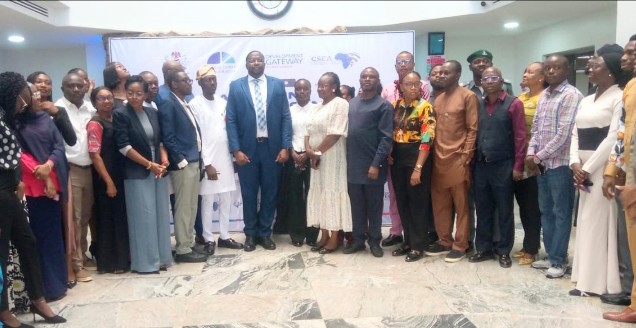
They made the call on Wednesday in Abuja at a national workshop on titled “Advancing Evidence-Informed Tobacco Control in Nigeria”.
The forum, which comprised representatives from civil society organisations, government agencies, researchers, development partners and the media, among others, noted the importance of the Tobacco Control Data Initiative (TCDI) in combating the dangers of tobacco and related products.
The TCDI is an interactive portal and programme that collects, analyses, and presents comprehensive country-specific data to help policymakers, civil society, and academia design and implement effective tobacco control policies and is currently being implemented in the Democratic Republic of Congo (DRC), Ethiopia, Kenya, Nigeria, South Africa and Zambia.
Speaking at the workshop, Executive Director of the Centre for the Study of the Economies of Africa (CSEA), Dr. Chukwuka Onyekwena, called for stronger collaboration among all stakeholders to improve the implementation of tobacco control policies.
According to him, evidence must play a central role in shaping public health decisions in Nigeria, as tobacco control had evolved beyond a public health issue into one that affects economic development, governance, education, security, and human capital, requiring a coordinated national response.
Onyekwena said Nigeria had established a solid legal and policy framework through the National Tobacco Control Act, the National Tobacco Control Regulations, and its commitment to the World Health Organization Framework Convention on Tobacco Control.
He, however, noted that legislation alone would not deliver the desired outcomes without effective implementation, enforcement, sustainable financing, inter-agency coordination and continuous surveillance.
He said that the workshop was designed to strengthen the interface between research and policymaking by examining the latest evidence on tobacco use, its health and economic consequences, emerging tobacco products, implementation challenges and practical strategies for improving Nigeria’s tobacco control ecosystem.
“CSEA’s research over the years had consistently focused on generating evidence that supports policymaking across public health financing, governance, fiscal policy and economic development, adding that the organisation had expanded its work on tobacco control in recognition of the significant social and economic costs associated with tobacco consumption,” Onyekwena said.
He also noted that tobacco use places pressure on health systems, reduces workforce productivity, increases catastrophic health spending for households and undermines national development, with consequences extending beyond smokers to families and communities.
On her part, Seember Ali, an official at Development Gateway and Regional Program Leader, TCDI, said data, policy, and political will must work together to sustain public health gains, noting that the tobacco industry continues to adopt sophisticated strategies, including digital marketing targeted at young people.
She said the TCDI platform was developed to ensure that evidence is translated into practical tools that policymakers, civil society groups and journalists can use to strengthen tobacco control, urging participants to critically examine available data and convert it into sustained action capable of protecting future generations.
“And this matters. Nigeria is fighting an industry that is sophisticated, well-resourced, and adaptive, one that has moved from billboards to algorithms, targeting young people through digital marketing tactics that regulation has historically been too slow to catch. The Federal Ministry of Health and Social Welfare’s leadership on FCTC implementation has been the backbone that has kept Nigeria’s response credible and enforceable, even as the industry’s tactics evolve.
“Today, the TCDI dashboard, and the DaYTA insights we’ll hear shortly, exist to give that leadership -and every advocate, researcher, and journalist in this room – a sharper, faster line of sight into what young Nigerians are actually facing,” Ali said.
On his part, Country Coordinator of the Campaign for Tobacco-Free Kids (CTFK), Michael Olaniyan, described evidence as one of the most powerful tools for shaping public health policy and called for greater use of quality data in tobacco control efforts.
Olaniyan said the TCDI had become an important resource for advocacy and policymaking, noting that the platform supports informed decision-making, accountability and evidence-based programming.
He expressed hope that discussions at the workshop would move beyond dialogue to concrete action capable of strengthening tobacco control in Nigeria.
In a goodwill message, Runcie Chidebe, Executive Director of Project PINK BLUE, said tobacco use remains one of the leading preventable causes of cancer globally and underscored the importance of reliable data in supporting stronger policies and improving public health outcomes.
Represented by Deborah Ejemole, the Project PINK BLUE Executive Director said the TCDI dashboard provides comprehensive information on tobacco prevalence, youth tobacco use, taxation, illicit trade, emerging tobacco products and the relationship between tobacco use and cancer, describing it as a valuable resource for researchers, policymakers and advocates.
The engagement also witnessed a presentation on how to navigate the dashboard by Halimat Abdulrasaq, Project Manager, TCDI Nigeria, who took participants through the thematic areas that the dashboard covers.
According to her, they include Tobacco Harm, Adult Prevalence, Youth Prevalence, Taxation, Shisha Use, New and Emerging Tobacco Products, and Industry Interference.
She also explained that the dashboard is a one-stop shop for important tobacco control information and data.
The technical session was facilitated by Philip Jakpor, Executive Director of the Renevlyn Development Initiative (RDI), who emphasised that the TCDI is a product of rigorous research that provides organisations across different sectors with the information to advance tobacco control.
He underscored the recommendations of media participants on the need to further update some of the nodes in the dashboard and introduce new themes, noting that a key recommendation in this regard is the need for a new theme on Agriculture and to further update the existing content with Nigeria-specific context under the relevant nodes in the Tobacco Harm theme.
The media participants equally explained that such inclusions would accommodate the research concerns of journalists on the environment and agriculture beats, who currently view the dashboard as a platform that is only beneficial to health reporters.
Dr. Malau Mangai Toma of the Federal Ministry of Health, in his presentation, made an intervention on ‘Data on Youth Tobacco Smoking in Africa’, which the ministry and the CSEA Director-General are currently working on.
Tochukwu Okereke, CSEA Programme Manager, while rounding off the discussions, said the engagement with different stakeholders would continue to achieve the desired objectives of safeguarding public health.
Discover more from TheTimes Nigeria
Subscribe to get the latest posts sent to your email.