KIGALI, RWANDA — Twenty years after the late UN Secretary-General Kofi Annan issued a historic call to spark a uniquely African green revolution, the continent’s premier agricultural leadership gathering convened in Kigali not for ceremonial self-congratulation, but to confront an urgent reckoning on the future of its food systems.
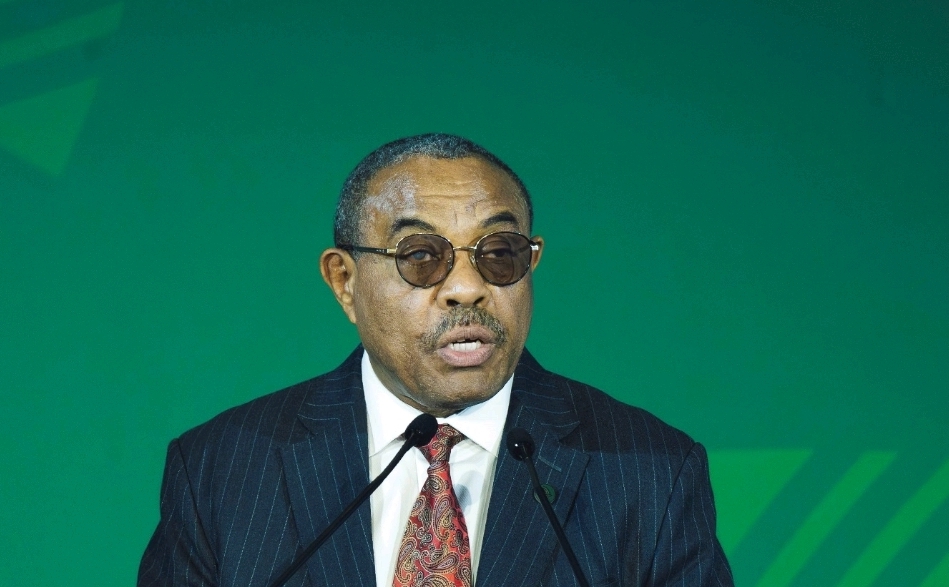
Addressing more than 5,000 delegates, heads of state, ministers, and private sector leaders during the opening ceremony of the 20th Africa Food Systems Forum (AFSF) Summit, outgoing AGRA Board Chair and former Prime Minister of Ethiopia, H.E. Hailemariam Dessalegn, delivered his valedictory address, challenging the continent to make the next decade one of “capable delivery and durable prosperity”.
The 2026 summit marks a double milestone: two decades since Annan’s 2004–2006 rallying cry that birthed AGRA and the original Oslo convening, and the evolution of the forum from a modest gathering of 200 delegates into the continent’s foremost agrifood gathering.
Unveiling findings from the newly launched Africa Agriculture Foresight Report 2026, Dessalegn highlighted concrete strides achieved across intervention areas. In focus countries where AGRA has operated, smallholder farmer incomes rose from an average of US1,250 in recent years, while annual cereal yield growth nearly doubled from 1.2% to 2.3%.
Yet, Dessalegn was emphatic that higher agricultural yields must not be mistaken for ultimate success.
“Progress is not the same as prosperity,” Dessalegn told the plenary. “A farmer who produces more but earns too little is not yet prosperous. A young person who sees opportunity but cannot access finance is not yet empowered. A woman who feeds a community but cannot own land, access credit, or influence markets is not yet treated with justice. And a country that grows more food but exports raw commodities and imports finished food has not yet transformed.”
Dessalegn warned that despite past gains, Africa’s broader transformation remains constrained by three structural barriers: a productivity trap driven by soil degradation and climate shocks; a value trap where farmgate output rises but fails to yield income due to broken processing and trade links; and a capability trap where ambitious government investment plans fail to translate into sustained delivery.
To break this cycle, the outgoing Chair outlined a strategic shift for both African governments and development institutions. He called on Heads of State to move beyond fragmented, short-term projects and commit state budgets to integrated, country-owned transformation pathways aligned with the Comprehensive Africa Agriculture Development Programme (CAADP) 2026–2035 Strategy.
Crucially, Dessalegn declared that AGRA’s own institutional mandate must continue to evolve from holding systems together to building permanent state capability.
“Our task is to help countries diagnose where traps are binding, convene capabilities, test what works, and close missing links—then enable domestic institutions and markets to carry the work forward,” Dessalegn said. “AGRA succeeds when farmers prosper, when countries deliver, and when the systems we helped catalyse continue to work without us at the centre.”
Echoing this transition from dialogue to execution, Amath Pathé Sene, Managing Director of the Africa Food Systems Forum, underscored that the forum itself is pivoting from an annual convening into a permanent, year-round delivery and accountability platform.
“Twenty years ago, this journey started with a simple belief: Africa’s agricultural transformation needed a place where leaders could meet, ideas could be challenged, and commitments could become action,” Sene noted. “Our first twenty years proved that Africa can convene with excellence. Our next twenty years must prove that Africa can deliver. The question is no longer simply whether Africa can transform its food systems, but how fast we can make it happen.”
The call to action was reinforced by the host nation’s leadership. Delivering the keynote address on behalf of President Paul Kagame, Rwanda’s Prime Minister, the Rt. Hon. Dr. Justin Nsengiyumva, reminded delegates of the stark paradox confronting the continent: in 2025, approximately 309 million Africans—nearly 20% of the population—faced hunger, while 57% experienced moderate to severe food insecurity.
Nsengiyumva posed three operational questions for the summit: how to turn national strategies into bankable plans, how to finance whole food ecosystems rather than disconnected pieces, and how to scale proven pilots across borders.
As Dessalegn prepares to step down after years of steering the continental board, his parting charge set the tone for the week’s deliberations in Kigali: “Let this Forum be remembered not only as the 20th anniversary of a platform, but as the moment Africa chose a different decade: a decade of capability, value, productivity, and prosperity. The promise was never simply to grow more; the promise was to build systems that allow our people to live better.”
Discover more from TheTimes Nigeria
Subscribe to get the latest posts sent to your email.