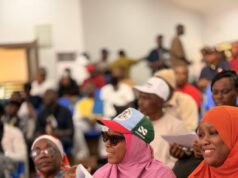
Women participating in the 2027 general elections in Kano and Borno states face growing threats from political intimidation, economic coercion, gender-based violence and misinformation, with entrenched party structures and weak protection systems further limiting their chances of securing elective offices.
A new assessment by the Rule of Law and Empowerment Initiative, Partners West Africa Nigeria (PWAN), warned that the combination of insecurity, harmful gender norms, political gatekeeping and inadequate institutional response could undermine women’s participation in the elections if urgent preventive measures were not introduced.
The report, titled Women, ‘Elections and Security in Kano and Borno States: Integrated Pre-2027 Gender-Based Election Security Threat Assessment’, said women remained important to electoral mobilisation but were largely excluded from political power and decision-making.
It was prepared with support from the Government of Ireland International Development Programme and published in September 2026.
According to the assessment, the problem extends beyond the low number of women holding political offices. Women aspiring to participate in politics face multiple, interconnected barriers, including high nomination fees, limited access to campaign finance, intimidation, sexual harassment, online abuse and pressure from family members and community leaders.
The report drew on desk research, 28 key informant interviews and six focus group discussions conducted across selected local government areas in the two states. Participants included women politicians, party representatives, electoral and security officials, civil society organisations, traditional and religious leaders, media practitioners and community members.
It noted that although women accounted for a substantial proportion of registered voters in both states in the 2023 general elections, their presence at the ballot box had not translated into comparable representation in elective positions.
Women constituted 44.40 per cent of registered voters in Kano and 42.60 per cent in Borno in 2023. Yet neither state elected a female governor, while women’s representation in legislative institutions and senior party structures remained extremely low.
The assessment said the figures exposed a persistent gap between women’s participation in elections and their access to political authority.
It identified political exclusion, economic pressure, intimidation, physical violence, misinformation, hate speech, sexual harassment and broader sexual and gender-based violence as major threats that could discourage women from seeking office or participating freely in the electoral process.
The report warned that the threats reinforced one another, making it difficult for women to participate safely even where formal opportunities to contest elections existed.
A woman without independent campaign funds, for instance, could become vulnerable to pressure from political sponsors, while a female aspirant targeted by false online allegations could face reputational damage, family pressure and threats to her personal safety.
It added that women living in communities affected by insecurity could also withdraw from political activities where reporting mechanisms were inaccessible or there was little confidence that complaints would receive a meaningful response.
Political parties accused of restricting women’s access
The report identified political-party gatekeeping as one of the principal obstacles to women’s political advancement in both states.
It said opaque primary elections, patronage networks, male-dominated party structures and limited access to influential decision-makers often restricted women’s chances of obtaining viable party tickets.
High nomination fees and the cost of running campaigns further disadvantaged female aspirants, particularly those without access to wealthy sponsors or established political networks.
According to the assessment, campaign expenses such as transportation, publicity, media engagement and maintaining political contacts could place women at a disadvantage before the actual contest began.
It also identified meeting arrangements and party practices that failed to accommodate women’s circumstances, as well as family and community expectations concerning marriage, mobility and public visibility.
These factors, the report said, could discourage women from entering politics or make their participation dependent on approval from male relatives and influential political figures.
The assessment observed that women were frequently mobilised to bring out voters, attend rallies and support party candidates without receiving corresponding influence over nominations, party leadership or policy decisions.
It called for reforms that would enable women to move beyond mobilisation roles into positions where they could influence political choices and governance.
Kano faces threat of political thuggery, banditry
In Kano, the assessment identified the interaction between intense political competition and insecurity as a major source of concern ahead of the 2027 elections.
It highlighted political intimidation, electoral violence, hate speech and economic pressure, alongside urban gang activity involving Yan Daba and Yan Ta’adda, expanding banditry, kidnapping, small-arms proliferation and drug-related violence.
The report said these security challenges could affect women not only during campaigns and elections but also in their daily movement, livelihoods and family life.
Women attending political meetings, rallies or community engagements could face intimidation, assault, threats to their reputation or pressure to withdraw from political contests.
The assessment placed political exclusion in the high-to-very-high severity range and described economic pressure as a very high risk in Kano.
It also identified the absence of a trusted and dedicated mechanism for reporting gender-based election threats as a significant protection gap.
The report said the state’s large electorate gave women substantial electoral importance, but this had not translated into corresponding political representation.
It cited a decline in the number of female governorship candidates from nine in 2019 to two in 2023, with neither election producing a female governor.
The assessment called for election security planning in Kano to incorporate political thuggery, urban gang violence, kidnapping, banditry and the circulation of small arms, rather than treating threats against women as separate from the state’s broader security challenges.
Insurgency, displacement complicate Borno election environment
In Borno, the report said the legacy of insurgency, displacement, abduction and restrictions on movement presented a different but equally serious set of challenges for women seeking to participate in politics.
Although elections had continued through security deployments and operational adjustments, the assessment noted that access and mobility remained uneven, particularly for women in vulnerable communities.
It warned that insecurity could limit attendance at political meetings, restrict campaign activities and make travel to polling locations difficult or dangerous.
The report also identified competition within political structures as a potential source of tension, particularly in a dominant-party environment where political succession and access to influential positions could intensify internal rivalries.
Women accounted for 42.60 per cent of registered voters in Borno in 2023. However, only one of the 12 governorship candidates was a woman, and no woman was elected to the State House of Assembly.
The assessment identified misinformation and political exclusion as the leading threats in Borno, with each recording an average stakeholder score of 4.2 out of five.
Intimidation and threats to psychological safety each featured prominently, while economic pressure and physical violence added to the risks facing women.
It said the combination of displacement, insecurity, weak knowledge of reporting channels and gender-based abuse required interventions adapted to the state’s specific circumstances.
AI-generated content raises fresh concerns
The report also raised concerns over the increasing use of digital platforms to intimidate women and undermine their political participation.
It said women could be targeted through sexualised insults, manipulated photographs and videos, false allegations about their morality or marital status, impersonation and coordinated online harassment.
The assessment warned that artificial intelligence could make fabricated content more convincing and easier to circulate, exposing female aspirants to reputational damage and psychological distress.
It said the consequences were not limited to the internet, as false narratives could spread into families, communities, religious gatherings, party meetings and conventional media.
Such attacks could lead to family pressure, community stigma, threats to personal safety and withdrawal from political activities.
In Borno, the report said misinformation was particularly concerning, recording an average stakeholder score of 4.2 out of five.
Kano participants also identified false stories, hate speech and online reputational attacks as significant risks.
The assessment argued that digital threats should not be treated merely as communication problems requiring public rebuttals.
Instead, it recommended linking online monitoring to evidence preservation, fact-checking, protection services, referral mechanisms and accountability for serious abuses.
It also urged authorities and relevant organisations to develop procedures for responding to AI-generated sexualised or defamatory material, including verification, takedown requests and public corrections.
Sexual exploitation, weak reporting systems
Beyond political intimidation and digital attacks, the assessment identified sexual harassment and sexual and gender-based violence as significant threats to women’s participation.
It cited concerns about sexual demands linked to political positions or sponsorship, harassment during political meetings and campaigns, unsafe venues and transportation, and exposure to violence in communities affected by insecurity.
In Borno, participants also raised concerns about sexual exploitation linked to political access and mentorship.
The report warned that many incidents could remain unreported because victims feared stigma, retaliation, economic consequences or damage to their political careers.
It said the problem was compounded by inadequate confidentiality, low confidence in investigations and uncertainty about where complaints should be directed.
Although institutions such as the Independent National Electoral Commission, the police, the Nigeria Security and Civil Defence Corps, ministries responsible for women affairs, justice and health, the National Agency for the Prohibition of Trafficking in Persons and civil society organisations were available to provide different forms of assistance, coordination remained weak.
The assessment said the central problem was not necessarily the complete absence of institutions but the fragmentation of their services, poor accessibility and inconsistent accountability.
It recommended a coordinated response connecting electoral, security, justice, medical, psychosocial and civil society actors.
The report stressed that survivors should be able to seek assistance confidentially and make informed choices without fear of retaliation or exposure.
The report noted that the situation can be liken to a thinking that votes don’t translate to power as the cases as it affects the segments of women, elections and insecurity in the mapped states.
Report recommends urgent reforms
To address the threats, the assessment called for the establishment of gender-responsive election security mechanisms in Kano and Borno before political activities intensify ahead of the 2027 polls.
It recommended that the Inter-Agency Consultative Committee on Election Security and state security structures incorporate threats against women into operational planning, including the identification of hotspots, safer transport arrangements and security at rallies, polling locations and collation centres.
It also called for confidential, accessible and trackable reporting channels through toll-free telephone lines, WhatsApp, websites and physical complaint points.
Such channels, it said, should have clear privacy safeguards and connect complainants to relevant security, legal, medical and psychosocial services.
The report urged INEC and security agencies to work with civil society groups and other stakeholders to establish common procedures for classifying incidents, referring cases and tracking response times and outcomes.
It further recommended the deployment of trained female personnel and confidential complaint points at priority political events and election locations.
On political-party reforms, the assessment called for transparent nomination criteria, fees, timelines and complaint procedures.
It urged parties to reduce or cap nomination fees for women, prohibit hidden levies and coercive fundraising practices, and enforce codes against intimidation, sexual harassment, hate speech and retaliation.
The report also recommended transparent financial assistance for viable female aspirants to cover legitimate campaign expenses, including transportation, media engagement, training and security.
It said mentorship and peer-support networks could help women reduce their dependence on individual political sponsors and entrenched party gatekeepers.
Traditional and religious leaders, women’s groups, youth networks and men were also identified as important partners in challenging beliefs that political leadership should be reserved for men.
The assessment urged stakeholders to use community radio and trusted local-language channels to counter misinformation and inform women about available reporting and referral services.
It further proposed a results-monitoring framework covering the number of female candidates, reported threats, response times, referrals, resolved cases, party compliance and security hotspots.
Quarterly reviews involving multiple stakeholders were recommended ahead of the elections, followed by an independent post-election assessment.
‘Act before risks intensify’
The report concluded that the period before the 2027 elections offered an important opportunity to establish preventive and response systems before political competition intensified.
It said Kano required particular attention to political thuggery, urban gang activity, expanding banditry and weapon- and drug-related violence, while Borno needed measures adapted to insurgency, displacement, abduction and restrictions on movement.
Both states, however, required stronger protection against online misinformation, sexual exploitation, political intimidation and exclusion from party structures.
The assessment maintained that women should not be treated merely as voters to be mobilised during elections but as rights-holders and political actors entitled to participate safely and equally in leadership and decision-making.
It warned that failure to address the threats could further weaken women’s political representation and undermine confidence in the electoral process.
According to the report, reforms in reporting systems, election security, political-party access, digital protection and campaign financing would have benefits beyond the 2027 elections.
It said coordinated action by government institutions, political parties, security agencies, civil society and community leaders was necessary to strengthen political inclusion and the legitimacy of democratic governance.
Discover more from TheTimes Nigeria
Subscribe to get the latest posts sent to your email.