…Sultan dismisses ‘Islamisation’ fears, tasks clerics on religious literacy
The Federal Government has urged the integration of religious literacy into education and civic systems to counter political manipulation, reduce conflict and promote unity ahead of the 2027 general elections.
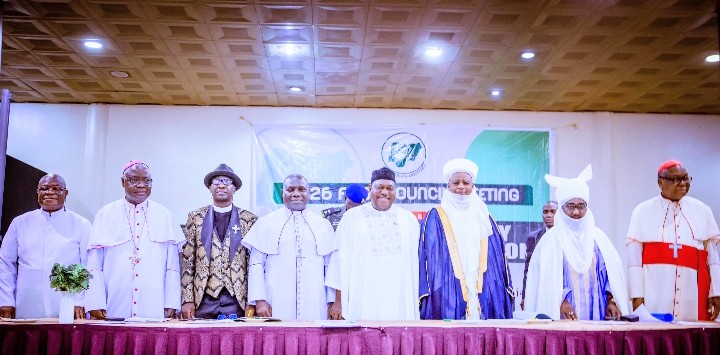
The Secretary to the Government of the Federation (SGF), George Akume, made the plea on Wednesday in Abuja at the First Tri-annual Meeting of the Nigeria Inter-Religious Council (NIREC), themed: “Religious Literacy for National Cohesion.’’
Akume, who described religious literacy as a civic necessity, noted that the weaponisation of identity and the existence of stereotypes continue to fuel conflicts across the country.
According to him, the integration of religious literacy into Nigeria’s civic and educational frameworks would shield citizens from political manipulation and identity-based violence.
“National cohesion cannot be built on suspicion, coercion, or exclusion; rather, it should be built on justice, dignity, and mutual respect,” Akume said.
He said that the government’s task is not to politicise religion but to strengthen citizenship.
The SGF said that while religious studies are already in the school curriculum, the focus must shift to improving teacher preparation and learning materials.
Akume reminded NIREC of its moral responsibility to strengthen grassroots mobilisation and warned against the manipulation of communities during the electoral cycle as the 2027 general elections approaches.
He assured the council that the Federal Government had put machinery in place to support traditional and religious institutions in ensuring safety before, during, and after the polls.
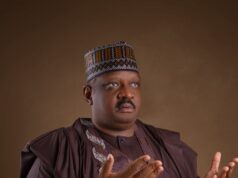
On his part, the Sultan of Sokoto and President-General of the Nigerian Supreme Council for Islamic Affairs (NSCIA), Alhaji Muhammad Sa’ad Abubakar III, dismissed claims of a planned “Islamisation” of Nigeria, describing such narratives as impossible and divisive.
The Sultan, who is also a co-Chair of NIREC, said that Muslims have no agenda to dismantle the Christian population, as God in His wisdom brought both faiths together for a purpose.
He said that the council remains a vital platform for dialogue, which he said is the only instrument to set the nation free.
He noted that in his 20 years on the council, he has never missed a meeting, a testament to his commitment to peace.
“We believe talking is better than fighting. Let us understand our differences rather than trying to forget them; I am a Muslim, you are a Christian, and we must live together with respect,” he said.
Addressing the theme of religious literacy, the monarch warned against the rise of “self-styled” clerics who lack deep theological knowledge.
He also said that knowing the Arabic language does not make one an Islamic scholar, just as pastors in parts of the Middle East preach in Arabic.
He urged religious leaders to be literate enough to guide their followers correctly and prevent the weaponisation of faith for selfish or political gains.
The Sultan also took a firm stand against the religious profiling of criminals, insisting that bandits and terrorists should be called by their names rather than being linked to Islam.
“Any individual who takes an innocent life under the guise of religion is going to hell, as Islam equates the killing of one human being to the destruction of all humanity,” Sultan Abubakar said.
He lamented that more Muslims have actually been killed in the “madness” of banditry and terrorism across the North.
The Sultan also called for increased trust between faith leaders and their followers, especially as the 2027 general elections is close by.
He emphasised that the sight of Christian and Muslim leaders eating and working together sends a powerful message of unity to the grassroots.
He commended the collaboration between NIREC and international bodies, mentioning recent high-level interfaith engagements in London involving the Archbishop of Canterbury and prominent Islamic scholars aimed at finding home-grown solutions to Nigeria’s challenges.
He also expressed gratitude to the Federal Government for its support and urged NIREC members to remain steadfast in steering the nation toward peace.
Speaking earlier, the President of the Christian Association of Nigeria (CAN), Archbishop Daniel Okoh, also identified religious literacy as a critical tool for dismantling stereotypes and ending the manipulation of faith for divisive purposes.
Okoh, a co-Chair of NIREC, noted that religious literacy is the ability to engage constructively across differences and resist divisive narratives.
“Across various parts of our nation, we continue to witness tensions framed along religious lines, even when their root causes are social, economic, or political,” Okoh said.
“Religious literacy is not merely the academic understanding of doctrines or rituals. It is the cultivation of awareness, sensitivity, and respect for the beliefs and practices of others,” Okoh said.
He noted that NIREC has over the years served as an important platform for dialogue, conflict resolution, and mutual understanding between Christians and Muslims.
He said, “Through NIREC, we have demonstrated that despite our religious differences, we share common values of peace, justice, dignity of human life, and the well-being of our nation.”
The CAN President called for stronger collaboration among faith communities, civil society groups, and the media, urging that places of worship become centres of enlightenment rather than division.
“Our places of worship must become centres of enlightenment, where messages of peace, unity, and responsible citizenship are consistently emphasised,” he said.
A lecturer at the University of Abuja, Prof. Ukertor Moti, delivering a keynote, warned that “leadership without learning is dangerous,” highlighting how selective readings of sacred texts by untrained clerics often inflame passions.
Moti recommended that NIREC should establish a “National Framework for Religious Literacy and Responsible Clergy Practice”.
He also proposed a voluntary certification system for Clerics to curb hate speech.
In his welcome remarks, the Executive Secretary of NIREC, Fr. Prof. Cornelius Omonokhua, emphasised that true literacy should emancipate the mind from ‘ancestral vengeance’.
“Children learn first from the parents and the surrounding environment. They acquire language through active demonstration and repetition of sounds. The brain of the child gets adjusted to the sounds in the first six years with the cognitive capacity.
“A child who grows with wild animals in the jungle could behave like the savages. The next level of learning comes from formal school teachers and religious educators. The formation of the child for the future depends on exposition to authentic learning in a conducive environment.
“To attain literacy for national cohesion, the Government needs to provide the enabling environment for the children. A healthy society provides hope for the future through a functional system and structure,” Omonokhua said.
On her part, Dr. Rosaline Adhiambo, Regional Advisor, African Council of Religious Leaders -Religions for Peace (ACRL-RP), said that ACRL-RP was officially inaugurated in June 2003 in Abuja, following a pivotal 2002 gathering of religious leaders in Nairobi, Kenya.
She said the organisation was established as a premier pan-African, multi-faith organization, with significant support from Nigeria’s former President, Olusegun Obasanjo.
“Nigeria has been a major hub of interfaith engagement in Africa. It hosts one of the most active national interfaith councils, NIREC, among the 35 ACRL-RP networks,” Adhiambo said.
Discover more from TheTimes Nigeria
Subscribe to get the latest posts sent to your email.