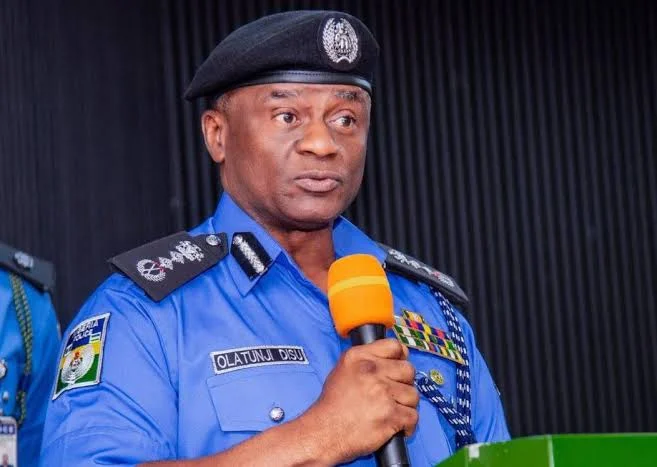
The Inspector-General of Police, Olatunji Disu, has assured journalists of adequate protection during the 2027 general elections, warning that misinformation, fake news and information disorder could undermine the credibility of the polls.
Disu gave the assurance on Tuesday in Abuja while delivering the keynote address at the 2026 Media and Development Conference organised by the Centre for Journalism Innovation and Development (CJID).
He said the Nigeria Police Force would support journalists in carrying out their professional responsibilities, stressing that police personnel would not be allowed to intimidate or suppress the media for political interests.
The IG stated, “Accountability must go beyond rhetoric and be demonstrated through practical actions,” adding that the police would not allow themselves to be used as instruments of political oppression.
He described journalism and policing as professions that shared similar challenges, including considerable risks, demanding responsibilities and a commitment to public service.
Disu warned that threats to credible elections went beyond physical violence, noting that misinformation and fake news could discourage voter participation and distort the electoral process.
He said election security should not be regarded as the sole responsibility of the police, urging stakeholders to recognise the dangers posed by information disorder ahead of the 2027 elections.
The police chief disclosed that officers were undergoing training to understand media expectations and their responsibilities towards journalists.
He added that commissioners of police had been directed to organise practical training sessions and media parley as part of preparations for the elections.
Meanwhile, the Deputy Ambassador of the Netherlands to Nigeria, Ronald Sonnemans, called for an end to the arrest, harassment and intimidation of journalists.
He emphasised the need to protect press freedom and media independence, urging the government and other stakeholders to respect the media’s constitutional responsibility.
Sonnemans expressed hope that the conference would equip journalists with the skills and practical tools needed to conduct independent investigations, produce credible reports and provide citizens with information to make informed decisions.
He also challenged journalists to take control of artificial intelligence, advising them to use the technology for fact-checking and improving their reports without becoming excessively dependent on it.
The envoy further advocated independent newsrooms free from restrictive laws and policies capable of undermining their operations.
Earlier, the Chief Executive Officer of CJID, Dapo Olorunyomi, described technology as an important tool for strengthening journalism rather than an enemy, particularly in the fight against misinformation.
Speaking at the opening of the three-day conference on Monday, Olorunyomi highlighted the role of data journalism in exposing misinformation, government misconduct and corruption.
However, he cautioned that technology without accountability and proper oversight could also threaten democratic institutions.
He described technology as democratic infrastructure, stressing the need for accountability in the deployment of artificial intelligence and other digital tools.
Also speaking, Kolly Amina Shettima, who represented the MacArthur Foundation, called for greater protection of journalists in their pursuit of truth.
She noted that relations between the media and the state might not always be cordial because of journalism’s responsibility to hold those in authority accountable.
The conference, themed Media, Technology and the Future of Democratic Societies, attracted media practitioners and stakeholders from Nigeria, Mali, Niger and other West African countries.
Discover more from TheTimes Nigeria
Subscribe to get the latest posts sent to your email.