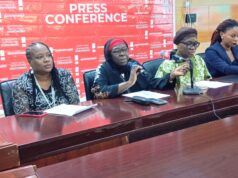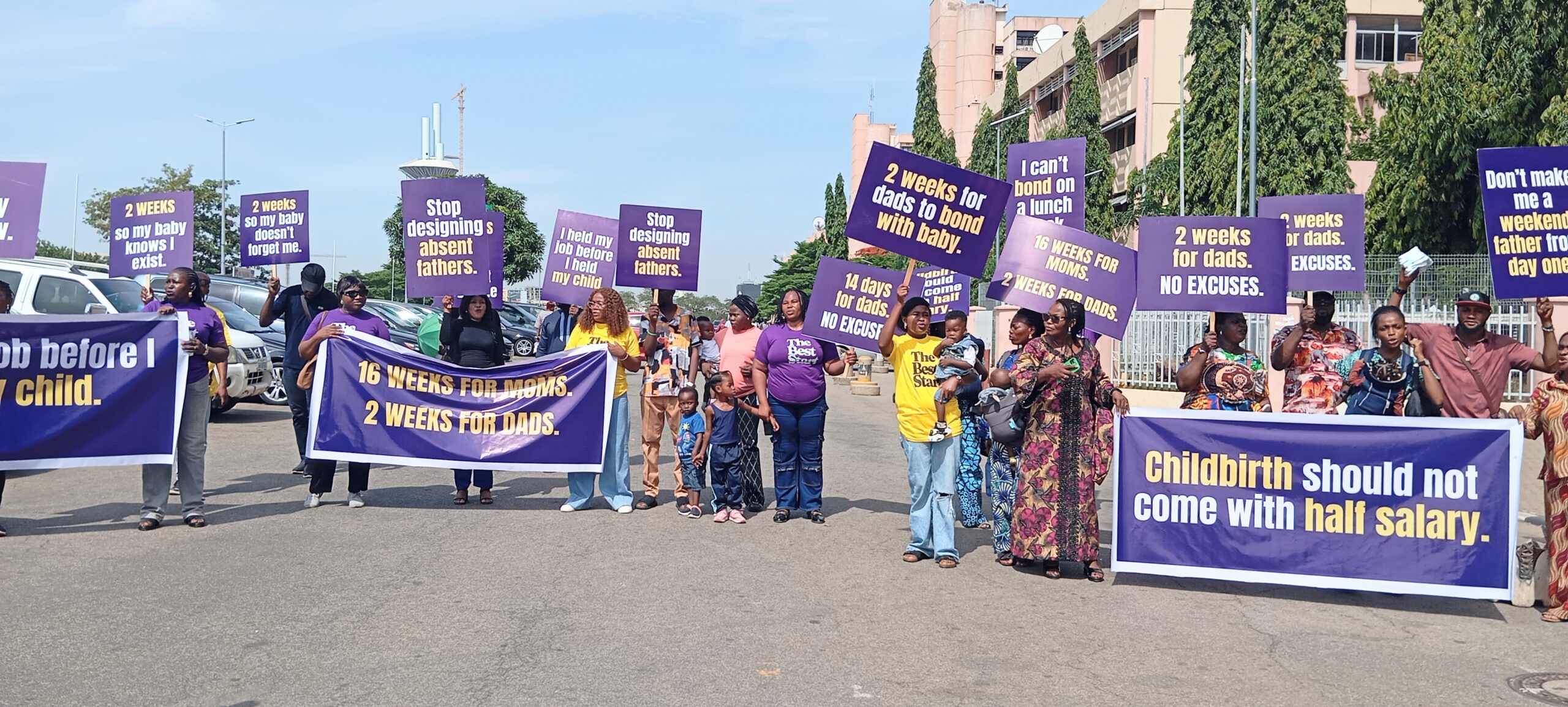
At a public activation held on Monday at the Federal Ministry of Labour in Abuja, parents, advocates, and policy stakeholders under the Nigerian Women in Leadership Coalition (WIL Coalition) has called for urgent national reform of Nigeria’s parental leave system.
The coalition during the rally said the current framework is unequal, burdensome, and economically limiting.
According to them, Nigeria deserves an urgent parental leave reform to strengthen families and the economy.
The WIL coalition launched the Best Start campaign calling for the adoption of a national parental leave framework, guaranteeing a minimum of 16 weeks of fully paid maternity leave and two weeks of fully paid paternity leave across all sectors.
Speaking at the activation, advocates highlighted that Nigeria’s current leave policies leaves mothers with only 12 weeks of maternity leave with half salary, and zero days of paternity leave for fathers, besides those working in the Federal civil service and a few states.
This means that for most fathers in the private sector, there is no consistent statutory protection, creating unequal access to care during the most critical period of early childhood development.
“Nigeria does not have a functioning parental leave system. There is no national standard for paternity leave. And maternity leave provisions are inadequate. We have fragmented rules across states and employers.” said Ekimini Akpapan Executive Secretary, WISCAR.
The proposed reform seeks to establish a unified national standard applicable across federal, state, and private sector employers, supported by clear enforcement mechanisms to ensure compliance and end the existing patchwork of inconsistent policies.
The WIL coalition also called for legal protection against pregnancy and caregiving discrimination; transparent public reporting on employer compliance; and a structured pathway to extend parental leave protections to informal sector workers over time.
Citing economic evidence, advocates noted that Nigeria could unlock up to $23 billion in economic value by closing gender gaps in workforce participation, while also improving productivity, retention, and long-term child health outcomes through stronger parental support systems.
They emphasized that the reform is not only a social policy issue but a national economic priority.
What parents are saying: “As a working father, with no leave, I did not have enough time to spend with my child during the early days. Most times I come back at night, and the child is already asleep,” said Samson Elijah.
Advocates also called on corporate leaders to take proactive steps by adopting progressive parental leave policies that reduce employee burnout, improve retention, and strengthen long-term productivity and business performance.
“As a grandmother, my daughter was forced to return to work after 12 weeks at 50% payment; 12 weeks is not enough for recovery, which affects your productivity. Also, the 50% payment is not enough support,” said Priscilla Shinshima, a nurse.
“I believe the two weeks are necessary so that the dad can help the new mum. It also helps the dad to have a good relationship with the child,” said Joshua Chinedu.
According to the World Bank’s Women, Business and the Law 2026 report, most Nigerian states score 0 out of 100 for supportive parenthood laws, reflecting a system with no meaningful protections or incentives for working families.
“Evidence shows that parental leave does not cause productivity to drop. Instead, it improves retention. As we all know, talent stays when care is supported.” Tolu Abdul, Senior Program Officer, Nigerian Governors Forum.
Global evidence shows that extending paid maternity leave improves child health outcomes, including higher rates of exclusive breastfeeding and lower infant mortality.
The coalition urged immediate policy reforms action to establish a unified national standard: 16 weeks for mothers. 2 weeks for fathers. Fully paid.
Discover more from TheTimes Nigeria
Subscribe to get the latest posts sent to your email.