West African youth under the Next Gen in Reform Community of Practice (CoP) on Tuesday in Abuja began a three-day symposium on political reforms in the sub-region.
The symposium is a convening of youth leaders working on democratic reforms, within and outside the CoP, to share ideas on how best they can strengthen democratic institutions and processes within the sub-region.
It was organised by the regional network designed through a collaboration between West Africa Democracy Solidarity Network (WADEMOS), a regional initiative of CDD-Ghana, and the National Democratic Institute (NDI).
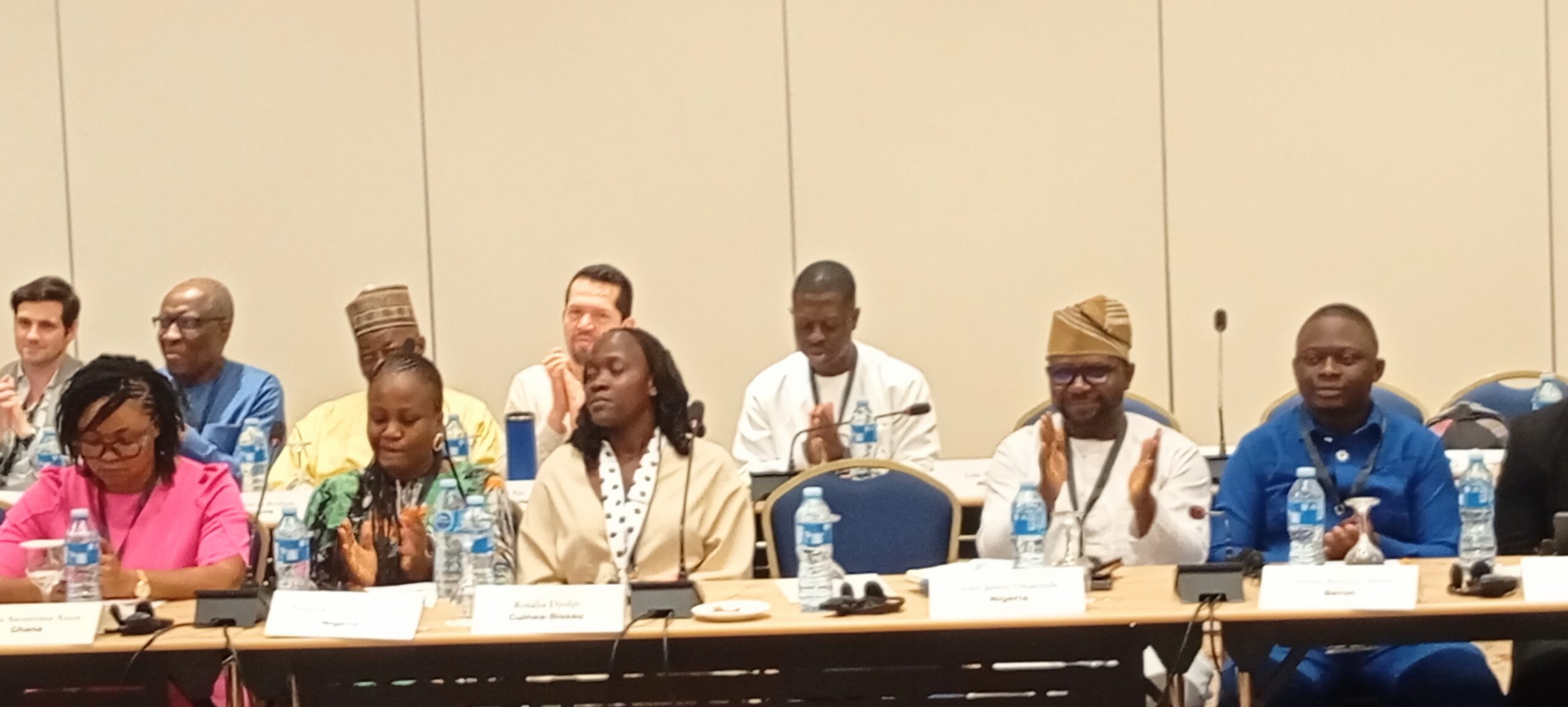
The symposium brings together over 90 young leaders from 13 countries with diverse backgrounds, including civil rights advocates, labour unions, policymakers and creatives.
The symposium is focusing on elevating youth voices, fostering active citizenship, and establishing and/or strengthening national and regional level political reforms, to safeguard democracy and help it deliver for West Africans.
The symposium kicked off with a clear call to action after an intergenerational dialogue between participating young leaders and more experienced leaders that West African youth are concerned about the state of democracy in the sub-region and are committed to actively guarding it.
Participants identified unique challenges facing young people and democracy in West Africa to include weak democratic institutions, weak processes such as quality of elections, closing political spaces, and challenges related to quality of life and livelihoods.
Members of the Next Gen in Reform Community of Practice noted that democracy is not foreign to Africa, and made commitments to defend it through effective national and regional political reform campaigns.
“Youth are critical to democratic renewal in Africa because they represent both the largest demographic group (60%) on the continent and the generation that will shape its political future.
“This demographic reality means sustainability and legitimacy of democratic systems depend largely on whether young people are included in political and governance processes by empowering them with practical toools, skills and knowledge” – Paul Osei Kuffour, the
WADEMOS Network Coordinator said as he underscored the need for initiating the Next Generation program.
Participants also held elaborate conversations around the obstacles that young people in West Africa face in advocating for political reforms such as negative cultural norms and how to address them.
To address these challenges, participants reiterated the need for national and regional collaboration, intergenerational partnership, strengthening youth political negotiations skills. They also identified improving youth involvement in the political and governance process, forming political parties, and turning youth frustration into concepts and action that could sustain the conservations about ways to address their concerns.
The youth also promoted the ethical use of AI and understanding that social media activism needs physical actions too.
Speaking specifically on the milestones achieved since commencing the Next Gen in Reform Program, Paul Osei-Kuffour noted, “we have built a stronger youth leadership for democracy, increased youth participation in governance, enhanced greater collaboration among youth democratic actors across West Africa, enhahnced civic knowledge and advocacy skills among young people and developed stronger networks capable of defending democratic values and institutions.”
Members of the Next Gen in Reform Community of Practice will hold further deliberations over the next two days and come up with specific political reform steps they will take in their respective countries, and collectively in the West African sub-region.
It serves as a dynamic space for young pro-democracy leaders to foster cross-border collaboration, exchange knowledge and strengthen skills identified as priorities by members of the community of practice.
Declaring the workshop open, Mr. Francis Madugu, NDI Nigeria Country Director, said the gathering has three goals: Connect and consolidate -build a trusted regional network of youth reformers; Equip and Inspire –train participants in power mapping, systems thinking, and democratic engagement; and Increase Visibility and Influence – amplify youth-led democratic work in a region where 60% of the population is under 30, yet youth voices remain under-recognized.
“West Africa is at a critical juncture with democratic backsliding and shrinking civic space. This Committee of Practice is NDI’s response –to equip young leaders and make youth engagement in governance visible and impactful,” Madugu said.
According to him, the opening day is public, featuring youth-led reform panels and multimedia storytelling; while days two and three are closed strategy workshops for committee members only, focused on inter-system reform and power analysis.
Madugu noted that West Africa stands at a critical juncture.
He said, “We are seeing democratic backsliding and shrinking civic space in several countries. In response, NDI is consolidating the Next Gen Committee of Practice to equip young leaders and increase the visibility of youth engagement in governance.”
He urged participants to “listen deeply, engage fully, and act as agents of change” in their home countries.

One of the panel sessions, titled: “Resiliency and Agency in a Challenging Democratic Landscape” witnessed Dr. Christopher Fomunyohz Senior Associate for Africa and Special Advisor to the President, NDI; Prof. Jibrin Ibrahim, Senior Fellow, Centre for Democracy and Development (CDD), Abuja; and Ms. Vera Abena Addo, Program Officer, Ghana Centre for Democratic Development (CDD-Ghana) strategically assessing the state of democracy in West Africa.
Ms Addo, noted the disconnect in ‘Youth Leadership in Constitutional Reform’
“Young people believe they can build a better country. You cannot build a country while sidelining young people. Across the region, young people are the majority, whichever way you look at it. Yet for too long, the majority of this population has been sidelined in national conversations.
“A few years ago, we mobilized on the streets around the constitution. Our constitution is over 30 years old. We’ve seen how it concentrates too much power in the Executive, entrenches corruption, and entrenches systemic issues in how political leaders operate.
“As a civil society space, we realized most reform conversations ignore the foundation: the Constitution itself. So we asked: how do we go back and address this?
“We called on all political parties to commit in their manifestos to constitutional change – amendments, revision, a new constitution. That process is now underway. A committee was set up by the current President. We have a report with about 700 major recommendations.
“Sometimes the priorities of the political class are different. Politicians focus on the next election – how to win power, how to mobilize. But that does not always translate into real development for the everyday person.
“That’s why we don’t limit ourselves to election cycles – four years, five years. We ask: how does reform translate into the life of the ordinary citizen?
“The message is clear: it is important that young people lead this process. If young people are not part of deciding the key reform areas, the process will fail. If done right, it must also mobilize citizens. We have submitted our inputs and we will follow up.
“If you fix the foundation, it must translate throughout the system. Young people in Africa today are doing amazing work. It is high time that any country, any political leader who wants to succeed, must organize and work with this huge asset that we have – our youth,” me Addo said.
Also, Prof. Ibrahim stressed the importance of making the case for continuous youth monitoring of democracy and not just mobilizing once and relapse.
“There’s a pattern we keep seeing in our democracies: Someone fights for democracy, mobilizes people, gains power, then throws out the same principles they advocated for. That is the real source of disrespect, not young people demanding accountability.
“When young people are told “you are being disrespectful” for pointing this out, what’s actually happening is an attempt to demobilize them. To stop them from restoring respect for the rules, for promises kept, for doing what society agrees is right.
“Young people must be able to name this: the history of disrespect lies with leaders who abandon the system they once fought for.
“Why do we keep losing ground after we win? Because we mobilize, we get people on the streets, we achieve change, then we assume the job is done. That’s the stumbling block.
“Too many people become experts at surrounding the king and telling him how good he is. And the king believes it. The moment you relax and “enjoy the fruits,” that’s when achievements start getting dismantled.
“The solution is analytical, not just activist:
We need continuous political analysis. Continuous intervention. Watch where rules are being broken. Spot danger signals early, before they become entrenched. Respond before the backsliding is irreversible.
“The real disrespect is not youth demanding accountability. It’s leaders who abandon the system they fought for,” Prof. Ibrahim, who cited examples of some African leaders who assumed power through mouthed principles, and later tried to undermined the democratic governance through unconstitutional extension of tenure, said.
On his part, Dr Fomunyoh called for democracy to be translated into terms ordinary citizens understand, warning that technical jargon is fueling disengagement across West Africa.
“Our collective mistake over the last 2-3 decades is that we haven’t broken down what democracy means for ordinary people. For the market woman, democracy is the right to set her price and keep her returns without paying a bribe. For the village, it’s a hospital built where the people are, not in the Minister’s hometown,” Fomunyoh said.
He also rejected the claim that democracy is “Western” and foreign to African tradition:
He said, “No, it’s not. The African is among the most democratic individuals you’ll find. We respect Queen Mothers. We have Kingmakers who judge cases with independence. We have these things already. Our job is to name them, translate them, and allow citizens to defend them.”
He urged young reformers to build broader coalitions, including with the private sector: “Business owners understand that rule of law and transparency improve the environment they operate in. Youth must invest in this analysis and these alliances.”
The panelists also agreed that young people should mobilize to extract penalties for parties and party leaders that make the wrong decisions, insisting that politicians need to realize there is a price to pay when they make wrong decisions.
The event was attended by youth activists, foremost academics, reformers, national and international leaders in the development sector, respected creatives, and media leaders from different parts of Africa.
Discover more from TheTimes Nigeria
Subscribe to get the latest posts sent to your email.