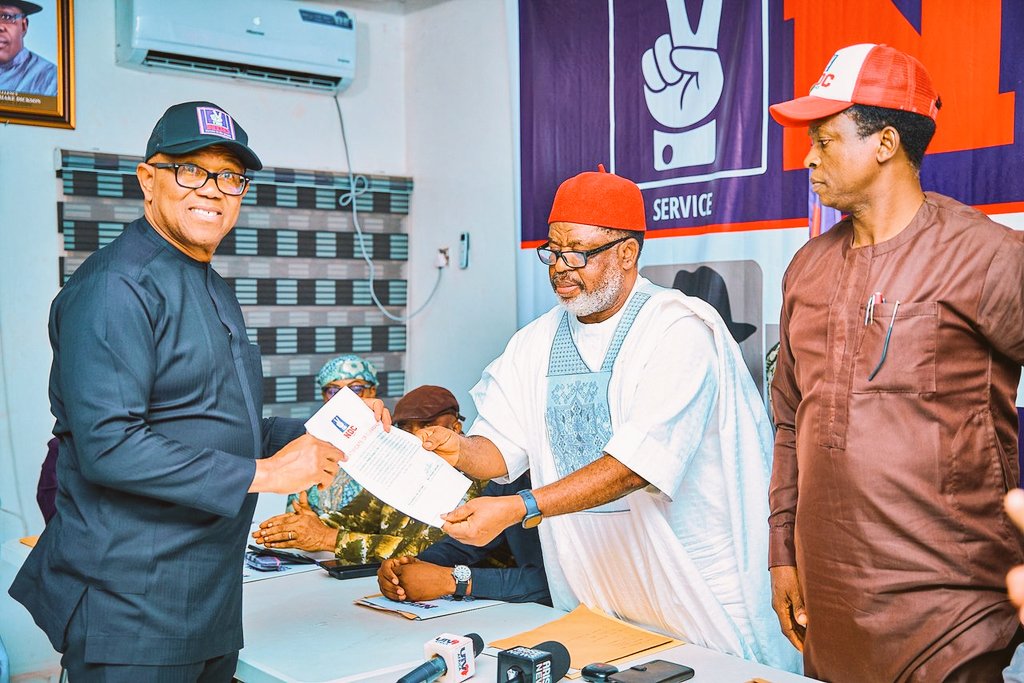
Ahead of the 2027 general elections, former Labour Party presidential candidate, Peter Obi, is expected to emerge as the presidential flagbearer of the Nigeria Democratic Congress (NDC) after he became the sole aspirant to purchase the party’s Expression of Interest and Nomination forms.
The development comes amid widening cracks within Nigeria’s opposition bloc, following the collapse of the African Democratic Congress (ADC)-led coalition that had initially brought together Obi, former Vice President Atiku Abubakar, and former Kano State governor, Rabiu Musa Kwankwaso.
The NDC confirmed that it closed the sale of presidential nomination forms on Sunday, while extending the deadline for governorship, Senate, House of Representatives, and State Assembly aspirants by one week.
Unnamed party officials said Obi may now emerge unopposed as the NDC’s consensus candidate for the 2027 presidential election, given the absence of any other presidential aspirant.
The NDC’s National Secretary, Ikenna Morgan Enekweizu, had in a statement saif the deadline for other elective offices was shifted from May 17 to May 24, 2026.
He said the screening of aspirants will begin on May 19 and end on May 26, while collection and submission of nomination forms for cleared candidates will run between May 20 and May 26.
Aspirants are expected to appear before screening panels with academic certificates, voter cards, birth certificates or age declarations, passport photographs, curriculum vitae, and party membership cards.
The NDC said the screening process would assess competence, integrity, public acceptability, and local political dynamics, while also reflecting its affirmative action policy for women, youths, and persons living with disabilities.
Obi’s emergence as the sole presidential aspirant follows months of internal disagreements that weakened the ADC coalition formed to challenge President Bola Ahmed Tinubu and the ruling All Progressives Congress in the 2027 elections.
The coalition had initially drawn national attention after opposition figures moved toward a unified platform aimed at avoiding a repeat of the split opposition votes recorded in the 2023 presidential election.
However, disagreements over party structure, leadership control, zoning arrangements, and the selection of a consensus presidential candidate reportedly triggered fresh tensions within the alliance.
Obi, a former Anambra formally exited the ADC earlier this month, citing persistent internal crises and a lack of cohesion within the coalition, while sources said he became increasingly uncomfortable with prolonged disputes over its direction.
Shortly after Obi’s exit, Kwankwaso also left and aligned with the NDC movement, further weakening the ADC coalition
Discover more from TheTimes Nigeria
Subscribe to get the latest posts sent to your email.