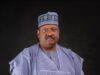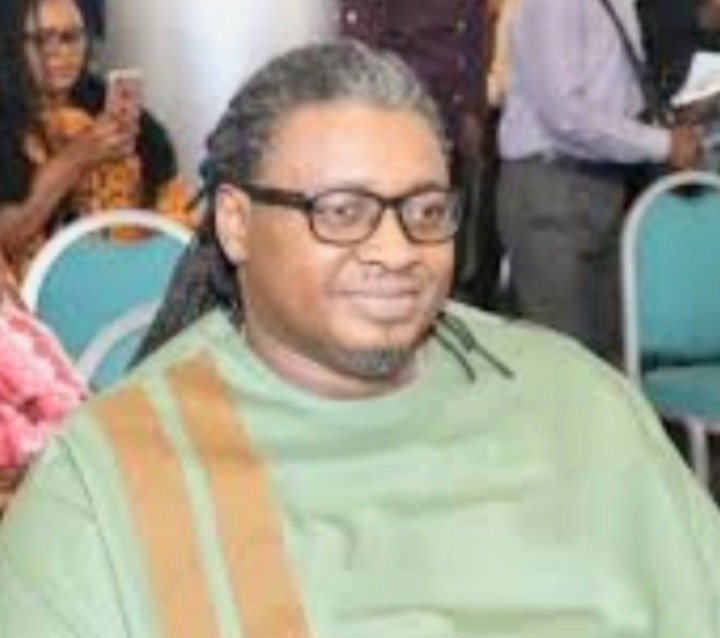
By Dr. Chike Okogwu
National Leader, ADC Persons With Disabilities and Member, 50 Wise Men and Women Policy and Manifesto Committee
About ten years ago, a serving Colonel in the Nigerian Army shared a story with me. It was simple, almost ordinary, yet it has remained one of the most powerful illustrations of Nigeria’s security dilemma that I have ever encountered.
Over a decade later, I find myself returning to that story because, sadly, it appears more relevant today than when I first heard it.
The story goes like this:
A wealthy man lived on a large estate and owned several powerful Rottweiler dogs. These dogs were highly trained, fiercely loyal, disciplined and more than capable of protecting the estate and everyone living within it.
One night, marauders descended on the property, they attacked the gates, vandalized buildings, stole valuables, terrorized residents and wreaked havoc across the estate, standing there was the owner of the estate, beside him stood his Rottweilers, strong, alert, ready!
Prepared to do exactly what they had been trained to do yet, there was one problem. The owner held tightly to their leashes. The dogs barked furiously and strained against their restraints. They wanted to pursue the attackers. They wanted to defend the estate. They wanted to stop the destruction but, the owner refused to let go.
As the attack intensified, neighbours cried out in frustration, “Release the dogs”, “Let them do what they were trained to do”! “Why are you holding them back”?
Still, the owner would not release them, the marauders continued their destruction while the dogs remained restrained.
When the attack was over, the owner did something astonishing, he blamed the dogs! Oh chim! He complained that they were ineffective and questioned their competence even demanding explanations, as in? (Our Nigerian expression on sarcasm).
The neighbours could hardly believe what they were hearing. How could the dogs be blamed when they had never been allowed to do their job?
The Colonel then paused and delivered the lesson.
“The dogs”, he said, “represent the security forces. The owner represents the political leadership. Sometimes the men on the ground are expected to win battles while operating under restrictions, inadequate support, conflicting directives, political interference, delayed procurement, poor intelligence coordination and the absence of a sustained national security strategy”. That lesson stayed with me.
Ten years later, it haunts me because, the story appears to be repeating itself on a larger scale. Today, Nigeria continues to confront terrorism, insurgency, banditry, kidnapping, communal conflicts, illegal arms trafficking and organized criminal networks.
Our military personnel, police officers, intelligence operatives, civil defence officers and local security actors continue to make sacrifices under extraordinarily difficult circumstances.
Sadly, many have paid the ultimate price. Many continue to serve in conditions that would challenge even the most advanced military forces in the world.
Yet, insecurity persists and this raises a fundamental question for us all and that is, “Is our challenge merely one of manpower and weaponry” or is it increasingly a question of leadership, coordination, accountability and political will?
Every year, both the Federal Government and the thirty-six state governments allocate enormous resources to defense and security. Defence budgets have expanded significantly over the years. States maintain security votes and provide various forms of logistical support for security operations and additional allocations are made for intelligence gathering, surveillance, counterterrorism operations and security infrastructure.
Notwithstanding this, ordinary Nigerians continue to ask a legitimate question: Why does increasing expenditure not always produce increasing security?
Part of the answer lies in accountability. Part lies in intelligence failures. Part lies in corruption. Part lies in weak inter-agency coordination. Part lies in porous borders. Part lies in delayed justice. Part lies in unemployment and social exclusion. Part lies in governance failures and part, mostly lies in the reality that security is often treated solely as a military issue when it is, in fact, a whole-of-government and her civilian populace responsibility.
Security cannot be achieved through weapons alone as I learned in one of my courses on National security, security requires effective governance, it requires economic opportunity community trust, technology, information which, when processed becomes intelligence. Security requires justice and most importantly, security requires leadership. Simplicita!
If the owner of the Rottweilers genuinely wishes to protect his estate, he must do more than acquire stronger dogs, he must remove unnecessary restraints and must provide proper support. He must establish clear rules that demands accountability whilst as a matter of must, allow the security architecture to function effectively.
Perhaps the greatest tragedy of this story is not what happens to the estate, it is what happens to the people trapped inside it. For every community attacked, every village displaced, every farmer prevented from cultivating his land, every school abandoned because of fear, every market shut down by violence and every family destroyed by insecurity, there is a human cost that can never be fully captured by statistics, budget figures or official reports and the first victims are often the most vulnerable.
As a disability rights advocate, I have long argued that insecurity disproportionately affects Persons With Disabilities (PWDs) such that, when attacks occur, able-bodied citizens may run, hide, relocate or seek refuge.
Many persons with mobility impairments like me cannot, many persons with visual impairments face additional barriers. Other persons with hearing impairments are unable to access emergency warnings and those with intellectual and psychosocial disabilities find themselves abandoned during crises. Some lose access to medication. Some lose their assistive devices. Some lose access to healthcare. Some become internally displaced without disability-inclusive shelters, transportation or support services. Others simply disappear from public attention altogether.
Every security failure deepens existing inequalities and every attack widens the gap between the vulnerable and the opportunities they deserve. Then, there are the mothers, across Nigeria, countless mothers now live in a state of permanent anxiety. Many sleep with one ear open. A late-night knock on the door sends fear through the household. An unfamiliar phone call causes panic.
A journey that should take a few hours becomes an exercise in prayer and apprehension. Many mothers have buried sons and daughters. Many have watched loved ones disappear into captivity. Many have become widows overnight. Many carry emotional wounds that no compensation package can heal.
The consequences extend far beyond the immediate victims as families are devastated as businesses collapse. Savings disappear into ransom payments (which I have personally contributed severally to). Children abandon their education as breadwinners are lost and dreams are postponed indefinitely.
Hope gradually begins to give way to mere survival, with the economic cost is enormous. The social cost is devastating. The psychological cost is incalculable, matter of fact, the most dangerous consequence of prolonged insecurity is what it does to the collective psyche of a nation.
A society repeatedly exposed to violence eventually begins to normalize it.
People stop expecting protection.
People stop believing justice will come.
People stop reporting crimes.
People stop trusting institutions.
People stop planning for the future.
Instead of asking how to prosper, citizens begin asking how to survive.
Fear becomes normal.
Helplessness becomes cultural.
Cynicism becomes fashionable.
The extraordinary becomes ordinary.
The unacceptable becomes tolerated.
That may be the greatest victory any terrorist, bandit, kidnapper or criminal network can ever achieve. The worst even being the mass viral posting of the videos which is against my training in UN Counterterrorism manuals. You never celebrate terrorism and terrorists. Terrorists now do give aways on TikTok with ransom money and even have followers. Lord have mercy!
We don’t care again about the destruction of buildings or the theft of property or even the loss of lives. I worry much about the erosion of national confidence. A nation is strongest not merely because of the weapons it possesses but because its citizens believe that their country can protect them, defend them and deliver justice and when that belief begins to fade, the foundations of nationhood itself begin to weaken.
The greatest danger before us is not simply the persistence of violence. The greatest danger is the acceptance of violence as normal. The belief that nothing can change. The belief that insecurity is simply the Nigerian condition.
History teaches us that nations rarely decline because of external threats alone. They decline when citizens lose confidence in the willingness or ability of institutions to confront those threats and Nigeria must never reach that point, even though, we appear to be.
The owner of the Rottweilers must understand that every day he hesitates, every day he delays meaningful reforms, every day politics takes precedence over national security and every day accountability is sacrificed for expediency, real people pay the price.
Not statistics.
Not budget lines.
Not policy papers.
Real people.
Mothers.
Children.
Farmers.
Traders.
Students.
Persons With Disabilities.
Entire communities.
…A nation whose greatest strength has always been the resilience, optimism, and determination of its people. The story of the Rottweilers was never really about dogs.
It was about responsibility.
It was about leadership.
It was about accountability.
It was about the consequences of inaction.
Ten years later, its lesson remains as urgent as ever.
The question before Nigeria is no longer whether we have dogs capable of defending the estate. The question is whether those holding the leash are prepared to do what is necessary to secure the nation before the people inside the estate lose faith all together.
Okogwu is the National Leader, ADC Persons With Disabilities and Member, 50 Wise Men and Women Policy and Manifesto Committee
Discover more from TheTimes Nigeria
Subscribe to get the latest posts sent to your email.