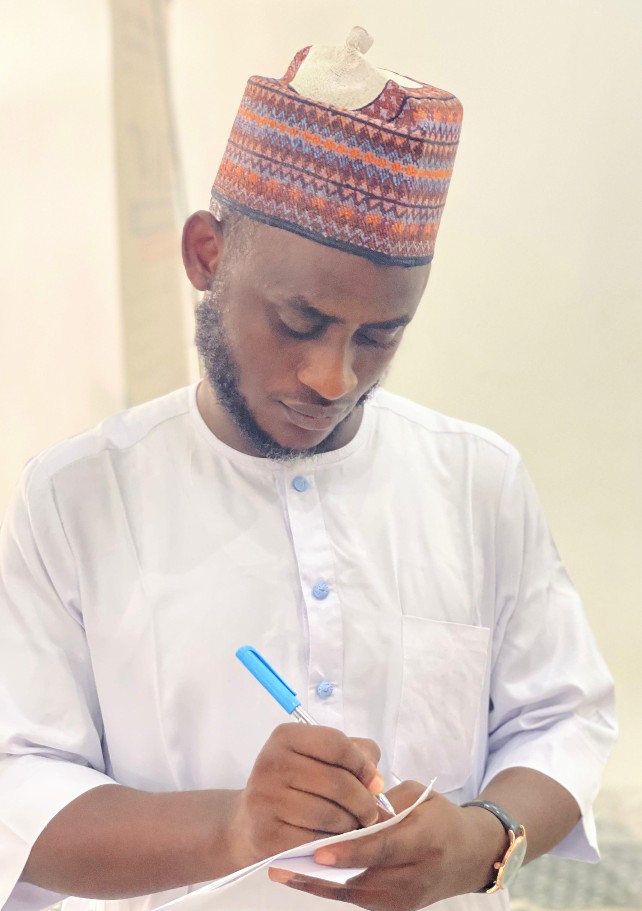
By Adeyemi A. Ridwan
As the crescent of Muharram ushers in the Islamic year 1448, millions of Nigerian Muslims will mark the Hijrah, the migration of Prophet Muhammad (Peace be Upon him) from Makkah to Madinah. More than a calendar event, the Hijrah is a profound masterclass in crisis management, strategic sacrifice and the gritty business of constructing a secure and just society from the ashes of persecution.
For a Nigeria haunted by banditry, insurgency, kidnapping and a pervasive atmosphere of fear, the lessons of that desert journey 1,400 years ago have never been more urgent. This New Year must not be a ritual of sermons and soups; it must become a mirror held up to the conscience of our political leaders and every citizen.
The Hijrah as strategic retreat and the foundation of social contract:
The Prophet’s migration was not a flight of cowardice. It was a tactical retreat to build strength, a deliberate separation from an environment where life, property and faith were under constant assault. Makkah had become a zone of state-sponsored terrorism against a minority.
The parallels with today’s Nigeria are uncomfortable, vast territories where farmers cannot go to their fields, children are abducted from school dormitories and motorists are snatched on highways that should be arteries of commerce.
The Hijrah teaches that when a space becomes irredeemably hostile, the intelligent response is not passive endurance but a calculated, organized relocation of resources, people and vision to a place where security and law can be rebuilt. Madinah was that place and its foundation was the Constitution of Madinah, history’s first written social contract that guaranteed the rights and security of every citizen, Muslim, Jew and pagan alike, under one indivisible state.
Admonishment to Nigerian leaders – From fortified mansions to shared sacrifice:
Here lies the first sharp admonition for Nigeria’s political leadership. The Prophet did not merely flee, he constructed. He built a city where the displaced (Muhajirun) and the hosts (Ansar) were bonded not by tribe or tongue but by a pact of mutual defence and economic equity.
Nigeria’s insecurity is, at its core, a collapse of this social contract. We have leaders who view state resources as the spoils of their ethnic and religious silos, who allocate security apparatus to protect themselves while rural communities lie naked before marauders.
The Hijrah scorns the leader who builds a fortified mansion in the middle of a burning village. You cannot secure Nigeria by polishing the armour of a political elite that has migrated morally and fiscally away from the people.
The Muharram message to every governor, minister and federal legislator is blunt: Emulate the Prophet’s sacrifice. He slept in the bed of the targeted Ali, risked the assassin’s sword, and put his life on the line before asking others to trust the new order. When did a Nigerian leader last genuinely share the risk of the ordinary citizen? Ride an unescorted road, sleep in an unprotected hamlet, or refuse a pay rise while constituents starve? Until leadership personalizes the agony of the insecure, our wish to have a safe Nigeria will remain a hollow slogan.
Dismantling ethnic and religious blood-Feuds for collective security:
The Constitution of Madinah also dismantled the ancient tribal blood-feuds that kept the Arabian Peninsula in perpetual war. It insisted that collective security trumps clan loyalty. Nigeria is being consumed by the modern equivalent, ethno-religious entrepreneurs who spin every bandit attack into a narrative of tribal or religious genocide, while the real enemy, the criminal with an AK-47 laughs all the way to his forest camp.
The Hijrah admonishes our political class to stop weaponizing identity for election cycles. A Fulani herder gunned down in Zamfara is as dead as an Igbo trader killed in Onitsha. A Christian widow in Plateau weeps with the same salt as a Muslim widow in Borno.
The Prophet united the Aws and Khazraj tribes, who had buried centuries of hatred. If Nigerian leaders cannot unite the nation around a genuine, non-sectarian security architecture that protects everyone equally, they have learned nothing from the Hijrah will all claim to honour.
Citizens’ role: From complicity and apathy to communal solidarity:
Yet the lessons are not for leaders alone. The Hijrah is also an unflattering spotlight on the citizenry. The Ansar of Madinah did not wait for government aid, they voluntarily shared half of their wealth and homes with the emigrants.
Today, Nigerian communities torn apart by banditry have seen neighbors become informants for terrorists, land disputes escalate into reprisal massacres and the rich flee to Dubai, Lagos and FCT while their villages burn, tossing occasional crumbs as charity.
The Hijrah demands that we rebuild the communal vigil, not as jungle justice, but as organized, lawful neighborhood solidarity that reports suspicious movements, refuses to negotiate ransoms privately and treats every kidnapped child as our own.
The pervasive culture of silence and complicity, of seeing security as a commodity to be bought rather than a common good to be nurtured, is a betrayal of the Madinah model.
The spiritual dimension – Pairing prayer with practical actions:
Moreover, the Hijrah underscores the spiritual dimension of security that material solutions ignore. The Prophet did not leave Makkah until divine permission came, but once it came, he planned meticulously, camel, guide, hidden cave, supply lines. Trust in God (Tawakkul) was paired with tireless worldly strategy. Nigeria is a deeply religious country where both mosques and churches overflow, yet our public square is filled with the despair of fatalism: a popular Lingo in Nigeria says “Na condition wey make crayfish bend.”
The Hijrah rebukes the lazy religiosity that prays for peace while voting for bandit-sympathizers, or that quotes scripture to justify extortion because “everyone is doing it.” To the Nigerian citizen, the New Year whispers: Prayer is the compass, but your boots must walk the rocky path of integrity, vigilance and holding your leaders to account without violence.
Nigeria at Its Cave of Thawr — A call to migrate from Greed to Justice:
In the spirit of the Hijrah 1448AH, I propose the following urgent, actionable steps drawn from the Prophet’s migration and state-building in Madinah. These are not mere suggestions but a moral and strategic imperative for any leader who seeks legitimacy in the eyes of the people and accountability before God.
1. Create a clear security agreement and openly pledge to uphold it
Convene an emergency, non-partisan national assembly on insecurity and produce a binding, time-bound pact (modelled on the Constitution of Madinah) that guarantees equal security protection for every Nigerian regardless of ethnicity, religion or political affiliation. Sign it publicly with the full understanding that your oath is to the people, not your party. Any leader unable to uphold this pact should resign.
2. Personalize the Risk by Returning to the People
Break the culture of fortress governance. Every governor, senator and security chief must regularly spend unscheduled nights in the most insecure local government areas of their domain, without armored convoys or prior media hype. Share the vulnerability of the peasant farmer and the displaced child. Until your blood feels the same fear, your policies will remain academic. The Prophet’s example of sleeping in Ali’s bed must become your yardstick for sacrificial leadership.
3. Talk About Crime Without Mentioning Tribe
Issue an immediate executive or legislative directive that all security briefings, public statements and operational strategies must identify criminals by their actions, not their tribe or religion. Ban the use of ethnic labels in describing banditry and terrorism. Form a national solidarity task force of respected traditional and religious leaders across divides to jointly visit attack scenes, demonstrating that a life lost in Sokoto is grieved in Aba and that collective security is not a Fulani, Igbo or Yoruba issue but a Nigerian one.
4. Provide Strong Support and Funding for Local Security Groups (Following the Ansar Model)
The Madinah hosts did not wait for an external force. Legislators must amend laws to constitutionally recognize, train and fund community security outfits under strict state oversight, ensuring they reflect the ethnic and religious diversity of their localities. Integrate these groups into formal intelligence grids while eliminating lawlessness. Pay community guards adequately and provide insurance for their families, this is a fraction of what you spend on personal aides and foreign trips.
5. Institute a “Ransom and Complicity Tribunal”
The culture of secret ransom payments funds terrorism. Move beyond rhetoric by establishing special fast-track courts to prosecute families or communities who negotiate and pay ransoms without security force coordination and heavily penalize bank officials who facilitate such transfers. At the same time, offer a state-backed, confidential ransom fund that cuts off the criminal economy while freeing victims, mirroring the Hijrah’s principle of collective economic responsibility without empowering the aggressor.
6. Live a Life of Clear Sacrifice and Simple Living, Following the Example of the Muhajirun (Immigrants)
As insecurity pushes hundred of thousands into humanitarian catastrophe, the political class must publicly accept a temporary, legally enforced 30% cut in all political office holders’ salaries, allowances and estacode, with the savings directed exclusively to the armed forces’ field welfare and the rehabilitation of displaced persons (will they facilitate this?). The Prophet migrated with nothing but a camel and a vision; you cannot build a secure nation while your personal convoys consume the budget meant for frontline boots.
7. Mandate a National Week of Reconciliation and Prayer
Declare the first week of Muharram a National Week of Migration from Divisions, in which every public office holder, accompanied by their family, joins interfaith cleansing and dialogue ceremonies in violence-torn communities. Not photo opportunities, but a structured, monitored commitment to physically clear rubble, plant trees in abandoned farmlands and sleep in the homes of the bereaved. Let your presence declare that the leader has not migrated away from the suffering citizen. The choice is yours this 1448AH. The nation and its Creator are watching.
My conclusion, as 1448AH dawns, Nigeria stands at its own cave of Thawr, with enemies closing in, but with a divine opportunity to spin a new nation from the threads of sacrifice and justice. Political leaders must migrate away from the Makkah of greed, nepotism and reactive security measures and build a Madinah where every Nigerian, regardless of tribe or creed, sleeps under a constitution that protects his blood and bread. Citizens must become Ansar to one another, rediscovering the national bond that terrorism mocks. The Hijrah is not history, it is an urgent, breathing blueprint. If we ignore it, the calendar will still turn, but the blood will continue to water a land that has forgotten why its Prophet once walked through the desert to find a home worth dying for.
May Allah grant us a year of genuine migration, from fear to security, from division to unity and from talk to action (Amin).
Ridwan writes from Abuja.
Discover more from TheTimes Nigeria
Subscribe to get the latest posts sent to your email.