KIGALI, RWANDA — Across Africa, high-level agricultural policies frequently stumble at the last mile, failing to cross the divide between federal ministries and rural farmgates. But at a high-level roundtable during the Africa Food Systems Forum (AFSF) 2026, Nigeria presented a compelling delivery model of how federal policy directives, development partner technical support, and sub-national execution converge to drive real agricultural productivity.
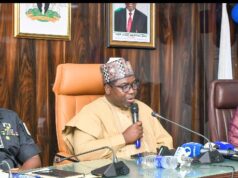
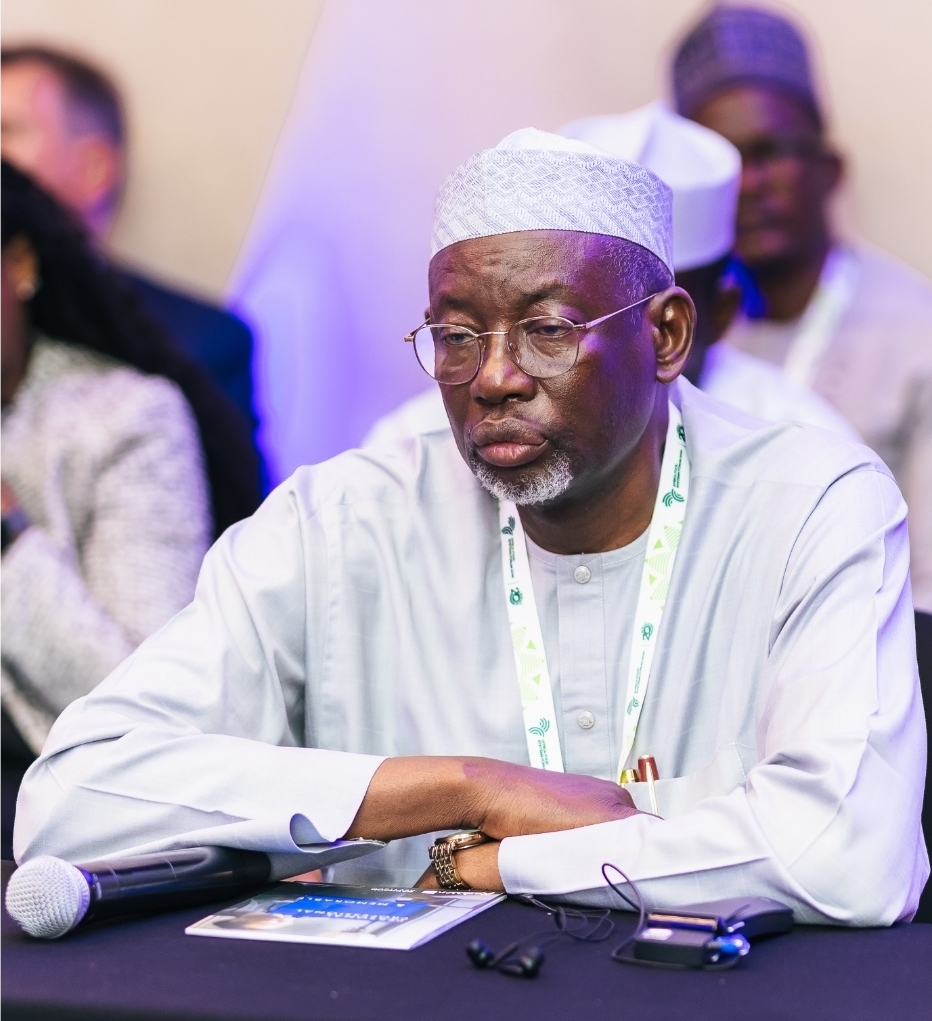
The dialogue, which featured Nigeria’s Minister of Agriculture and Food Security, Senator Abubakar Kyari, and the Executive Governor of Jigawa State, Malam Umar Namadi, laid bare the operational mechanisms necessary to translate continental frameworks such as CAADP into tangible harvests.
Governor Namadi captured the essence of the federal-state dynamic with unvarnished clarity: “We want to complement what is being done at the center. The Federal Government brings the policies and the overarching support, but it is we at the sub-national level who must drive it. We have the land, we have the people, and we have the direct interface with the communities. The mission is to transform agriculture from subsistence to commercial scale, and that only happens when you empower the smallholder farmer.”
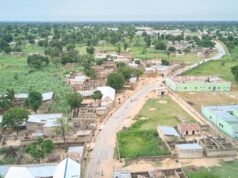
To bridge that execution gap, Jigawa State has built an aggressive delivery architecture designed around technology, youth entrepreneurship, and mechanization. Namadi highlighted the establishment of a dedicated agency for youth employment, which launched the Rice Millionaire program across the state’s 11 federal constituencies, empowering roughly 1,100 youth per constituency to take up commercial farming.
On mechanization, the Governor disclosed that Jigawa has deployed 460 tractors organized across 60 specialized service centers. Each hub is staffed with managers, mechanics, and extension personnel, operating on a digital booking system that eliminates cash transactions and tracks tractor field operations in real time.
“Farmers book services digitally through agents across the state. The tractors are tracked from the central office, measuring exact engine hours worked and acreage tilled,” Namadi explained, commending the Bank of Agriculture (BOA) for financing equipment under the national mechanization window.
Complementing this machinery footprint is a deployed cadre of 1,700 state-backed agricultural extension agents providing continuous advisory support. To optimize soil fertility and crop selection, the state partnered with agricultural research institutes to complete comprehensive soil mapping across Jigawa, giving farmers scientific clarity on crop suitability and precise fertilizer applications.
This state-level momentum directly mirrors the federal government’s policy vision outlined by Minister Kyari, who stressed that agricultural resilience must be anchored in ecological realities and modern infrastructure. Kyari emphasized that achieving national food sovereignty requires pairing federal budget expansions with institutional partners like AGRA, whose technical assistance helps states align local investment plans with national targets.
AGRA’s strategic footprint in Nigeria—working across state capability, certified seed delivery systems, digitized registries, and public-private partnerships—provides the institutional wiring that allows state governments to absorb capital effectively. This collaborative framework is exemplified by Nigeria’s flagship Irrigate Nigeria initiative showcased at the forum, where AGRA serves as a technical partner to scale water infrastructure and dry-season farming clusters from an initial US$210 million pilot to a US$6 billion nationwide transformation.
For delegates and investors gathered in Kigali, the message from the Nigerian delegation has been unmistakable: continental targets under CAADP 2026–2035 will not be won in federal boardrooms alone. Sustainable food security requires a disciplined triangle in which federal policy creates the enabling environment, technical partners de-risk systems, and sub-national leaders turn policies into functioning fields, tractors, and jobs.
Discover more from TheTimes Nigeria
Subscribe to get the latest posts sent to your email.