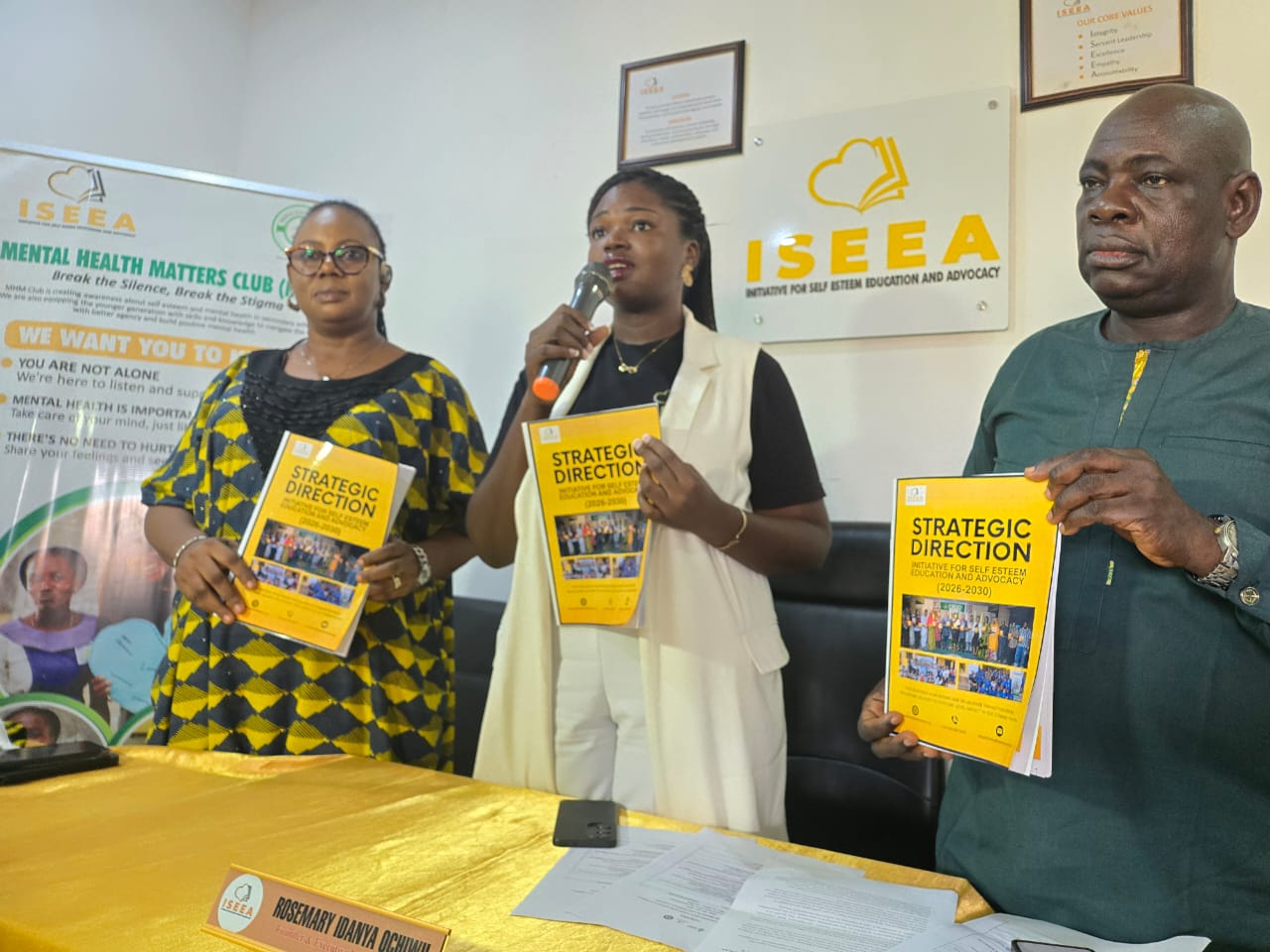
The Initiative for Self-Esteem Education and Advocacy (ISEEA) has unveiled a new strategic framework aimed at tackling rising cases of mental illness among adolescents and young people across Nigeria.
The organisation raised concern over increasing levels of anxiety, depression, substance abuse and low self-esteem among youths, warning that the situation has reached a point requiring structured and coordinated intervention.
Speaking in Abuja during the launch of its 2026–2030 Strategic Direction Plan and maiden Mental Health and Self-Esteem E-Journal, the Founder and Executive Director of ISEEA, Rosemary Idanya Ochiwu, said fragmented interventions were no longer sufficient.
She said schools must now be positioned as the first line of response in addressing mental health challenges among students.
“Schools must become safe spaces and entry points where young people can access mental health education, peer support and personal development opportunities,” Ochiwu said.
According to her, many adolescents are battling emotional distress linked to bullying, abuse, peer pressure and substance use, while most schools lack trained personnel and functional referral systems.
She noted that the organisation’s new strategy is anchored on the THRIVE Model, which targets over 60,000 young people nationwide through school-based mental health clubs, teacher training, community engagement and digital support systems.
The plan also includes strengthening referral pathways and expanding partnerships with families and community stakeholders.
ISEEA said it would intensify advocacy to ensure mental wellness support is integrated into education and youth development policies across the country.
The organisation also launched its Mental Health and Self-Esteem E-Journal, which it described as a platform for research, personal stories and policy recommendations aimed at reducing stigma and promoting evidence-based action.
Meanwhile, stakeholders from the Federal Ministry of Health and Social Welfare and the National Mental Health Programme commended the initiative, describing it as timely given Nigeria’s growing youth population.
They stressed that early intervention through schools remains critical in addressing mental health challenges and building resilience among young people.
Government representatives pledged continued collaboration with civil society organisations to scale up school-based mental health interventions nationwide.
Discover more from TheTimes Nigeria
Subscribe to get the latest posts sent to your email.